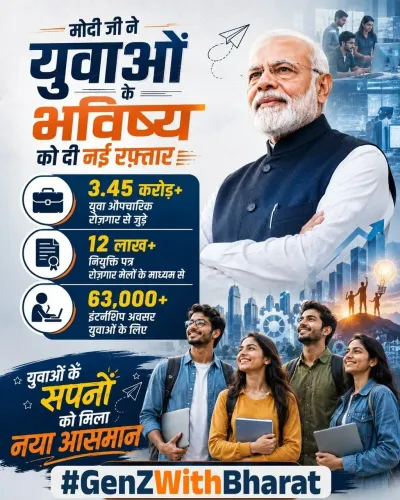
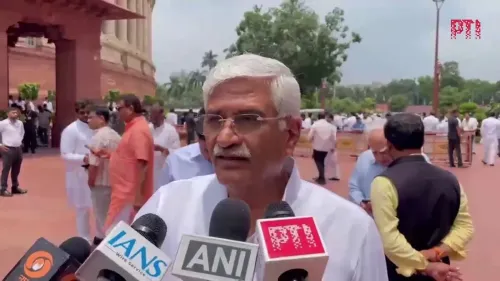
Shekhawat frames Gen-Z as nation-builders in social media post
Synopsis
Union Culture and Tourism Minister Gajendra Singh Shekhawat on 26 July 2026 defined India's Gen-Z as synonymous with nation-building, character, service and innovation, encapsulating the message in a 'Nation First' framework on X.
Key Takeaways
Gajendra Singh Shekhawat , Union Minister of Culture and Tourism, posted a five-point Hindi framework on 26 July 2026 defining Gen-Z as nation-builders.
The post identifies five qualities for Gen-Z: nation-building, character-building, service, innovation and 'Nation First'.
The messaging aligns with the National Youth Policy 2014 and the National Education Policy 2020 , both of which emphasise youth-led national development.
The BJP has consistently used 'Nation First' framing in its youth outreach since 2014 , and Shekhawat's post continues that pattern.
India's Gen-Z population is estimated at roughly 37 crore , making it the country's largest and most digitally active demographic.
Ministry of Culture announcements on youth-focused cultural or tourism programmes could follow as an operational extension of this messaging.
Union Culture and Tourism Minister Gajendra Singh Shekhawat on Sunday, 26 July 2026, took to social media platform X to articulate his vision of India's Generation Z, casting the cohort as the embodiment of nation-building, character, service and innovation under the overarching theme of 'Nation First'.
Context
In a brief but pointed post written in Hindi, Shekhawat outlined five attributes he associates with Gen-Z: नेशन बिल्डिंग (nation-building), कैरेक्टर बिल्डिंग (character-building), सेवा का पर्याय (a synonym for service), इनोवेशन (innovation), and ultimately, नेशन फ़र्स्ट (Nation First). The post distilled a five-point framework into a single declarative sentence for each quality, making it both rhetorically crisp and easily shareable across youth-facing digital platforms.
The minister's framing positions young Indians not merely as beneficiaries of government policy but as active agents of national development — a distinction that has become central to BJP's communication strategy since 2014.
Policy Backdrop
The sentiments expressed by Shekhawat align closely with two major policy frameworks. The National Youth Policy 2014 set out formal objectives for youth to contribute to national development through values, innovation and public service — the very pillars invoked in Sunday's post. The National Education Policy 2020 further reinforced this direction by placing character-building, holistic education and innovation at the centre of India's learning agenda.
As the minister responsible for Culture and Tourism, Shekhawat oversees programmes that directly interface with young Indians — from heritage festivals and cultural outreach to tourism promotion campaigns that increasingly target domestic youth travellers. His framing of Gen-Z as 'nation-builders' signals a potential convergence between cultural programming and youth-engagement mandates within his ministry.
Stakeholders and Impact
The post's primary audience is India's estimated 37 crore Gen-Z population — broadly defined as those born between the late 1990s and early 2010s — who represent the country's largest and most digitally active demographic. For this group, ministerial messaging on social media carries weight as it shapes the narrative around civic identity, career choices and participation in public life.
The emphasis on 'service' and 'innovation' also resonates with ongoing government initiatives in skill development, start-up promotion and volunteerism, suggesting that the minister's post may be a precursor to, or reinforcement of, broader institutional outreach targeting young citizens.
What's Next
Observers will watch for follow-up announcements from the Ministry of Culture on youth-focused festivals, heritage programmes or tourism initiatives that operationalise the 'Gen-Z as nation-builder' theme articulated by Shekhawat. If the post is part of a wider campaign, concrete policy actions — such as dedicated youth tracks at cultural events or Gen-Z-led heritage conservation drives — could be expected in the weeks ahead. The minister's use of social media to frame youth identity in explicitly nationalist terms is consistent with a broader pattern of integrating patriotism with calls for innovation and public service that has defined BJP's youth outreach since 2014.
Point of View
The minister is doing ideological groundwork that his ministry can later operationalise through cultural festivals, heritage drives or tourism campaigns. The timing, a Sunday evening post with high organic reach potential, suggests deliberate platform strategy rather than casual commentary. Taken alongside the National Education Policy 2020's character-building emphasis, this signals a sustained effort to make nationalism the default civic identity of India's youngest voters.
NationPress
26 Jul 2026
Frequently Asked Questions
What did Gajendra Singh Shekhawat say about Gen-Z?
Shekhawat posted on X on 26 July 2026 that Gen-Z stands for nation-building, character-building, service, innovation and 'Nation First', framing India's youth as central to national development.
Who is Gajendra Singh Shekhawat?
Gajendra Singh Shekhawat is India's Union Minister of Culture and Tourism, a senior BJP leader and Lok Sabha MP representing Jodhpur in Rajasthan.
What is the National Youth Policy 2014?
The National Youth Policy 2014 is a government framework that sets objectives for Indian youth to contribute to national development through values, innovation and public service — themes Shekhawat echoed in his post.
Why is the BJP focused on Gen-Z messaging?
India's Gen-Z population of roughly 37 crore is the country's largest and most digitally active demographic, making it a critical audience for the ruling party's nation-building and 'Nation First' narrative.
What could follow Shekhawat's Gen-Z post?
Observers expect possible Ministry of Culture announcements on youth-focused festivals, heritage conservation programmes or tourism initiatives that translate his 'Gen-Z as nation-builder' theme into concrete policy action.