Nadda hails Lok Sabha passage of exam anti-cheating amendment

Synopsis
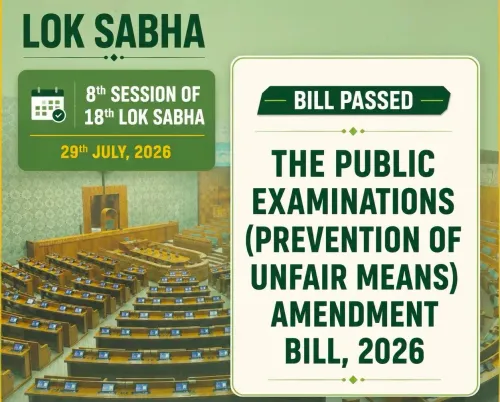
The Lok Sabha passed the Public Examinations (Prevention of Unfair Means) Amendment Bill, 2026 on 29 July, introducing fast-track courts, time-bound probes, special prosecutors, and stricter penalties to combat paper leaks and organised examination fraud across India.
Key Takeaways
The Lok Sabha passed the Public Examinations (Prevention of Unfair Means) Amendment Bill, 2026 on 29 July 2026 .
The bill introduces fast-track courts and special public prosecutors specifically for examination fraud cases.
Key provisions include time-bound investigations , time-bound disposal of appeals, and stricter penalties for paper leaks and organised exam crimes.
The amendment builds on the original Public Examinations (Prevention of Unfair Means) Act, 2024 , enacted after the NEET and UGC-NET paper leak controversies.
The bill must now clear the Rajya Sabha before receiving presidential assent and becoming law.
Nadda described it as a 'historic and decisive step' for crores of youth aspirants.
Millions of Indian students who have sat through sleepless nights preparing for competitive examinations — only to watch their futures upended by leaked question papers — got a legislative answer on Wednesday, 29 July 2026, when the Lok Sabha passed the 'Public Examinations (Prevention of Unfair Means) Amendment Bill, 2026'. Union Health Minister and BJP national president J. P. Nadda called the passage 'a historic and decisive step' toward securing the futures of crores of hardworking youth.
In his post on X, Nadda described the amendment as brought under the leadership of Prime Minister Narendra Modi, saying it would make the examination system 'more transparent, impartial, and accountable' — adhik paadarshi, nishpaksh aur jawabdeh. The bill targets paper leaks and organised examination crimes with a set of enforcement teeth that the original 2024 law lacked.
Fast-track courts and time-bound probes: what the amendment adds
According to Nadda's post, the amendment introduces fast-track courts for examination fraud cases, time-bound investigations, appointment of special public prosecutors, time-bound disposal of appeals, and stricter penalties. Together, these provisions are designed to move cases from crime to conviction without the years-long delays that have historically let examination mafia networks regroup and operate again.
The 2026 amendment builds directly on the Public Examinations (Prevention of Unfair Means) Act, 2024, which Parliament enacted in the wake of high-profile paper leak controversies surrounding major national examinations. That law established the foundational framework; this amendment sharpens its enforcement architecture.
NEET and UGC-NET fallout that forced Parliament's hand
The legislative urgency is rooted in a specific crisis. Leaks tied to examinations including NEET and UGC-NET in 2024 triggered widespread protests, court interventions, and a national debate about whether India's examination bodies could be trusted at all. Aspirants who had invested years of preparation found their results under a cloud — not because of their own shortcomings, but because of criminal networks operating upstream of the exam hall.
The 2024 Act was Parliament's first structural response. The 2026 amendment signals that the government views deterrence as incomplete without a credible, fast judicial mechanism to punish perpetrators.
The bill's next stop: Rajya Sabha
Passage in the lower house is one half of the legislative journey. The bill now moves to the Rajya Sabha, where it must clear before receiving presidential assent and becoming enforceable law. Implementation rules — specifying how fast-track courts will be constituted and how special prosecutors will be appointed — will follow through executive notification, likely by the Ministry of Personnel or the Ministry of Education.
For the crores of students preparing for UPSC, SSC, banking, and medical entrance examinations, the real test of this law will not be its passage — it will be the speed and rigour with which the first cases are prosecuted under it.
Point of View
Dedicated prosecutors, and hard deadlines are the missing links. Politically, passing this bill allows the BJP to close a chapter that cost it credibility among student communities after the 2024 examination controversies. The bill's real test will be institutional: whether fast-track courts are actually constituted and staffed promptly, or whether the provision remains on paper. Analysts will watch the Rajya Sabha debate for opposition amendments that could signal how much political consensus exists around the enforcement architecture.
NationPress
29 Jul 2026
Frequently Asked Questions
What is the Public Examinations (Prevention of Unfair Means) Amendment Bill 2026?
It is a bill passed by the Lok Sabha on 29 July 2026 that amends the 2024 anti-cheating law to add fast-track courts, special public prosecutors, time-bound investigations, and stricter penalties for paper leaks and organised examination fraud.
What new provisions does the 2026 exam amendment bill introduce?
The bill introduces fast-track courts for exam fraud cases, time-bound investigations and appeal disposals, appointment of special public prosecutors, and harsher punishments for those involved in paper leaks and organised malpractice.
Why was the exam anti-cheating law amended in 2026?
The original 2024 Act lacked a fast judicial enforcement mechanism. High-profile paper leaks in NEET and UGC-NET examinations in 2024 exposed the need for dedicated courts and prosecutors to ensure swift conviction of perpetrators.
Has the exam fraud amendment bill been passed in Rajya Sabha?
As of 29 July 2026, the bill has been passed by the Lok Sabha. It still needs to be passed by the Rajya Sabha and receive presidential assent before it becomes enforceable law.
How does the 2026 amendment help students affected by paper leaks?
By establishing fast-track courts and time-bound probes, the amendment aims to ensure that those who leak papers or run exam fraud networks are prosecuted quickly, deterring future crimes and restoring trust in public examination results.