CM Sawant backs anti-paper-leak bill passed in Lok Sabha

Synopsis
Goa Chief Minister Pramod Sawant has backed the Public Examinations (Prevention of Unfair Means) Amendment Bill, 2026, passed in the Lok Sabha. The bill builds on the 2024 Act by introducing stricter punishments, time-bound probes, and Special Fast Track Courts to combat paper leaks and organised exam fraud.
Key Takeaways
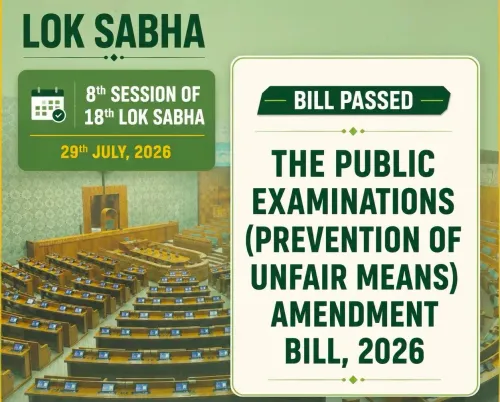
The Public Examinations (Prevention of Unfair Means) Amendment Bill, 2026 was passed in the Lok Sabha on 29 July 2026 .
The bill introduces stricter punishments , time-bound investigations , and Special Fast Track Courts for exam-fraud cases.
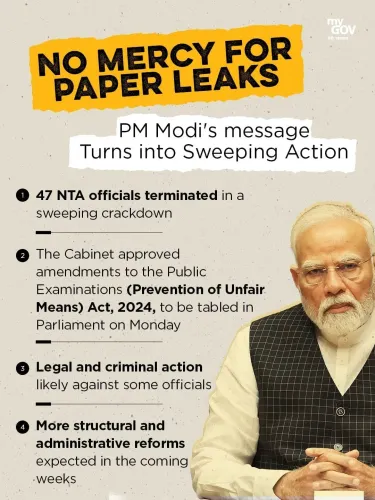
It builds on the Public Examinations (Prevention of Unfair Means) Act, 2024 , which first made paper leaks a cognizable offence.
Goa CM Pramod Sawant endorsed the legislation, framing student aspirations as 'non-negotiable.' The bill must still pass the Rajya Sabha before it becomes law; fast-track court notifications will be a key implementation milestone.
The move follows repeated high-profile paper leak scandals in national and state-level competitive examinations since 2024.
Millions of students who have watched their exam dreams shatter due to paper leaks now have a stronger legal shield. Goa Chief Minister Pramod Sawant on Wednesday, 29 July 2026 welcomed the passage of the Public Examinations (Prevention of Unfair Means) Amendment Bill, 2026 in the Lok Sabha, calling the legislation a decisive step to protect the future of India's youth.
What the 2026 amendment adds to the 2024 law
India already had a baseline framework in place. The Public Examinations (Prevention of Unfair Means) Act, 2024 made paper leaks a cognizable offence and introduced minimum jail terms — a hard break from the era when exam fraud was treated as a minor administrative lapse. The 2026 amendment now layers on stricter punishments, mandates time-bound investigations, and — most significantly — provides for Special Fast Track Courts to hear exam-fraud cases. The message is deliberate: not just tougher sentences, but faster verdicts.
CM Sawant framed the bill in unambiguous terms: 'Those attempting to undermine the integrity of public examinations through unfair means will face the full force of the law. Paper leaks and examination fraud will not be tolerated.'
Why NEET and recruitment scandals made this inevitable
The legislative push did not emerge in a vacuum. A string of high-profile paper leak incidents — spanning national medical entrance tests and state-level recruitment drives — exposed how organised fraud networks could simultaneously compromise thousands of aspirants. Each scandal triggered public outrage, court interventions, and political pressure. The 2024 Act was Parliament's first structural response; this amendment is the second, tightening the screws on both deterrence and procedural speed. The pattern is clear: incremental criminalisation, not institutional overhaul.
For competitive exam aspirants — a demographic that numbers in the tens of millions and cuts across every state and income bracket — the stakes are existential. A leaked paper does not just hand an unfair advantage to a few; it invalidates the effort of everyone who prepared honestly. That political reality has kept exam integrity near the top of the Modi government's education agenda since 2024.
Rajya Sabha passage and fast-track court rollout to watch
The bill's Lok Sabha passage is one half of the legislative journey. Its progress through the Rajya Sabha and the subsequent government notifications required to actually constitute the Special Fast Track Courts will determine whether the law's promise translates into operational reality. Implementation timelines and court capacity will be the real test of political will.
India's exam-integrity battle is far from over — but Parliament has now twice in two years chosen to answer fraud with force of law. The question is no longer whether the state is serious. It is how fast the machinery can move.
Point of View
Signalling that the political cost of inaction on paper leaks now outweighs the complexity of reform. By anchoring accountability in fast-track courts rather than administrative restructuring, the Centre is betting on criminal deterrence over systemic change — a choice that will face scrutiny if leaks continue despite tougher penalties. For state leaders like CM Sawant, publicly endorsing central education legislation also reinforces BJP's unified messaging ahead of any electoral cycle. The real policy test arrives when the Rajya Sabha votes and the government moves to operationalise the special courts.
NationPress
13 Sept 2026
Frequently Asked Questions
What is the Public Examinations Amendment Bill 2026?
The Public Examinations (Prevention of Unfair Means) Amendment Bill, 2026 is a central legislation passed in the Lok Sabha that strengthens India's anti-paper-leak law by adding stricter punishments, time-bound investigations, and Special Fast Track Courts for cases of examination fraud.
How is the 2026 bill different from the 2024 Act?
The 2024 Act made paper leaks a cognizable offence with minimum jail terms for the first time. The 2026 amendment goes further by mandating faster investigations, harsher penalties, and dedicated fast-track courts to ensure speedier justice.
Has the exam fraud bill become law yet?
Not yet. The bill was passed in the Lok Sabha on 29 July 2026 but must also clear the Rajya Sabha before it can receive Presidential assent and become law.
Why did India need a new exam fraud law?
A series of high-profile paper leak scandals — including in national medical entrance exams and state recruitment tests — exposed organised fraud networks that undermined the efforts of millions of honest aspirants, prompting Parliament to tighten the legal framework.
What are Special Fast Track Courts for exam fraud?
Special Fast Track Courts are dedicated judicial bodies proposed under the 2026 amendment to hear examination-fraud cases on an expedited timeline, ensuring quicker verdicts rather than years-long trials in regular courts.