Cyclone Arnab triggers Delhi-NCR rain till Nov 1; AQI hits 250

Synopsis
Cyclone Arnab's landfall near the Andhra-Yanam coast is set to trigger an unusual late-October rain spell in Delhi-NCR lasting until November 1 — disrupting Karwa Chauth and briefly masking a city-level AQI already at 250. The dual threat of festive disruption and worsening winter pollution puts Delhi's air quality battle in sharp focus just as the peak smog season begins.
Key Takeaways
The IMD has forecast isolated to scattered rainfall in Delhi-NCR from 28 October to 1 November 2026 under the influence of Cyclone Arnab and a western disturbance.
Cyclone Arnab is expected to cross the Andhra Pradesh–Yanam coast near Bapatla–Visakhapatnam as a very severe cyclonic storm with wind gusts up to 150 kmph on 28 October forenoon.
Heavy rainfall is forecast across Telangana , Vidarbha , Chhattisgarh , Jharkhand , Odisha , and Bihar between 28–30 October .
Delhi's city-level AQI stood at 250 ('poor') at 8 am on 28 October , per the CPCB ; Vivek Vihar topped monitoring stations at 320 .
The primary pollutant driving deterioration is PM2.5 , with over a dozen stations recording AQI above 270 .
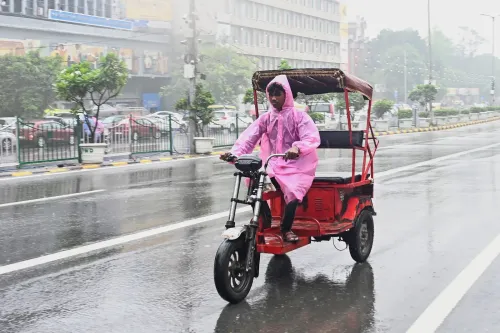
The India Meteorological Department (IMD) has forecast isolated to scattered rainfall across Delhi-NCR from 28 October to 1 November 2026, driven by the combined influence of a western disturbance and very severe Cyclone Arnab. The unseasonal spell is expected to push daytime temperatures down sharply, with potential disruption to Karwa Chauth celebrations this week.
Cyclone Arnab: Path and Intensity
Cyclone Arnab is forecast to make landfall along the Andhra Pradesh and Yanam coasts, crossing between Bapatla and Visakhapatnam — close to Yanam — as a very severe cyclonic storm by the forenoon of 28 October, according to the IMD. The system is expected to bring maximum sustained wind speeds of 125–135 kmph, gusting up to 150 kmph.
Meanwhile, a western disturbance in the form of a cyclonic circulation is positioned over northwest Uttar Pradesh and its neighbourhood, reinforcing the moisture flow into northern India and amplifying rainfall prospects for the capital region.
Rainfall Forecast Across Northern and Eastern India
The IMD has warned of isolated to very heavy rainfall over Telangana and Vidarbha on 28 October, extending to Chhattisgarh, east Madhya Pradesh, Jharkhand, and Odisha on 29 October. Bihar is likely to receive rainfall between 29 and 30 October. Northern and eastern India are effectively bracing for a multi-day rain event as the cyclone's remnants interact with the western disturbance.
This comes notably late in the season — post-monsoon cyclonic activity in the Bay of Bengal in late October is not unusual, but its cascading effect on Delhi's weather ahead of peak pollution and festive season adds layers of concern for authorities and residents alike.
Delhi Air Quality Deteriorates to 'Poor'
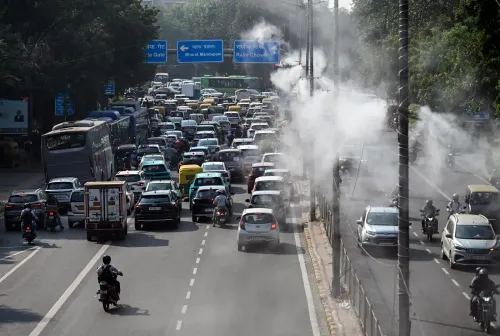
Even as rain approaches, Delhi's air quality had already slipped into the 'poor' category by Wednesday morning, 28 October, with the city-level Air Quality Index (AQI) recorded at 250 at 8 am, according to the Central Pollution Control Board (CPCB)'s All India AQI portal. PM2.5 — fine particulate matter capable of penetrating deep into the lungs — was identified as the primary pollutant.
Among individual monitoring stations, Vivek Vihar logged the highest AQI at 320, followed by Jahangirpuri at 307 and Patparganj at 291. Sirifort recorded 290, while Dwarka Sector 8 registered 286. Alipur and Chandni Chowk both posted 285, with R.K. Puram at 284. Areas including Punjabi Bagh, Mundka, and the Dr Karni Singh Shooting Range recorded AQI levels between 270 and 273.
Will Rain Offer Pollution Relief?
Rainfall typically acts as a natural scrubber, temporarily washing particulate matter from the air and bringing AQI readings down. However, experts caution that relief is usually short-lived — once rain stops and temperatures stabilise, pollutants from stubble burning in Punjab and Haryana, vehicular emissions, and construction dust can reaccumulate rapidly. With the winter inversion season approaching, any post-rain rebound in pollution could be sharper than usual.
Authorities are expected to closely monitor conditions under the Graded Response Action Plan (GRAP) framework as the weather system passes. Whether the rain-driven AQI dip lasts beyond the first week of November remains to be seen.
Point of View
But the city's AQI touching 250 before winter has even set in signals how compressed the 'clean air window' has become. With GRAP trigger thresholds approaching and stubble-burning season at its peak in Punjab and Haryana, authorities cannot afford to treat a rain-induced dip as a structural improvement. The political will to enforce GRAP Stage 3 and beyond — unpopular as it is — will be the real test in the fortnight ahead.
NationPress
28 Oct 2026
Frequently Asked Questions
Why is it raining in Delhi-NCR in late October 2026?
Delhi-NCR is experiencing unseasonal rainfall due to the combined influence of very severe Cyclone Arnab, which made landfall on the Andhra Pradesh–Yanam coast on 28 October, and a western disturbance in the form of a cyclonic circulation over northwest Uttar Pradesh. The IMD has forecast this rain spell to last from 28 October to 1 November.
What is Cyclone Arnab and where will it make landfall?
Cyclone Arnab is a very severe cyclonic storm expected to cross the Andhra Pradesh and Yanam coasts between Bapatla and Visakhapatnam, close to Yanam, by the forenoon of 28 October 2026. It is forecast to bring sustained winds of 125–135 kmph, gusting to 150 kmph.
What is Delhi's current AQI level and which areas are worst affected?
Delhi's city-level AQI was recorded at 250 ('poor') at 8 am on 28 October 2026, according to the CPCB. Vivek Vihar had the highest AQI at 320, followed by Jahangirpuri at 307 and Patparganj at 291, with PM2.5 identified as the primary pollutant.
Will the rain improve Delhi's air quality?
Rainfall typically provides short-term relief by washing particulate matter from the air, which may temporarily reduce Delhi's AQI. However, experts note that once the rain passes, pollution from stubble burning, vehicular emissions, and construction activity can reaccumulate quickly, especially as the winter inversion season approaches.
Which other states will be affected by Cyclone Arnab's rainfall?
The IMD has forecast isolated to very heavy rainfall over Telangana and Vidarbha on 28 October, extending to Chhattisgarh, east Madhya Pradesh, Jharkhand, and Odisha on 29 October. Bihar is likely to receive rainfall between 29 and 30 October.