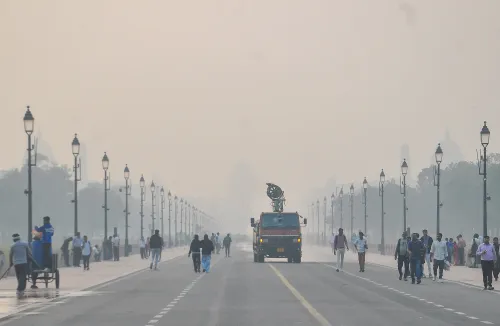
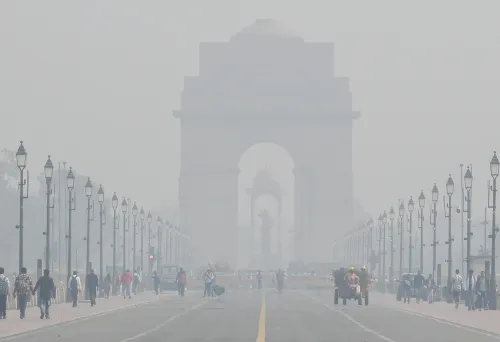
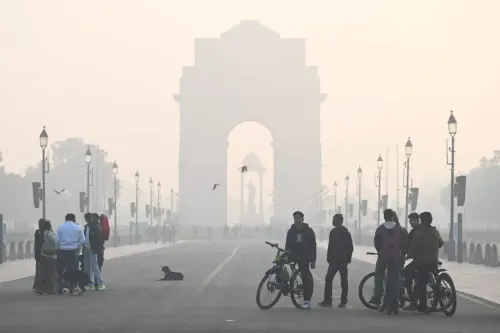
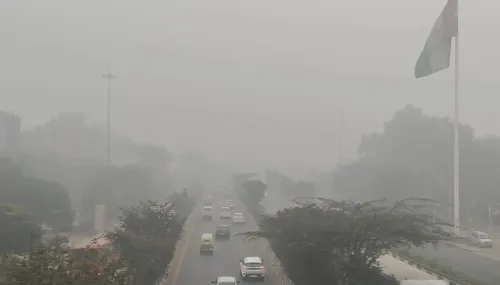
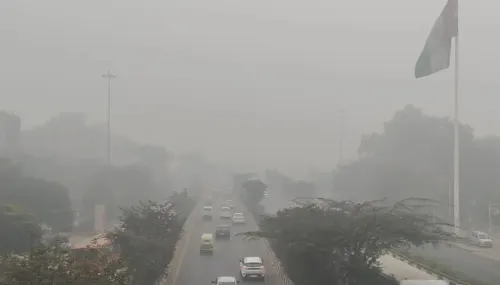
Delhi AQI hits 62-day high at 160 as dry weather grips NCR

Synopsis
Delhi's air quality jumped to its worst reading in over two months — AQI 160 — on Sunday as the monsoon retreated and winds stalled. Six monitoring stations hit 'poor' levels, and with dry, hot weather locked in across NCR through the week, the capital's winter pollution season looks set to begin ahead of schedule.
Key Takeaways
Delhi's AQI hit 160 on 21 September 2026 — its highest in 62 days , per CPCB data.
The reading climbed further to 165 by 10 pm ; PM2.5 and ozone were the primary pollutants.
Six of 45 monitoring stations recorded 'poor' air quality, led by IGI Airport ( 264 ) and Chandni Chowk ( 227 ).
The last comparable reading was 19 July , when Delhi's AQI stood at 171 .
IMD forecast dry weather across Delhi , Noida , Gurugram , Ghaziabad , and Faridabad with maximum temperatures of 35–36°C .
Delhi logged 12 days of 'satisfactory' air quality in September before Sunday's sharp spike.
Delhi's air quality deteriorated sharply on Sunday, 21 September 2026, with the capital recording its highest average Air Quality Index (AQI) in 62 days — a reading of 160 — as stagnant winds, the absence of monsoon rainfall, and local emissions combined to push pollution levels to a moderate-to-poor threshold. Meanwhile, the India Meteorological Department (IMD) forecast predominantly dry conditions across Delhi-NCR through Monday, with no significant rainfall expected in Delhi, Noida, Gurugram, Ghaziabad, or Faridabad.
Delhi's Worst Air Day Since July
According to the Central Pollution Control Board (CPCB)'s 4 pm bulletin, Delhi's average AQI stood at 160 — placing it at the higher end of the 'moderate' category. The pollution level climbed further during the night, reaching 165 by 10 pm. The last time Delhi recorded a comparable reading was 19 July, when the AQI stood at 171, also in the 'moderate' range.
The deterioration was rapid: Delhi's AQI had been 88 on Friday and 118 on Saturday before spiking to 160 on Sunday. PM2.5 and ozone were identified as the dominant pollutants driving the rise.
Six Stations Report 'Poor' Air Quality
Of the 45 active monitoring stations across Delhi, six recorded 'poor' air quality. The worst-affected locations were IGI Airport (264), Chandni Chowk (227), Okhla Phase-2 (219), Sirifort (210), Patparganj (209), and IIT Delhi (202).
Another 38 monitoring stations recorded AQI levels between 101 and 200, falling in the 'moderate' range. Delhi Cantonment was the sole station to report 'satisfactory' air quality, with an AQI of 81.
Weather Outlook Across NCR Cities
The IMD forecast mainly clear skies for Delhi on Monday, with the Safdarjung observatory likely recording a minimum of around 25°C and a maximum of nearly 35°C. Noida and Ghaziabad may see partly cloudy conditions, with temperatures ranging between 27°C and 36°C. Gurugram is similarly expected to see partly cloudy skies with temperatures between approximately 24°C and 36°C. No weather warning has been issued for any of the five NCR cities.
The dry spell is being attributed to the ongoing withdrawal of the southwest monsoon from parts of northwest India. The region is expected to remain largely rain-free over the coming days, which meteorologists and pollution experts note typically accelerates air quality decline in late September as wind speeds drop.
Context: A Clean September, Until Now
Delhi had enjoyed comparatively cleaner air through most of September 2026, recording 12 days of 'satisfactory' air quality and eight days in the 'moderate' range — largely because active monsoon rainfall and stronger winds helped disperse pollutants. Sunday marked the month's worst air quality day so far, and with the monsoon now retreating and temperatures remaining elevated, experts warn that the capital's annual winter pollution cycle could begin earlier than usual.
As the NCR prepares for a dry week ahead, residents — particularly those with respiratory conditions — are advised to monitor daily AQI bulletins issued by the CPCB.
Point of View
Emissions that exist year-round suddenly have nowhere to go. Twelve clean September days built no resilience; one stagnant night undid them. Until Delhi makes measurable progress on reducing baseline emissions — vehicular, industrial, and construction — the city will keep oscillating between 'satisfactory' and 'severe' with seasonal predictability and policy helplessness.
NationPress
21 Sept 2026
Frequently Asked Questions
What is Delhi's AQI today, 21 September 2026?
Delhi's average AQI stood at 160 on 21 September 2026, according to the CPCB's 4 pm bulletin — placing it at the higher end of the 'moderate' category. The reading climbed to 165 by 10 pm, making it the capital's worst air quality day in 62 days.
Why did Delhi's AQI rise so sharply on Sunday?
The spike was caused by a combination of stagnant winds, the absence of rainfall as the southwest monsoon withdraws from northwest India, and persistent local emissions. PM2.5 and ozone were identified as the dominant pollutants.
Which areas in Delhi had the worst air quality on 21 September?
Six monitoring stations recorded 'poor' air quality: IGI Airport (AQI 264), Chandni Chowk (227), Okhla Phase-2 (219), Sirifort (210), Patparganj (209), and IIT Delhi (202). Delhi Cantonment was the only station to record 'satisfactory' air quality, at AQI 81.
What is the weather forecast for Delhi-NCR on 22 September 2026?
The IMD has forecast predominantly dry weather across Delhi, Noida, Gurugram, Ghaziabad, and Faridabad, with no significant rainfall expected. Maximum temperatures are likely to hover between 35°C and 36°C, with mainly clear to partly cloudy skies.
When was Delhi's air quality last this poor?
The last time Delhi recorded a comparable AQI reading was on 19 July 2026, when the index stood at 171, also in the 'moderate' category. Sunday's reading of 160 is the highest since then.