CM Sawant backs Modi's push to end paper leaks with 2026 exam bill
Synopsis
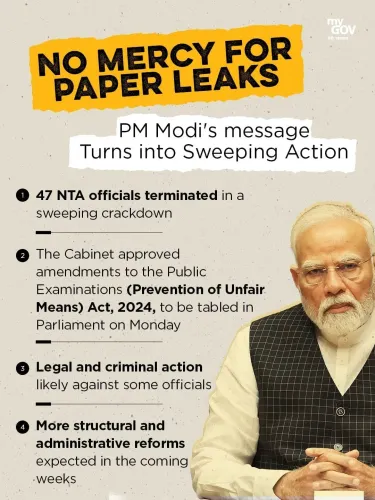
Goa Chief Minister Pramod Sawant on July 31, 2026 endorsed PM Modi's Public Examination (Prevention of Unfair Means) Amendment Bill, 2026 — a legislative push to end paper leaks and strengthen exam integrity following the NEET and UGC-NET scandals of 2024.
Key Takeaways
Goa CM Pramod Sawant amplified PM Modi's remarks on the Public Examination (Prevention of Unfair Means) Amendment Bill, 2026 on July 31.
The bill is an amendment to the Public Examinations (Prevention of Unfair Means) Act, 2024 , enacted after paper-leak scandals in NEET and UGC-NET .
The government's stated goal is stronger penalties against organised cheating and paper leaks in national-level public exams.
Bodies like the NTA and UPSC are expected to face tighter regulatory oversight under the amended law.
Parliamentary introduction and debate on the 2026 Amendment Bill is the immediate next step to watch.
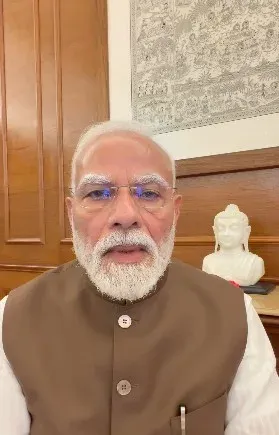
Two years after high-profile exam scandals shook millions of students across India, the central government is moving to close the loopholes — and Goa Chief Minister Pramod Sawant wants every aspirant to know it. On Friday, July 31, 2026, Sawant took to X to amplify Prime Minister Narendra Modi's remarks on the Public Examination (Prevention of Unfair Means) Amendment Bill, 2026, calling it 'a decisive step to end paper leaks, curb organised cheating, and protect the aspirations of millions of honest students.'
From NEET crisis to legislative overhaul
The amendment builds on the Public Examinations (Prevention of Unfair Means) Act, 2024, which Parliament passed in the immediate aftermath of a wave of paper-leak scandals that compromised NEET and UGC-NET — two of India's most high-stakes national exams. Those leaks didn't just derail individual careers; they triggered nationwide protests and a deep public reckoning with the integrity of merit-based selection. The 2024 law was a first response. The 2026 Amendment Bill is the government's signal that the first response wasn't the last word.
What the amendment is designed to do
While the exact provisions of the 2026 Amendment Bill are yet to be debated in Parliament, the government's stated intent is unambiguous: stronger penalties, tighter enforcement, and a system where 'merit, hard work, and talent alone determine success,' as Sawant put it. The bill is expected to tighten the regulatory framework around bodies like the National Testing Agency (NTA) and the Union Public Service Commission (UPSC), which conduct examinations that shape the careers of crores of young Indians every year.
Why BJP leaders are amplifying this moment
Sawant's post is not incidental. For the BJP, examination integrity has become a politically charged terrain — one where the party simultaneously owns the 2024 reform and needs to demonstrate that reform is working. By echoing the Prime Minister's framing, Sawant reinforces the message that this is a government-wide commitment, not a one-off parliamentary exercise. The stakes are real: competitive exam aspirants represent one of India's largest and most anxious voter blocs, and their trust in the system is a direct measure of faith in governance.
The next test will be in Parliament — where the amendment's specific provisions, penalties, and enforcement mechanisms will face scrutiny. For now, the signal from Panaji to New Delhi is clear: the era of the leaked question paper is meant to be over.
Point of View
The Centre signals iterative reform — but the credibility test will come during Parliamentary debate, where opposition parties are likely to demand specifics on enforcement and accountability. For CM Sawant, amplifying this message ties Goa's political brand to a national issue that resonates deeply with aspirational youth — a demographic the party cannot afford to lose. The bill's real impact will depend on whether implementation matches the urgency of the rhetoric.
NationPress
14 Sept 2026
Frequently Asked Questions
What is the Public Examination (Prevention of Unfair Means) Amendment Bill, 2026?
It is a proposed amendment to the Public Examinations (Prevention of Unfair Means) Act, 2024, aimed at strengthening penalties against paper leaks and organised cheating in national public exams. PM Modi highlighted its significance and Goa CM Pramod Sawant endorsed it on July 31, 2026.
Why was the original Public Examinations Act passed in 2024?
The 2024 Act was enacted in response to high-profile paper-leak scandals that compromised NEET and UGC-NET examinations, eroding public trust in India's competitive exam system.
What exams will the 2026 Amendment Bill affect?
The bill is expected to tighten the regulatory framework around bodies like the National Testing Agency (NTA) and the Union Public Service Commission (UPSC), which conduct major national-level examinations.
What did Goa CM Pramod Sawant say about the exam bill?
Sawant described the bill as 'a decisive step to end paper leaks, curb organised cheating, and protect the aspirations of millions of honest students,' echoing PM Modi's framing of the legislation.
When will the Public Examination Amendment Bill 2026 be passed?
The bill is yet to be introduced and debated in Parliament. Its exact provisions, timeline, and enforcement rules are pending legislative scrutiny.