CM Sawant Backs Modi's Zero-Tolerance Stand on Paper Leaks

Synopsis
Goa Chief Minister Pramod Sawant on 23 July 2026 publicly backed PM Modi's firm stand against examination paper leaks, citing strict action against culprits and new reforms to ensure a transparent, fair, and credible national examination system.
Key Takeaways
CM Pramod Sawant on 23 July 2026 voiced support for PM Modi 's zero-tolerance position on examination paper leaks.
The government has stated that strict action has been taken against those responsible for paper leaks. 'Robust reforms' have been introduced to ensure a transparent, fair, and credible examination system, according to Sawant's post.
The National Testing Agency (NTA) , set up in 2017 , is the central body responsible for conducting major national entrance examinations.
The National Education Policy 2020 had already laid groundwork for structural examination reforms aimed at reducing malpractice.
Millions of students who appear for national entrance tests are the primary stakeholders in any reform of examination integrity.
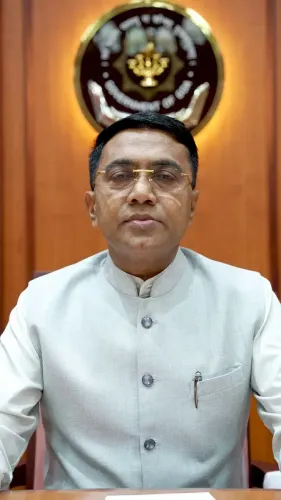
Goa Chief Minister Pramod Sawant on Thursday, 23 July 2026, voiced strong support for Prime Minister Narendra Modi's position on examination paper leaks, stating that the Centre has made its stand 'unequivocally clear' — that there can be no compromise with the future of India's youth.
Context
In his post on X, CM Sawant underscored that strict action has been taken against those responsible for paper leaks, and that 'robust reforms have been introduced to ensure a transparent, fair, and credible examination system.' The statement reflects a pattern of state BJP leaders publicly reinforcing the Centre's messaging on sensitive governance issues, particularly those touching on youth and opportunity.
Paper leaks in competitive examinations have remained a recurring crisis in India over the past decade, eroding public trust in the integrity of national entrance tests and triggering widespread student protests. Each fresh incident has prompted calls for systemic reform beyond ad hoc punitive measures.
Policy Backdrop
The National Testing Agency (NTA), established in 2017, was created specifically to bring standardisation and security to high-stakes entrance examinations. Despite its mandate, the agency has faced criticism over procedural lapses that have periodically allowed question papers to be compromised before examination day.
The National Education Policy 2020 had already outlined structural reforms to the assessment ecosystem, aiming to reduce malpractice and promote merit-based selection. The current push for 'robust reforms' appears to build on that legislative and policy foundation, with the government signalling both punitive and preventive action.
Central government responses to paper-leak episodes have typically combined criminal action against those caught leaking or purchasing papers with promises of technological upgrades — such as encrypted question-paper delivery and real-time surveillance at examination centres — to prevent recurrence.
Stakeholders and Impact
The primary stakeholders are the millions of students who appear each year for national entrance examinations — including medical, engineering, and civil services tests — whose careers hinge on results that are only meaningful if the process is untainted. A single paper-leak incident can invalidate months of preparation for lakhs of candidates.
CM Sawant's public alignment with PM Modi's position also carries a state-level signal: that Goa's BJP government stands behind the Centre's reform agenda and expects the same zero-tolerance approach to be reflected in examinations conducted within the state. For the BJP, messaging around protecting youth opportunity has become a consistent political and governance plank.
What's Next
Attention will now turn to the National Testing Agency and whether fresh guidelines or procedural amendments are issued ahead of the next cycle of national entrance examinations. Observers will watch for concrete legislative or regulatory action — such as amendments to examination-conduct rules or enhanced penalties under existing law — that can translate political statements into enforceable reform.
If the government follows through with structural changes rather than only punitive responses, it could mark a meaningful shift in how India manages the integrity of high-stakes public examinations — a test, in effect, of whether political will translates into institutional change.
Point of View
Making visible solidarity from state leaders a deliberate messaging exercise. The reference to 'robust reforms' without specifics is characteristic of this genre of political communication — it signals intent while leaving room for the Centre to define the details. Whether this translates into measurable institutional change at the NTA or in examination law will determine whether the political messaging holds up over time.
NationPress
21 Oct 2026
Frequently Asked Questions
What is Goa CM Pramod Sawant's stand on paper leaks?
Goa CM Pramod Sawant has publicly backed PM Narendra Modi's zero-tolerance position on paper leaks, stating that strict action has been taken against those responsible and that robust reforms are being introduced for a fair and credible examination system.
What action has the government taken on paper leaks in India?
According to CM Sawant's statement, the government has taken strict action against those responsible for paper leaks and has introduced reforms aimed at ensuring transparency and credibility in the examination process.
What is the National Testing Agency and what does it do?
The National Testing Agency (NTA) is an autonomous body established in 2017 to conduct major national entrance examinations in India, with a mandate to standardise and secure the testing process.
How does the National Education Policy 2020 relate to exam reforms?
The National Education Policy 2020 outlined structural reforms to India's examination and assessment system, aiming to reduce malpractice and promote merit-based selection — providing the policy foundation for current reform efforts.
Why are paper leaks a major issue for students in India?
Paper leaks can invalidate results for lakhs of students who have spent months preparing for competitive entrance examinations, directly damaging their career prospects and undermining public trust in the examination system.