CM Sawant Backs PM Modi's Stand on Exam Integrity
Synopsis
Goa Chief Minister Pramod Sawant on 24 July 2026 endorsed PM Narendra Modi's resolve to protect examination sanctity, backing the centre's zero-tolerance stance on malpractice backed by the Public Examinations (Prevention of Unfair Means) Act, 2024.
Key Takeaways
Goa CM Pramod Sawant publicly backed PM Narendra Modi 's stance on examination integrity on 24 July 2026 .
Sawant stated that the Prime Minister's resolve sends 'an unambiguous message' that examination violators will be held to account.
The Public Examinations (Prevention of Unfair Means) Act, 2024 prescribes penalties of up to 10 years' imprisonment for paper leaks and impersonation.
The National Testing Agency (NTA) remains under reform pressure following irregularities in NEET-UG 2024 .
A high-level committee was constituted by the Ministry of Education in 2024 to recommend structural reforms for the NTA.
Focus now shifts to NTA's new examination protocols for the 2026-27 academic session .
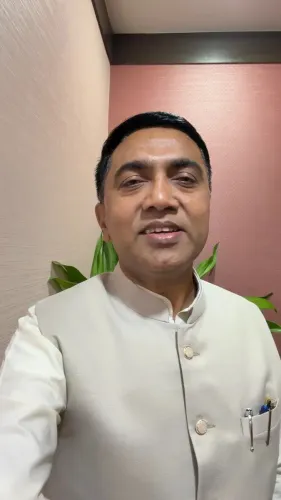
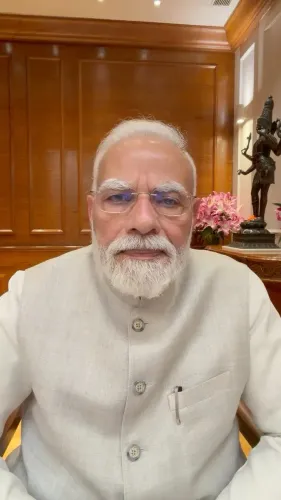
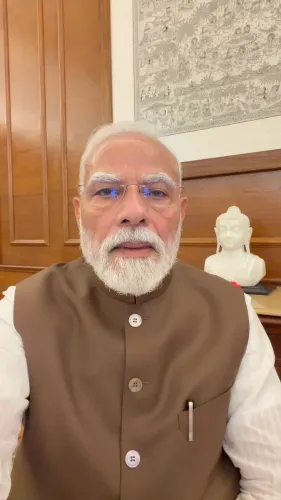
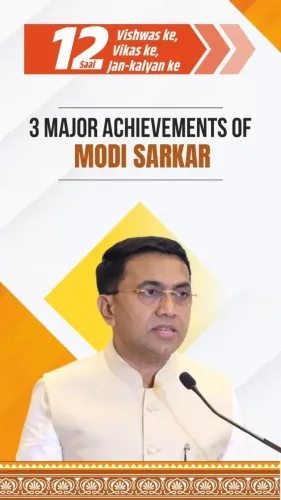
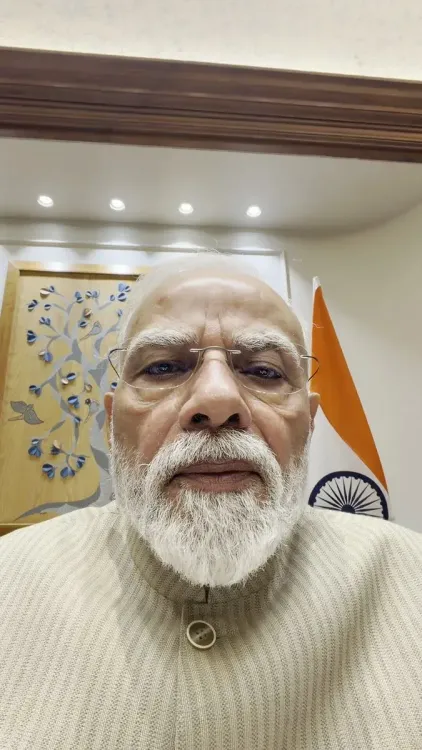
Goa Chief Minister Pramod Sawant on Friday, 24 July 2026 publicly endorsed Prime Minister Narendra Modi's resolve on examination integrity, stating that the Prime Minister's stance sends 'an unambiguous message' that the sanctity of examinations will be defended and violators held accountable.
Context
Sawant's post on X quoted the Prime Minister's position approvingly, writing: 'The resolve shown by Hon'ble PM Shri Narendra Modi Ji sends an unambiguous message: the sanctity of our examinations will be defended, and those who violate it will be held to account.' The statement places Goa's Chief Minister firmly alongside the central government's declared zero-tolerance stance on examination fraud.
The remarks come against the backdrop of sustained national concern over malpractice in high-stakes competitive examinations, a debate that intensified sharply following irregularities in NEET-UG 2024 and triggered a broader policy reckoning within the education establishment.
Policy Backdrop
The central government responded to the 2024 NEET-UG paper-leak controversy with two significant moves: the enactment of the Public Examinations (Prevention of Unfair Means) Act, 2024, and the constitution of a high-level committee to recommend structural reforms for the National Testing Agency (NTA).
The Public Examinations (Prevention of Unfair Means) Act, 2024 criminalises paper leaks, impersonation, and related malpractices, prescribing penalties of up to 10 years' imprisonment. This legislation was framed as the legislative backbone of the government's promise to protect meritocracy in admissions and recruitment.
The National Education Policy 2020 had earlier laid the groundwork for technology-driven, transparent examination systems, but implementation gaps and recurring leaks kept examination reform at the centre of political and administrative discourse through 2025 and 2026.
Stakeholders and Impact
The primary stakeholders in this debate are the millions of aspirants who appear annually for entrance tests such as NEET-UG and JEE, whose futures depend on the credibility of these assessments. Any perception of systemic compromise erodes confidence not only in individual examinations but in the broader meritocratic promise of competitive selection.
State education departments, including Goa's, play a complementary role in reinforcing central messaging and ensuring that state-level examination bodies align with federal standards. Sawant's public endorsement signals that state administrations are being mobilised to amplify the centre's accountability narrative ahead of the 2026-27 academic session.
The National Testing Agency itself remains under scrutiny as it works to implement reformed examination protocols. The agency's credibility is directly tied to the government's ability to demonstrate that legislative action has translated into operational change on the ground.
What's Next
Attention will now turn to the NTA's rollout of new examination protocols for the upcoming academic cycle and whether any further legislative or regulatory announcements follow. The government's credibility on this issue will ultimately be tested not by political statements but by the conduct of the next round of high-stakes examinations.
If the reformed framework holds, it could mark a turning point in restoring aspirant confidence. Any fresh irregularity, however, would intensify pressure on both the Ministry of Education and state-level leaders who have staked political capital on the centre's reform agenda.
Point of View
The statement is calibrated to project political unity while keeping the accountability narrative alive in the public domain. It also positions Goa's administration as an active participant in the education-reform arc rather than a passive observer. The real test of this political commitment, however, will come when the NTA conducts its next major examination and the reformed protocols face real-world stress.
NationPress
22 Oct 2026
Frequently Asked Questions
What did Goa CM Pramod Sawant say about PM Modi and examinations?
Sawant stated on 24 July 2026 that PM Modi's resolve sends 'an unambiguous message' that examination sanctity will be defended and those who violate it will be held accountable.
What is the Public Examinations (Prevention of Unfair Means) Act 2024?
It is a central law that criminalises paper leaks, impersonation, and other malpractices in public and competitive examinations, with penalties of up to 10 years' imprisonment.
What happened with NEET-UG 2024 that triggered exam reform in India?
Widespread paper leaks and irregularities in NEET-UG 2024 prompted the government to enact the Public Examinations (Prevention of Unfair Means) Act and set up a high-level committee to reform the National Testing Agency.
What is the National Testing Agency and why is it under scrutiny?
The National Testing Agency is an autonomous body under the Ministry of Education that conducts major national entrance exams like NEET-UG and JEE; it came under scrutiny after examination irregularities surfaced in 2024.
What examination reforms are expected in India for the 2026-27 academic session?
The NTA is expected to roll out new examination protocols incorporating the reforms recommended by a high-level committee, with further legislative or regulatory changes possible ahead of the 2026-27 cycle.