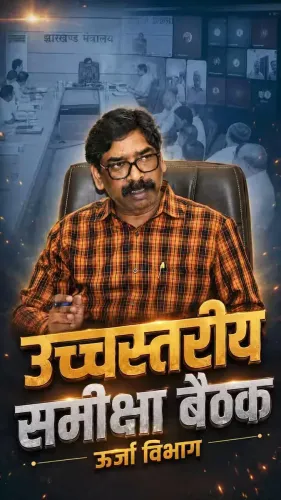
CM Hemant Soren Orders 24x7 Power Push in Jharkhand Review
Synopsis
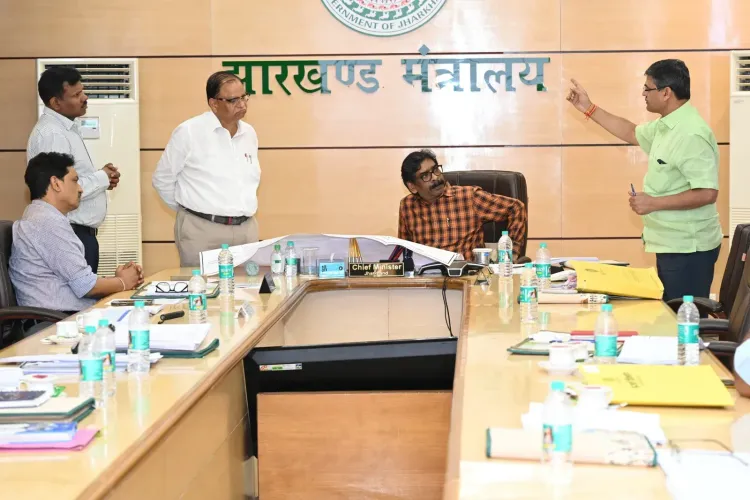
Jharkhand CM Hemant Soren chaired an electricity department review on 29 July 2026, issuing sweeping directives: uninterrupted 24x7 supply, a 10-15 year grid master plan, urgent staff recruitment, rooftop solar acceleration, smart metering, monopole transmission lines, and AI-driven departmental reform.
Key Takeaways
Zero-tolerance order: CM Soren declared no lapse in 24x7 power supply will be accepted, with transformer failures to be repaired within a fixed time window.
Long-range planning: The electricity department must draft and submit a master plan covering Jharkhand's power needs over the next 10 to 15 years .
Urgent recruitment: All pending posts — junior engineers, assistant engineers, and other essential staff — must be filled immediately.
Renewable push: Rooftop solar and state-wide solar installations are to be accelerated; rural generation is to be linked to the CMEGP scheme .
Infrastructure modernisation: Monopole transmission structures, smart grids, smart meters, and feasibility studies on reservoir-based energy storage were all directed.
Digital and AI reform: The department must study and submit a roadmap for integrating artificial intelligence and new technologies into its operations.
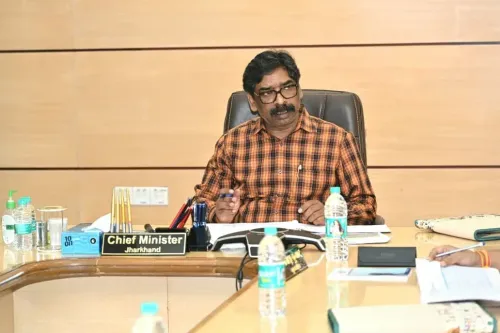
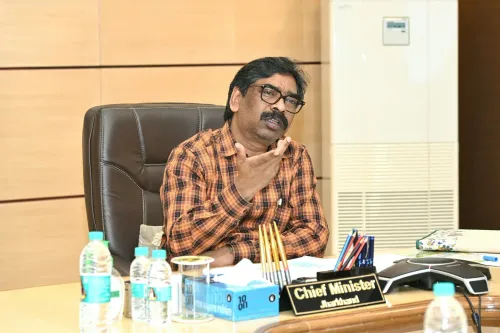
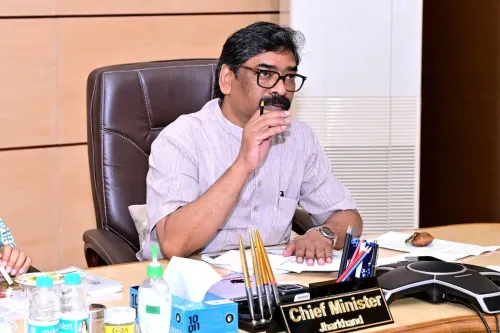
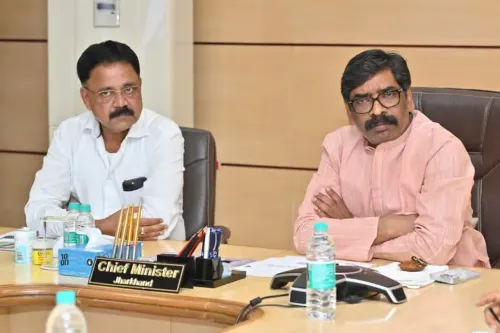
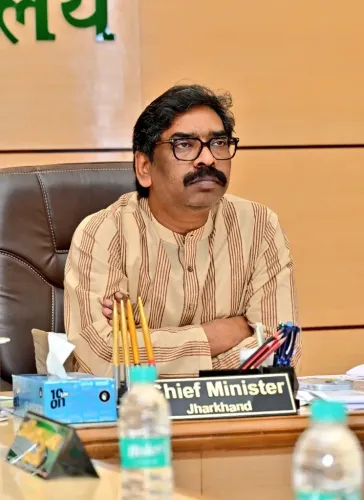
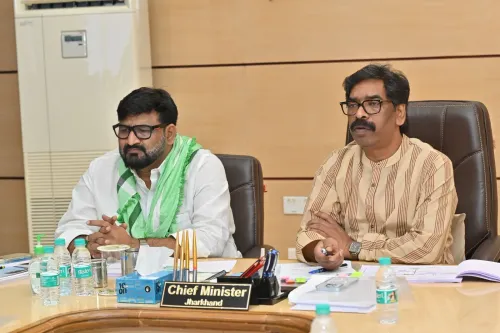
Zero tolerance for power cuts, a 10-to-15-year master plan, and an immediate recruitment blitz — Jharkhand Chief Minister Hemant Soren walked into a state electricity department review meeting on Wednesday, 29 July 2026, and walked out having handed officials one of the most detailed infrastructure mandates the department has received in recent years.
The zero-tolerance order on outages
Soren opened with a non-negotiable: electricity is a basic need, and any lapse in delivering uninterrupted supply to every resident of the state will not be tolerated. The directive, issued in Hindi, was blunt — 'कोई कोताही बर्दाश्त नहीं की जाएगी' ('not a single shortcoming will be accepted'). Officials were told to accelerate the installation of grids, transmission lines, power sub-stations, transformers, smart grids, and smart meters without delay.
Transformer failures drew particular fire. Soren told the department that reports of broken transformers in rural and urban areas must be resolved within a fixed time window. 'Such reports are unacceptable,' he said flatly.
A 10-15 year blueprint and the staffing gap
The Chief Minister directed the electricity department to draft and submit a long-range plan calibrated to Jharkhand's power demand over the next 10 to 15 years — a planning horizon that mirrors the approach recommended under India's 24x7 Power for All initiative, which set uninterrupted supply targets for states including Jharkhand in the mid-2010s.
Alongside infrastructure, Soren flagged a staffing vacuum. He ordered the department to urgently fill all pending vacancies — junior engineers (JE), assistant engineers (AE), and other essential posts — signalling that the grid upgrade cannot run on an understaffed engine.
Solar push, rural generation, and the CMEGP link
Rooftop solar and state-wide solar energy expansion were named as immediate priorities. The department was told to accelerate installation timelines and to submit a plan linking rural power generation opportunities to the CMEGP scheme — a state-level enterprise and livelihood programme — to create a dual dividend of energy access and local economic activity.
Feasibility studies were also ordered on energy generation and storage potential in Jharkhand's reservoirs and other natural sites, with reports to be submitted to the government. The state sits on significant water and land resources that have historically been under-leveraged for power generation.
Monopoles, street lights, and AI-driven reform
On infrastructure design, Soren pushed the department toward monopole structures for transmission lines — a modern approach that reduces land acquisition requirements significantly compared with conventional lattice towers. Urban street lighting was another target: officials were told to coordinate with municipal corporations and submit a plan for 100 per cent operational street lights across all city areas.
The final directive pointed at the future: study and submit a roadmap for integrating digital tools, artificial intelligence, and emerging technologies into departmental operations. Reform, Soren made clear, must keep pace with the times.
Feasibility reports, recruitment timelines, and long-range grid plans are now on the department's desk. The question is not whether Jharkhand needs this overhaul — it clearly does. The question is how fast the paperwork turns into power on the wire.
Point of View
Making future governments accountable to a published roadmap. Linking rural energy generation to the CMEGP livelihood scheme is a smart convergence play, but its success depends entirely on whether the staffing gaps Soren himself flagged can be closed quickly — an understaffed department cannot execute a decade-long infrastructure sprint.
NationPress
29 Jul 2026
Frequently Asked Questions
What did CM Hemant Soren direct in the electricity department review meeting?
Soren issued multiple directives on 29 July 2026 , including a zero-tolerance stance on power outages, a mandate to prepare a 10-15 year power plan, urgent filling of JE and AE vacancies, acceleration of rooftop solar, smart grid and smart meter installation, monopole transmission lines, and a study on AI-driven departmental reform.
What is the CMEGP scheme mentioned by Hemant Soren?
The CMEGP (Chief Minister's Employment Generation Programme) is a Jharkhand state scheme aimed at enterprise creation and livelihoods. Soren directed the electricity department to submit a plan linking rural power generation opportunities to this scheme.
Why is Jharkhand pushing for monopole transmission lines?
Monopole structures for transmission lines require significantly less land than conventional lattice towers. Soren directed the department to shift toward monopoles to reduce land acquisition needs while expanding the transmission network.
What is India's 24x7 Power for All initiative and how does it relate to Jharkhand?
Launched in the mid-2010s, India's 24x7 Power for All initiative set targets for uninterrupted electricity supply across all states, including Jharkhand . Soren's directives align directly with this national framework, demanding round-the-clock supply with no tolerance for gaps.
What renewable energy steps did Hemant Soren order for Jharkhand?
Soren ordered the acceleration of rooftop solar installations and broader solar energy expansion across the state. He also directed feasibility studies on energy generation and storage potential at reservoirs and other sites in Jharkhand .