CM Hemant Soren Reviews Jharkhand Irrigation Projects in Ranchi
Synopsis
Jharkhand CM Hemant Soren chaired a Water Resources Department review in Ranchi on 25 May 2026, directing officials to fast-track irrigation and pipeline drinking water projects using modern technology to boost farmer livelihoods across the state.
Key Takeaways
Hemant Soren chaired a Water Resources Department review meeting in Ranchi on 25 May 2026 .
The review covered irrigation schemes, lift irrigation projects , and pipeline-based drinking water supply initiatives.
Officials were directed to adopt newer technologies and complete projects without compromising quality.
Jharkhand's Chota Nagpur Plateau terrain makes lift irrigation critical, as traditional canal networks are limited.
The Pradhan Mantri Krishi Sinchayee Yojana (PMKSY) , launched in 2015 , forms part of the policy backdrop for these state-level efforts.
The Chief Minister directly linked project completion to improved livelihoods for the state's farming and rural communities.
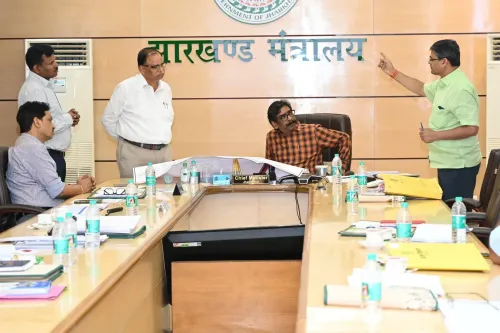
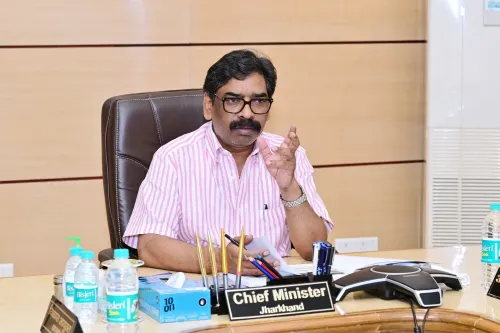
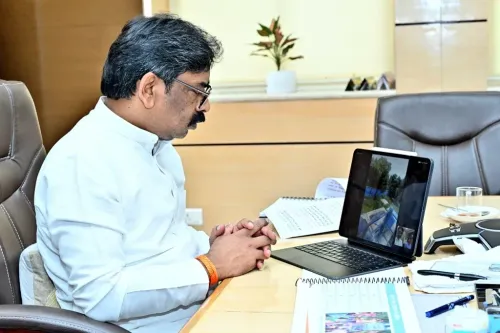
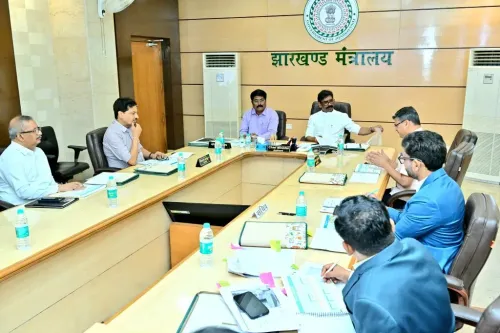
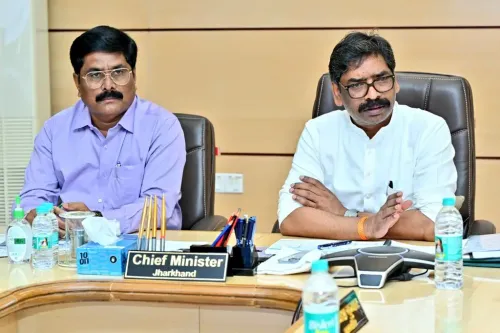
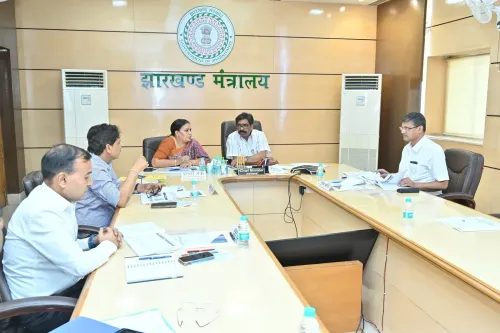
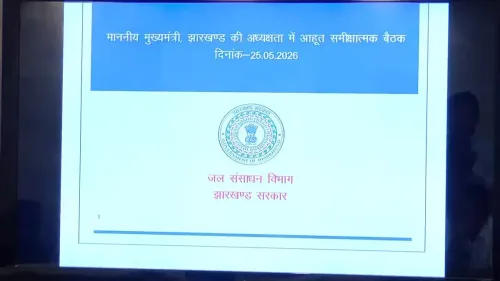
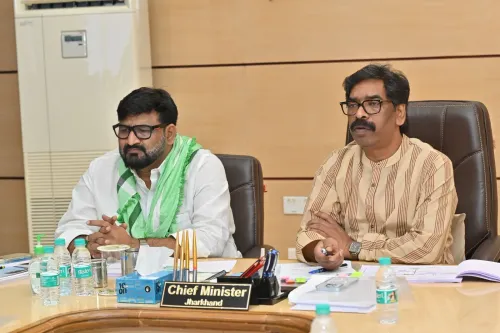
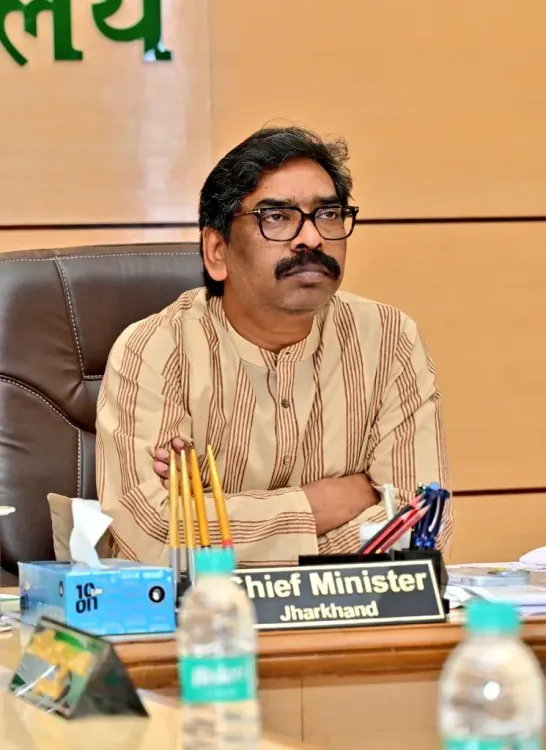
Jharkhand Chief Minister Hemant Soren on Monday, 25 May 2026, chaired a comprehensive review meeting of the Water Resources Department in Ranchi, directing officials to expedite irrigation and drinking water projects using modern technology while maintaining quality standards.
Context
At the meeting, CM Soren undertook a detailed assessment of various irrigation schemes, lift irrigation projects, and pipeline-based drinking water supply initiatives across the state. In his post, he stated — 'विभिन्न सिंचाई योजनाओं, लिफ्ट इरीगेशन परियोजनाओं, पाइपलाइन के माध्यम से पेयजलापूर्ति सुनिश्चित कराने आदि कार्यों की प्रगति की विस्तृत समीक्षा की' [a detailed review of the progress of various irrigation schemes, lift irrigation projects, and works to ensure drinking water supply through pipelines was conducted].
Officials were directed to leverage newer technologies to complete irrigation projects at the earliest, without compromising on quality. The meeting signals a push by the Jharkhand government to accelerate infrastructure delivery ahead of the upcoming agricultural season.
Policy Backdrop
Jharkhand, formed in 2000, sits largely on the Chota Nagpur Plateau, where traditional canal networks are limited and agriculture remains heavily dependent on seasonal rainfall. Lift irrigation — which pumps water from rivers and reservoirs to elevated fields — has been a key intervention in such terrain, supplementing gravity-fed canal systems.
The nationally launched Pradhan Mantri Krishi Sinchayee Yojana (PMKSY) of 2015 aimed to expand assured irrigation coverage and promote water-use efficiency, with implementation extending to Jharkhand. State governments in eastern India have consistently paired such central schemes with their own departmental reviews to drive project completion and introduce efficiency measures at the ground level.
Stakeholders and Impact
CM Soren explicitly linked the irrigation push to farmer welfare, stating in his post that 'इन सिंचाई परियोजनाओं की क्रांति से हम राज्य के हमारे मेहनती किसानों को सिंचाई की सुविधा देने का काम करेंगे जिससे उनकी आजीविका में भी बढ़ोतरी होगी' [the revolution brought about by these irrigation projects will provide our hardworking farmers in the state with irrigation facilities, which will also increase their livelihoods].
The primary beneficiaries are Jharkhand's farming and rural communities, particularly smallholder and tribal farmers who depend on rain-fed cultivation. Reliable irrigation access is widely recognised as a lever for improving crop yields, enabling double-cropping, and reducing income volatility in agrarian households. Pipeline-based drinking water supply, also reviewed at the meeting, addresses a parallel need for safe water access in rural areas.
What's Next
The Water Resources Department is now expected to act on the Chief Minister's directives, with subsequent departmental reviews likely to track timelines and technology adoption across individual lift irrigation and pipeline projects. State-level monitoring reports on project completion will be a key indicator of whether the acceleration drive translates into on-ground delivery.
With Jharkhand's farming calendar closely tied to the kharif sowing season, the pace of irrigation infrastructure completion in the coming months will directly determine how many farmers benefit from assured water access this cycle — and whether the government's stated goal of transforming rural livelihoods through irrigation gains measurable traction.
Point of View
Rather than just fund allocation, suggests a shift toward outcome-focused governance messaging. This sits within a broader pattern across eastern Indian states of using high-visibility review meetings to accelerate stalled infrastructure projects ahead of agricultural seasons. Whether the directives translate into measurable project completions will determine the political and developmental dividend the government can claim.
NationPress
10 Oct 2026
Frequently Asked Questions
What did Hemant Soren review in Ranchi on 25 May 2026?
CM Hemant Soren reviewed the progress of irrigation schemes, lift irrigation projects, and pipeline-based drinking water supply initiatives at a Water Resources Department meeting in Ranchi on 25 May 2026 .
What is lift irrigation and why is it important for Jharkhand?
Lift irrigation involves pumping water from rivers or reservoirs to elevated agricultural fields. It is especially important for Jharkhand because the state's Chota Nagpur Plateau terrain limits the reach of traditional gravity-fed canal networks, making mechanical water lifting essential for farmers in many areas.
How will Jharkhand's irrigation projects benefit farmers?
According to CM Soren , completing these irrigation projects will provide Jharkhand's farmers with assured water access, enabling more reliable cultivation and increasing their livelihoods — particularly for smallholder and tribal farming communities dependent on rain-fed agriculture.
What is PMKSY and how does it relate to Jharkhand's irrigation plans?
The Pradhan Mantri Krishi Sinchayee Yojana (PMKSY) , launched in 2015 , is a national scheme aimed at expanding assured irrigation and promoting water-use efficiency. Its implementation in Jharkhand forms part of the policy backdrop for the state government's ongoing irrigation infrastructure drive.
What instructions did CM Soren give to Water Resources Department officials?
CM Soren directed officials to make better use of new technologies to complete irrigation projects as quickly as possible while maintaining quality standards.