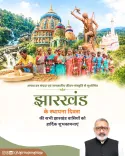
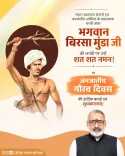
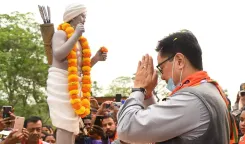
Nadda pays tribute to Birsa Munda on Janjatiya Gaurav Divas
Synopsis
On Janjatiya Gaurav Divas, 15 November, Union Health Minister J. P. Nadda paid tribute to Bhagwan Birsa Munda, honouring the tribal leader's Ulgulan revolt and his iconic fight for Jal, Jungle aur Zameen — water, forest, and land.
Key Takeaways
Union Health Minister J.
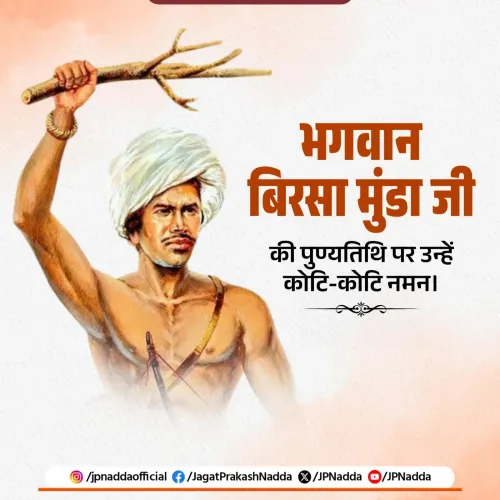
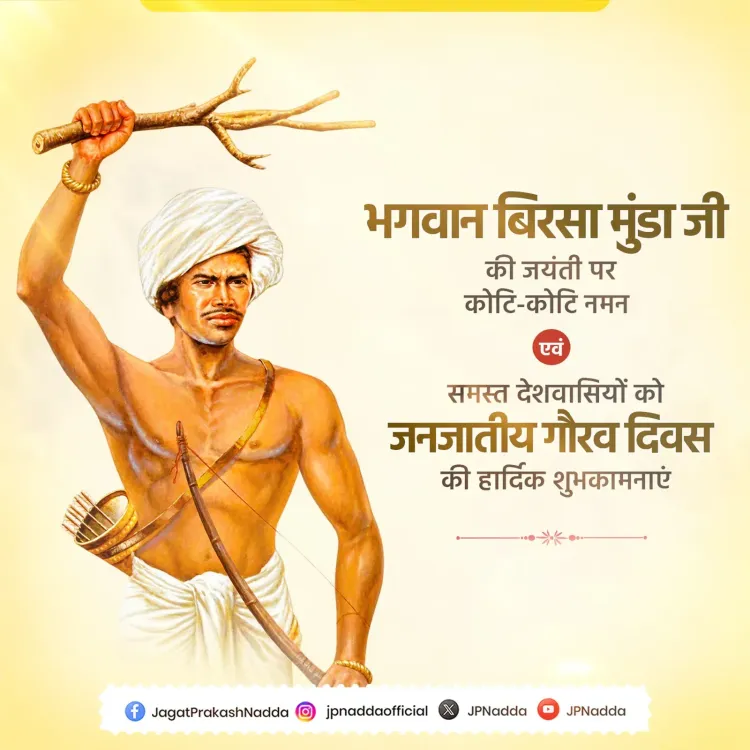
Nadda posted a Hindi tribute to Bhagwan Birsa Munda on 15 November 2026 , Janjatiya Gaurav Divas.
Nadda called Birsa Munda's life an 'unparalleled example of struggle against injustice' and invoked the Jal, Jungle aur Zameen slogan.
Birsa Munda was born on 15 November 1875 in present-day Jharkhand and led the Ulgulan revolt against British colonial rule before dying in Ranchi Jail in 1900 at age 25 .
The Government of India declared 15 November as Janjatiya Gaurav Divas in 2021 to honour tribal freedom fighters and their contributions to Indian history.
Birsa Munda is revered as 'Dharti Aaba' (Father of the Earth) across tribal communities in Jharkhand, Chhattisgarh, Odisha , and beyond.
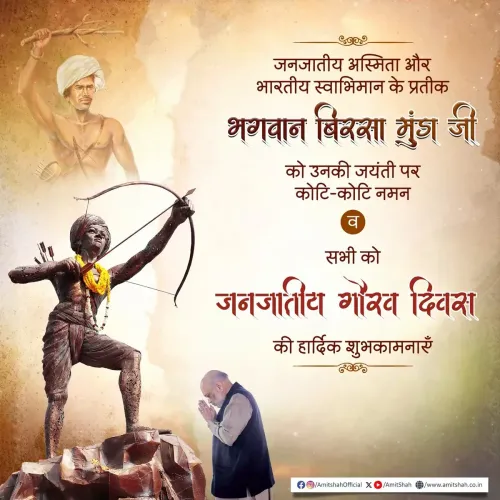
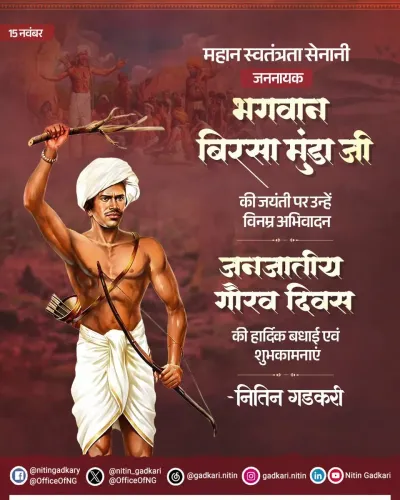
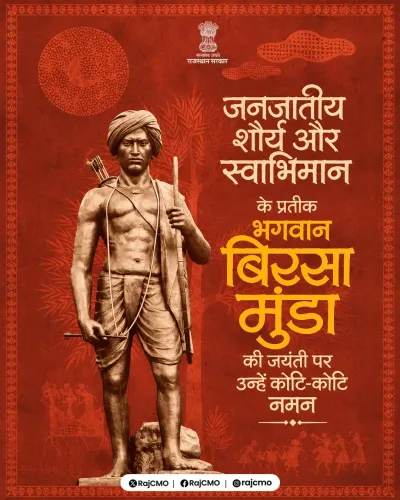
A young tribal fighter who took on the British Empire with nothing but conviction and a battle cry — Bhagwan Birsa Munda — turns 151 today, and India marks the moment as Janjatiya Gaurav Divas. Union Health Minister J. P. Nadda opened Sunday, 15 November 2026, with a heartfelt tribute on X, bowing in homage to the man tribal communities across the country revere as 'Dharti Aaba' — Father of the Earth.
Nadda's post, written in Hindi, offered 'kotish naman' (boundless salutations) to Birsa Munda and extended warm greetings to all Indians on the occasion of Janjatiya Gaurav Divas. He wrote that Birsa Munda's life is 'an unparalleled example of struggle against injustice and exploitation, indomitable courage, and the protection of tribal identity.' The post invoked the iconic slogan of the Munda uprising — 'Jal, Jungle aur Zameen' (water, forest and land) — calling Birsa Munda's fight for those rights a source of eternal inspiration for the nation.
Who was 'Dharti Aaba' and why the British feared him
Birsa Munda was born on 15 November 1875 in the Ulihatu village of what is today Jharkhand. By his early twenties he had launched the Ulgulan — meaning 'the great tumult' — a mass rebellion of Munda tribespeople against British land-grab policies and the feudal diku (outsider) landlord system that had displaced generations of forest-dwelling communities. The British colonial administration viewed him as a direct threat, arrested him, and he died in Ranchi Jail in June 1900, aged just 25. His brevity of life was matched only by the permanence of his legend.
How 15 November became a national day of tribal pride
In 2021, the Government of India formally declared 15 November as Janjatiya Gaurav Divas, institutionalising what tribal communities had long observed informally. The move was designed to honour not only Birsa Munda but the broader constellation of tribal freedom fighters and to bring indigenous heritage into the mainstream of India's historical memory. The day is now marked with cultural programmes, government events, and ministerial outreach across states with significant tribal populations — Jharkhand, Chhattisgarh, Odisha, Madhya Pradesh, and beyond.
Nadda's tribute and the BJP's tribal outreach
As BJP national president, Nadda's public homage carries both cultural and political weight. The party has invested heavily in tribal outreach, and Janjatiya Gaurav Divas has become a key date on its calendar. Senior ministers, chief ministers, and party functionaries across the country posted similar tributes, reinforcing the message that Birsa Munda's legacy belongs to the national mainstream — not just to Jharkhand's hills and forests.
Nadda's closing line — that Birsa Munda's sacrifice for the pride, culture, and self-respect of tribal society 'will always be inscribed in golden letters in Indian history' — echoed the register of a nation choosing to remember, loudly and officially, what colonial-era India tried to suppress.
One hundred and fifty-one years after his birth, 'Dharti Aaba' still moves governments, moves crowds, and moves a country still learning the full depth of its own story.
Point of View
Which has steadily built tribal outreach as a pillar of its electoral strategy in central and eastern India. Nadda's tribute — invoking Jal, Jungle aur Zameen and tribal self-respect — signals that the BJP continues to frame Birsa Munda not just as a regional icon but as a pan-national founding figure. The institutionalisation of the day in 2021 was a deliberate step to mainstream tribal history within the official national narrative, countering the perception that such heritage exists only at the margins. Whether this symbolic investment translates into durable policy gains for tribal communities — particularly around forest rights and land titles — remains the sharper, longer question.
NationPress
15 Nov 2026
Frequently Asked Questions
What is Janjatiya Gaurav Divas and why is it celebrated on 15 November?
Janjatiya Gaurav Divas is a national observance held every year on 15 November to mark the birth anniversary of tribal leader Bhagwan Birsa Munda and to honour the contributions of tribal communities to Indian history. The Government of India formally declared the day in 2021 .
Who was Bhagwan Birsa Munda?
Bhagwan Birsa Munda was a 19th-century Munda tribal leader born on 15 November 1875 in present-day Jharkhand . He led the Ulgulan revolt against British colonial rule and landlord exploitation, fighting for tribal rights over water, forests, and land. He died in Ranchi Jail in June 1900 , aged 25 .
What does 'Dharti Aaba' mean?
'Dharti Aaba' is a Munda-language honorific meaning 'Father of the Earth' , the title by which tribal communities across Jharkhand and central India revere Bhagwan Birsa Munda.
What was the Ulgulan movement?
The Ulgulan , meaning 'the great tumult,' was a mass uprising led by Birsa Munda in the late 1890s against British land policies and the feudal landlord system that had displaced Munda tribal communities from their ancestral forests in present-day Jharkhand .
What did J. P. Nadda say about Birsa Munda on Janjatiya Gaurav Divas 2026?
J. P. Nadda offered 'boundless salutations' to Birsa Munda, calling his life an unparalleled example of struggle against injustice and the protection of tribal identity. He specifically cited the fight for Jal, Jungle aur Zameen (water, forest, and land) and said Birsa Munda's sacrifice would be 'inscribed in golden letters in Indian history.'