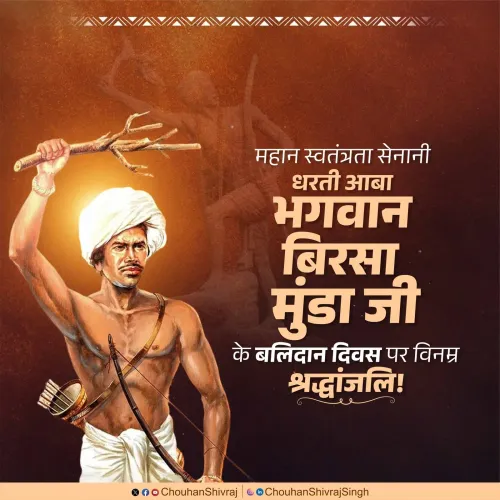
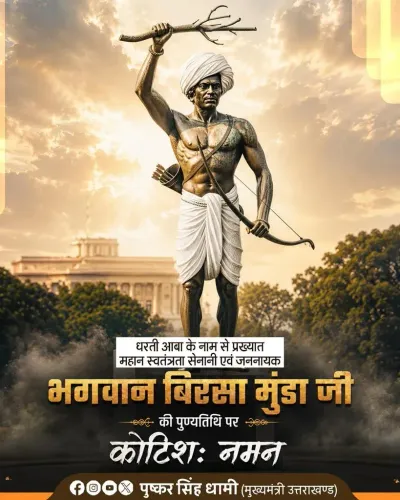
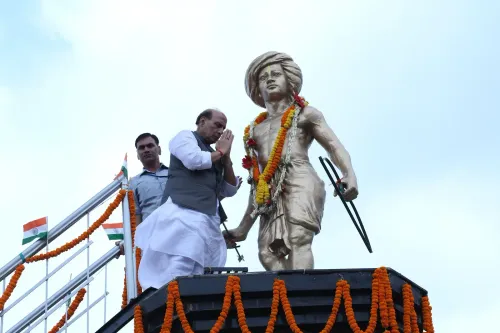
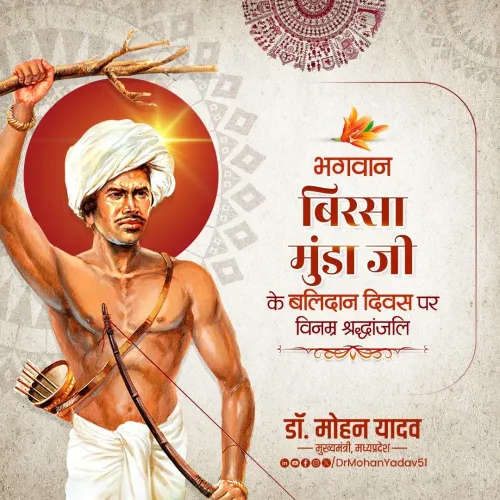
Nadda pays tribute to Birsa Munda on death anniversary
Synopsis
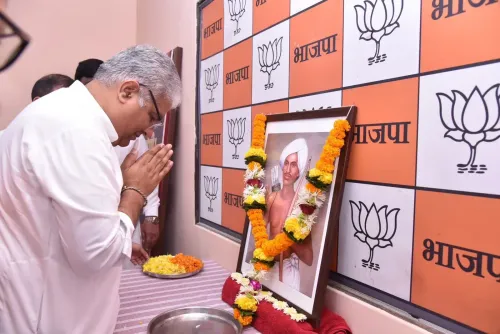
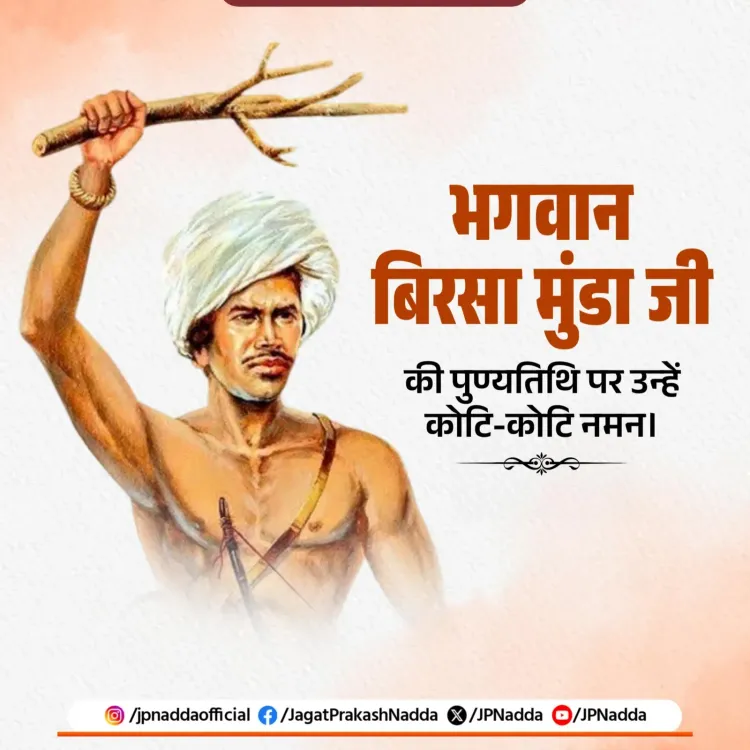
Union Health Minister J. P. Nadda on June 9, 2026, paid tribute to tribal icon Bhagwan Birsa Munda on his death anniversary, honouring the 'Dharti Aaba' as a symbol of tribal identity and the 'Jal, Jungle aur Zameen' movement against British colonial rule.
Key Takeaways
Nadda paid homage to Bhagwan Birsa Munda on his death anniversary on June 9, 2026 .
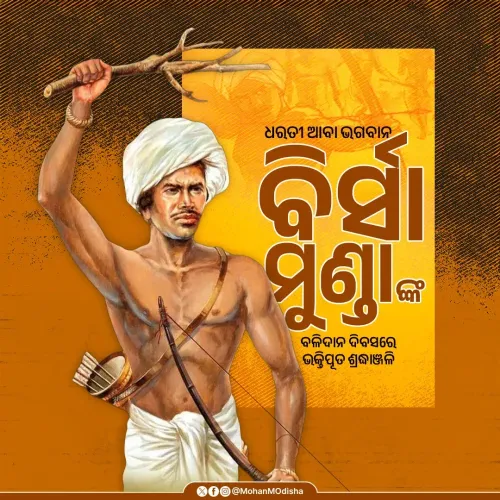
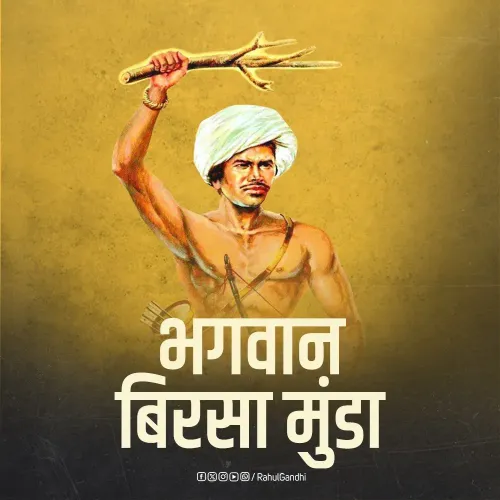
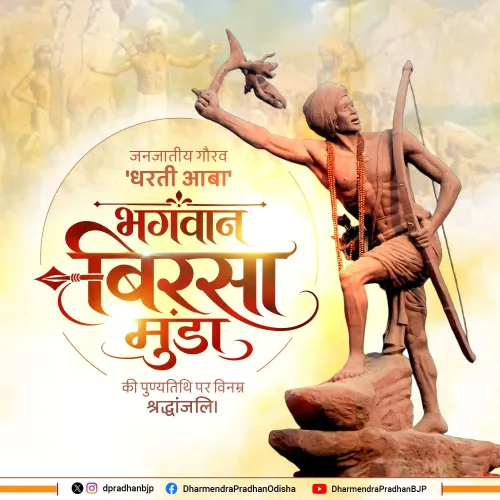
Birsa Munda , revered as Dharti Aaba (Father of the Earth), led the Ulgulan movement in present-day Jharkhand against British colonial rule in the late 1890s.
His movement centred on the demand for Jal, Jungle aur Zameen — protection of tribal rights over water, forests, and land.
The Government of India notified November 15 as Janjatiya Gaurav Diwas in 2021 to mark Munda's birth anniversary.
The tribute is part of a broader official effort to incorporate tribal icons into India's national freedom narrative and address historical marginalisation of Adivasi communities.
Union Health Minister J. P. Nadda on Tuesday, June 9, 2026, paid homage to tribal icon Bhagwan Birsa Munda on his death anniversary, honouring the 19th-century leader as an immortal warrior who instilled pride and self-respect in India's tribal communities.
Context
In his post, Nadda referred to Birsa Munda by the reverential title 'Dharti Aaba' (Father of the Earth) and described him as a symbol of tribal identity, indomitable struggle, and self-respect. He wrote: 'I offer countless salutations on the death anniversary of the immortal warrior Bhagwan Birsa Munda, who awakened in tribal society a sense of pride in its dignity and culture.'
Nadda further invoked the rallying cry of 'Jal, Jungle aur Zameen' (Water, Forest and Land), noting that Birsa Munda's mass movement against British colonial rule lit an enduring flame of tribal pride. He described Munda's courage and singular dedication to society and culture as a unique saga of sacrifice and valour for generations to come.
Policy Backdrop
The tribute comes against the backdrop of a sustained central-government effort to foreground tribal icons within India's national freedom narrative. In 2021, the Government of India notified November 15 — Birsa Munda's birth anniversary — as Janjatiya Gaurav Diwas (Tribal Pride Day), formally recognising tribal contributions to the independence movement.
Successive administrations have erected memorials, incorporated tribal history into school curricula, and instituted commemorative observances to address what many historians describe as the historical marginalisation of Adivasi participation in the freedom struggle. The Ulgulan (Great Tumult) movement led by Birsa Munda in the late 1890s in present-day Jharkhand remains one of the most studied tribal uprisings against British land and forest policies.
Stakeholders and Impact
The commemoration resonates most directly with India's tribal communities — numbering over 10 crore people across Scheduled Tribe categories — particularly those in Jharkhand, Odisha, Chhattisgarh, and other states with significant Adivasi populations. For these communities, Birsa Munda represents not only a historical resistance figure but a living cultural symbol tied to ongoing demands around forest rights and land records.
Official commemorations by senior ministers reinforce the government's messaging on tribal welfare and cultural preservation, intersecting with policy attention to Schedule V and Schedule VI areas, the Forest Rights Act, and development programmes for Particularly Vulnerable Tribal Groups (PVTGs).
What's Next
Policy watchers are tracking potential parliamentary action on amendments to the Forest Conservation Act and fresh notifications expanding the PVTG development programme ahead of the next Janjatiya Gaurav Diwas on November 15, 2026. How the government translates commemorative rhetoric into legislative and budgetary commitments for tribal communities will be closely watched by Adivasi rights groups and opposition parties alike.
Point of View
Which constitute a significant vote bloc in states like Jharkhand, Odisha, and Chhattisgarh. By invoking the 'Jal, Jungle aur Zameen' slogan — historically associated with Adivasi land-rights activism — the BJP signals ideological alignment with tribal aspirations even as its forest and land policies face scrutiny from rights groups. The institutionalisation of Janjatiya Gaurav Diwas in 2021 gave such tributes an official scaffolding, transforming individual gestures into a coordinated commemorative architecture. Whether this symbolic emphasis translates into substantive policy gains for Particularly Vulnerable Tribal Groups will determine its long-term political and social dividend.
NationPress
19 Sept 2026
Frequently Asked Questions
Who was Bhagwan Birsa Munda?
Bhagwan Birsa Munda was a 19th-century tribal leader from present-day Jharkhand who led the Ulgulan (Great Tumult) movement against British colonial rule to protect tribal rights over water, forests, and land. He died in British custody in 1900 and is revered as Dharti Aaba , or Father of the Earth.
When is Birsa Munda's death anniversary?
Birsa Munda died on June 9, 1900 , while in British custody. His death anniversary is observed on June 9 each year.
What is Janjatiya Gaurav Diwas?
Janjatiya Gaurav Diwas , or Tribal Pride Day, is observed on November 15 — the birth anniversary of Birsa Munda . The Government of India officially notified this day in 2021 to honour tribal contributions to India's freedom struggle.
What does 'Jal, Jungle aur Zameen' mean?
Jal, Jungle aur Zameen translates to 'Water, Forest and Land' and was the rallying cry of Birsa Munda's movement. It encapsulates the demand for tribal communities to retain rights over their natural resources against colonial and later commercial encroachment.
Why did J. P. Nadda pay tribute to Birsa Munda?
J. P. Nadda , Union Health Minister and BJP national president, posted a tribute on June 9, 2026 to mark Birsa Munda's death anniversary, honouring him as a symbol of tribal pride, cultural self-respect, and resistance to colonial rule.