Rahul Gandhi pays tribute to Birsa Munda on death anniversary
Synopsis
Congress leader Rahul Gandhi paid tribute to tribal icon Birsa Munda on his 9 June death anniversary, honouring the Ulgulan leader's fight for Adivasi control over water, forests and land — and signalling Congress's continued focus on tribal rights ahead of the monsoon session of Parliament.
Key Takeaways
Congress leader Rahul Gandhi posted a tribute to Birsa Munda on his death anniversary, 9 June 2026 .
Birsa Munda ( 1875–1900 ) led the Ulgulan uprising demanding Adivasi rights over jal, jungle aur zameen — water, forests and land — in the Chotanagpur region.
Gandhi described Munda as the 'great hero of Adivasi identity and rights' who dedicated his life to protecting tribal communities.
The tribute invokes the Forest Rights Act, 2006 policy context, amid ongoing disputes over land claims in Fifth-Schedule states.
Annual tributes to Birsa Munda are part of recurring political outreach to Adivasi voters in Jharkhand , Odisha , Chhattisgarh and Madhya Pradesh .
Parliamentary scrutiny of forest and land law amendments is expected in the upcoming monsoon session.
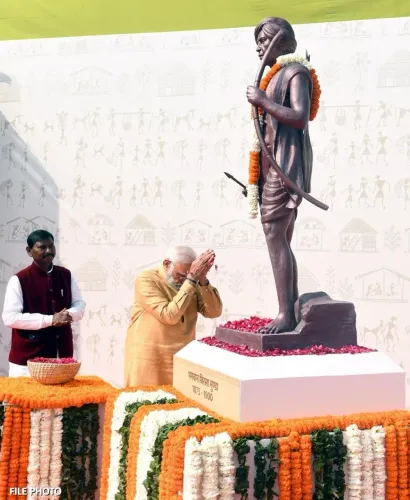
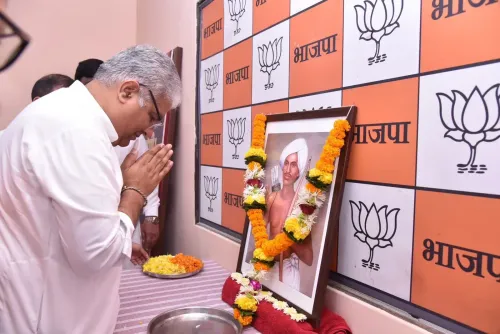
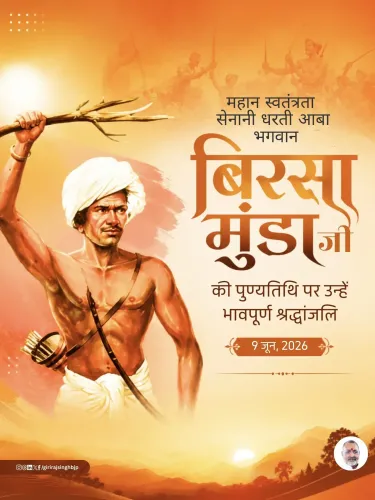
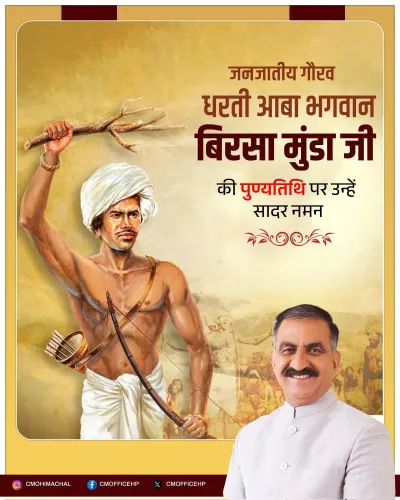
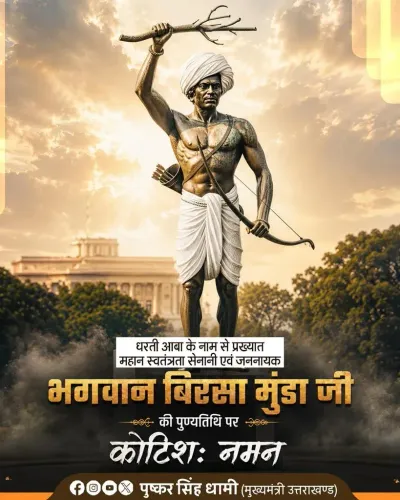
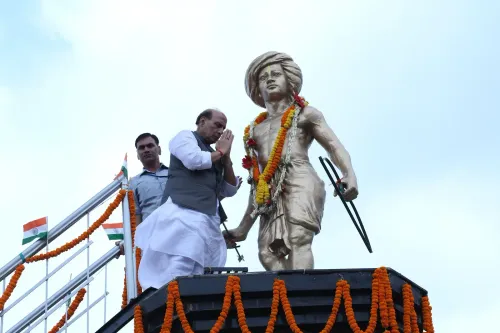
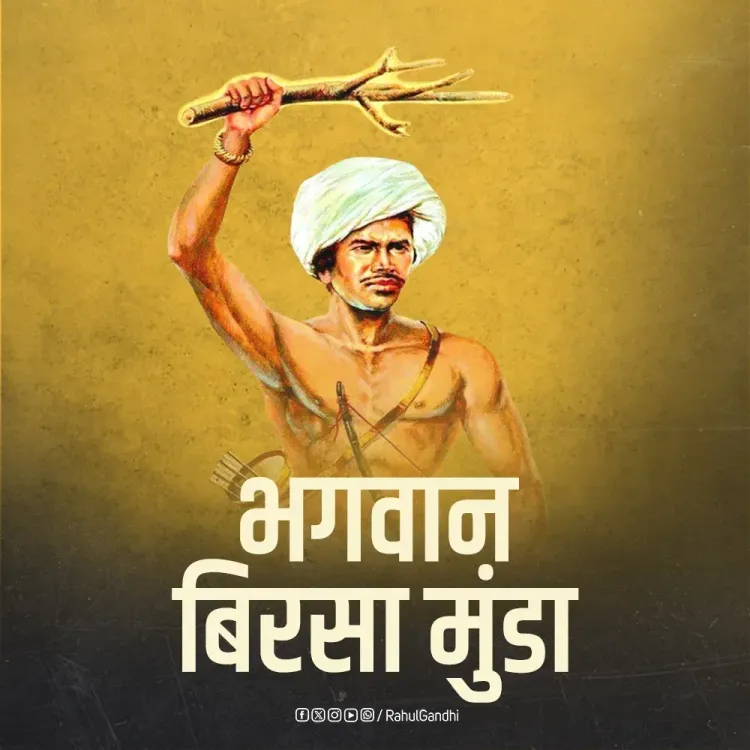
Congress leader Rahul Gandhi, Leader of the Opposition in the Lok Sabha, on Tuesday, 9 June 2026, paid homage to tribal icon Birsa Munda on his death anniversary, invoking the freedom fighter's lifelong struggle for Adivasi rights over land, forests and water.
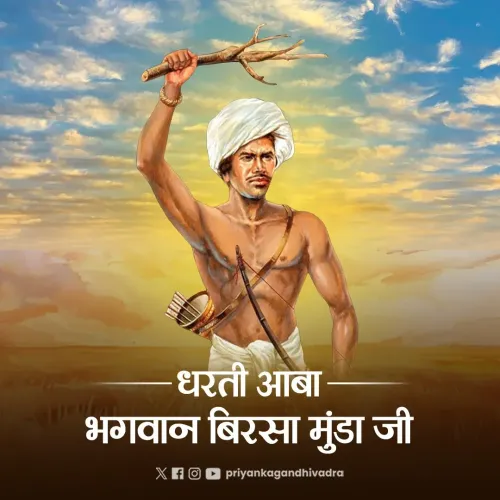
Posting in Hindi on X, Gandhi wrote: 'धरती आबा भगवान बिरसा मुंडा जी की पुण्यतिथि पर उन्हें विनम्र श्रद्धांजलि' — 'Humble tribute to Dharti Aaba Bhagwan Birsa Munda on his death anniversary.' He described Munda as the 'great hero of Adivasi identity and rights' who 'dedicated his entire life to protecting jal, jungle aur zameen' — water, forests and land.
Context
Birsa Munda (1875–1900) was a tribal leader from present-day Jharkhand who led the Ulgulan uprising of 1899–1900, demanding the restoration of Adivasi land rights and the expulsion of colonial-era encroachments from the Chotanagpur region. Revered as Dharti Aaba — 'Father of the Earth' — he remains a defining symbol of tribal assertion against dispossession. He died on 9 June 1900 in British custody at the age of 25.
Gandhi's tribute echoes the central slogan of the Ulgulan movement, jal-jungle-zameen, which has since become shorthand for Adivasi claims over natural resources and forest land across eastern and central India.
Policy Backdrop
The Scheduled Tribes and Other Traditional Forest Dwellers (Recognition of Forest Rights) Act, 2006 — commonly called the Forest Rights Act — was enacted to grant legal title to forest land cultivated or traditionally used by Adivasi communities. Implementation of the Act, including the disposal of individual and community land claims, has remained a contested issue across Fifth-Schedule states such as Jharkhand, Odisha, Chhattisgarh and Madhya Pradesh.
Opposition leaders, including Gandhi, have repeatedly invoked Birsa Munda's legacy to question land-acquisition policies, mining leases and forest-conservation rules that affect tribal areas. The Indian National Congress has positioned tribal rights as a key electoral plank in these states.
Stakeholders and Impact
Annual tributes to Birsa Munda on 9 June form part of sustained political outreach to Adivasi voters, who constitute a significant share of the electorate in Jharkhand, Odisha, Chhattisgarh and Madhya Pradesh. Tribal communities, forest dwellers and activists aligned with the jal-jungle-zameen cause closely watch how national parties translate such messaging into legislative action.
For the Congress, the tribute also reinforces its broader narrative around the rights of marginalised and historically dispossessed communities, a theme Gandhi has consistently foregrounded in parliamentary debates.
What's Next
Attention will now turn to the upcoming monsoon session of Parliament, where any proposed amendments to forest or land laws — and fresh data on Forest Rights Act claim disposals in tribal-majority districts — are expected to draw sharp scrutiny from opposition benches. Gandhi's tribute signals that the Congress intends to keep Adivasi land rights at the centre of its political agenda heading into that session.
Point of View
Arriving as debates over forest land rights and tribal welfare remain unresolved in several BJP-governed states. By anchoring the homage in the jal-jungle-zameen framework, the Congress is reinforcing its positioning as the custodian of Adivasi rights ahead of potential legislative battles in the monsoon session. The invocation of Munda's Ulgulan legacy also serves a longer electoral purpose — consolidating tribal voter sentiment in states where the Congress is seeking to rebuild its base. The tribute fits a broader pattern of the opposition using cultural and historical memory to frame contemporary policy disputes.
NationPress
24 Oct 2026
Frequently Asked Questions
Who was Birsa Munda and why is he remembered?
Birsa Munda ( 1875–1900 ) was a tribal leader from present-day Jharkhand who led the Ulgulan uprising of 1899–1900 , demanding Adivasi control over land, forests and water against British colonial encroachment. He is revered as Dharti Aaba — 'Father of the Earth' — and is a central symbol of tribal identity and resistance in India.
When is Birsa Munda's death anniversary?
Birsa Munda died on 9 June 1900 in British custody in Ranchi , at the age of 25 . His death anniversary is observed on 9 June each year.
What does jal jungle zameen mean?
Jal, jungle aur zameen — 'water, forests and land' — is the central slogan of Adivasi rights movements in India, originating in the demands of the Ulgulan uprising led by Birsa Munda . It refers to the claim of tribal communities to control and protect their traditional natural resources.
What is the Forest Rights Act and how does it relate to Birsa Munda?
The Forest Rights Act, 2006 recognises the rights of Scheduled Tribes and traditional forest dwellers over forest land and resources. It is seen as a legislative response to the historical dispossession that figures like Birsa Munda fought against, though its implementation — particularly the disposal of land claims — remains contested across tribal-majority states.
Why do politicians pay tribute to Birsa Munda on 9 June?
9 June marks the death anniversary of Birsa Munda , making it a significant occasion for political parties to reaffirm their commitment to Adivasi rights. Tributes on this date are part of sustained outreach to tribal voters in states such as Jharkhand , Odisha , Chhattisgarh and Madhya Pradesh , where Adivasi communities form a key electoral constituency.