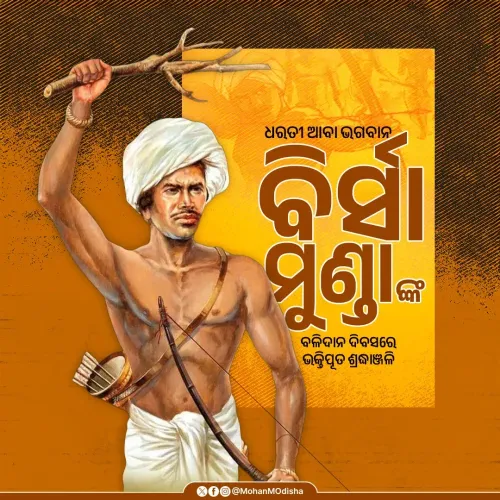
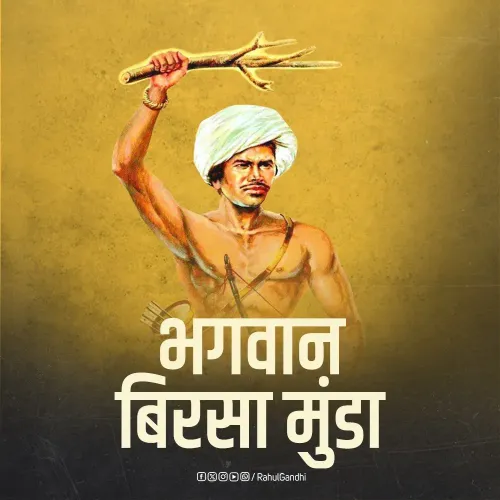
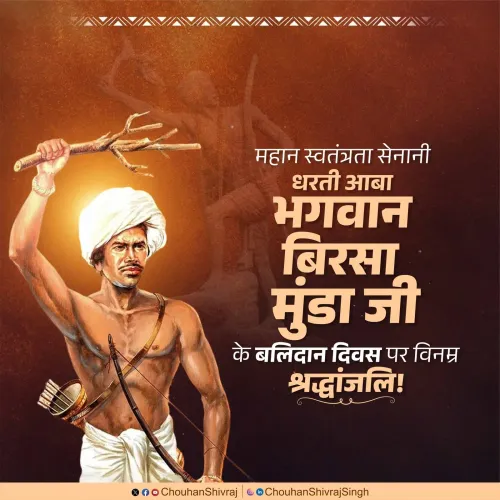
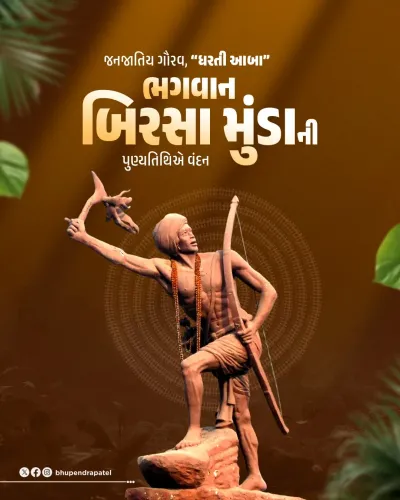
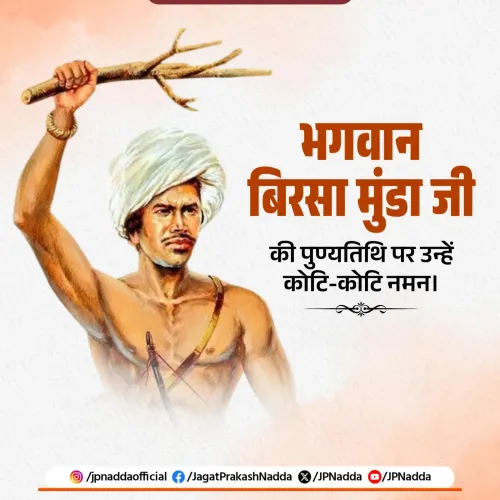
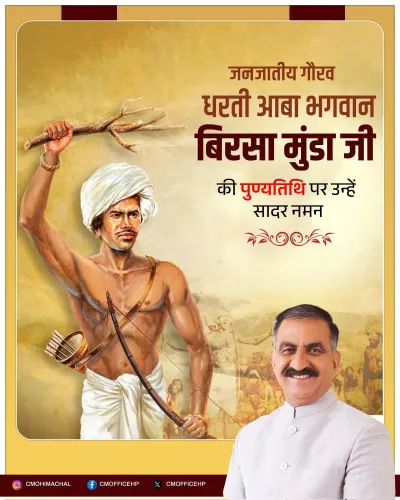
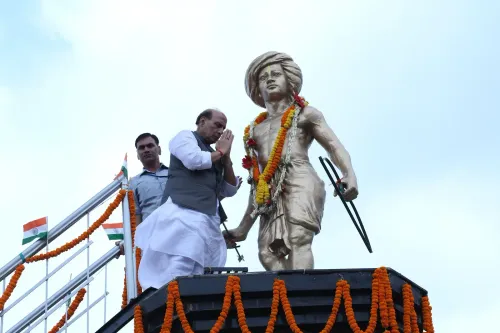
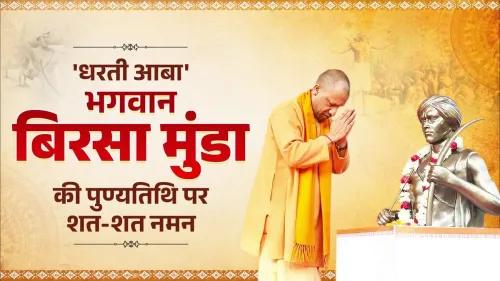
CM Dhami Pays Tribute to Birsa Munda on Death Anniversary
Synopsis
Uttarakhand CM Pushkar Singh Dhami on 9 June 2026 honoured tribal icon Birsa Munda on his death anniversary, invoking the jal-jungle-zameen legacy and pledging his government's full commitment to the development, cultural preservation, and rights of the state's Scheduled Tribe communities.
Key Takeaways
Uttarakhand CM Pushkar Singh Dhami paid tribute to Birsa Munda on his death anniversary, 9 June 2026 .
Munda, known as 'Dharti Aaba' , led the Ulgulan movement against British land and forest alienation in the late 19th century.
Dhami invoked the jal, jungle aur zameen (water, forest, land) framework central to Adivasi rights discourse.
The CM pledged 'all-round development' and cultural preservation for Uttarakhand's Scheduled Tribe communities, including the Bhotia , Jaunsari , Tharu , and Buksa .
The tribute aligns with a broader pattern of BJP -led state governments linking Birsa Munda commemorations to ongoing tribal welfare commitments.
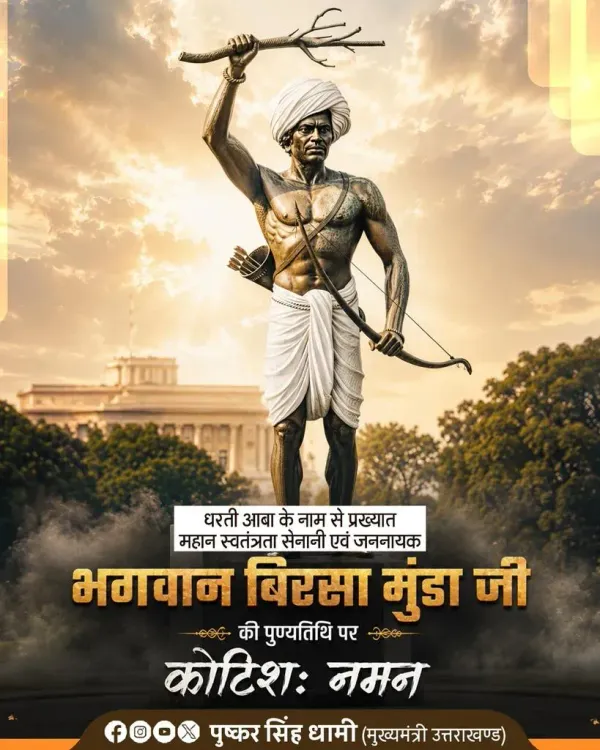
Uttarakhand Chief Minister Pushkar Singh Dhami on Tuesday, 9 June 2026 paid tribute to tribal icon Birsa Munda on his death anniversary, reaffirming his government's commitment to the holistic development, cultural preservation, and rights of tribal communities across Uttarakhand.
Context
Birsa Munda (1875–1900), reverently called 'Dharti Aaba' ('Father of the Earth'), was a Munda tribal leader from the Chotanagpur region who led the Ulgulan movement — a fierce uprising against British land alienation and forest restrictions in the late nineteenth century. His death anniversary falls on 9 June, the date he died in 1900 while in British custody. CM Dhami's post offered 'kotish naman' — 'reverence in crores' — to Munda's memory.
In his post, Dhami wrote that Munda's 'struggle and sacrifice for the protection of jal, jungle aur zameen [water, forest and land], the rights of the Adivasi community, and the preservation of cultural identity will inspire the people of this country for centuries.' The tribute directly invokes the three-word rallying cry that remains central to Adivasi rights discourse in India.
Policy Backdrop
The Scheduled Tribes and Other Traditional Forest Dwellers (Recognition of Forest Rights) Act, 2006 remains the key statutory framework through which individual and community rights over forest land and resources — the very terrain Birsa Munda fought for — are formally recognised. Uttarakhand's Scheduled Tribe population includes communities such as the Bhotia, Jaunsari, Tharu, and Buksa, for whom the state government implements targeted welfare and cultural programmes.
CM Dhami stated that his government is working 'with full commitment' to imbibe Munda's ideals while pursuing 'all-round development' (sarvangeen vikas) of the state's tribal communities alongside protection of their 'glorious cultural heritage' and rights. The BJP-led state government has consistently linked public tributes to Birsa Munda with its broader tribal welfare agenda, a pattern observed across several BJP-governed states.
Stakeholders and Impact
Tribal communities — including the Scheduled Tribes of Uttarakhand — are the primary stakeholders of the policy commitments invoked in the tribute. Adivasi groups across India observe 9 June as a day of remembrance and political assertion, making official tributes from state governments a significant signal of administrative intent.
The invocation of jal, jungle aur zameen carries particular resonance in a Himalayan state where forest rights, land access, and river-dependent livelihoods are live issues for hill-dwelling tribal populations. Cultural preservation programmes — including documentation of indigenous languages, folk traditions, and heritage sites — form part of the state's stated commitments to these communities.
What's Next
Observers will watch for concrete follow-through in the form of Uttarakhand's 2026-27 budget allocations for tribal welfare, specific scheme guidelines for tribal hamlets, and the state tribal welfare department's annual report. The broader national conversation around Adivasi rights — spanning forest land titles, educational access, and cultural autonomy — is likely to intensify as the political season progresses.
As India continues to debate the implementation gap between statutory tribal rights and ground-level outcomes, statements such as CM Dhami's serve as markers against which future policy delivery will be measured.
Point of View
It anchors the BJP's Adivasi outreach narrative at the state level. This fits a deliberate pattern in which the party has elevated Birsa Munda — culminating in the declaration of his birth anniversary as 'Janjatiya Gaurav Diwas' at the national level — to consolidate support among Scheduled Tribe voters. For Uttarakhand specifically, where hill-dwelling tribal communities face acute forest-rights and livelihood pressures, the gap between such pledges and measurable policy delivery will be the real test. Analysts will watch whether the 2026-27 state budget translates this rhetoric into targeted allocations.
NationPress
24 Oct 2026
Frequently Asked Questions
Why is 9 June observed as Birsa Munda's death anniversary?
Birsa Munda died on 9 June 1900 while in British custody at Ranchi jail, making the date a day of remembrance for Adivasi communities across India who honour his legacy of resistance.
Who was Birsa Munda and why is he called Dharti Aaba?
Birsa Munda (1875-1900) was a Munda tribal leader from the Chotanagpur region who led the Ulgulan movement against British land alienation and forest restrictions. He is called 'Dharti Aaba' — Father of the Earth — in recognition of his fight to protect Adivasi land and forest rights.
What does jal jungle zameen mean in the context of Adivasi rights?
Jal jungle zameen — water, forest, land — is a rallying phrase for Adivasi rights movements in India, asserting that tribal communities have historical and statutory claims over natural resources in their traditional territories, as recognised under the Forest Rights Act, 2006.
Which Scheduled Tribe communities live in Uttarakhand?
Uttarakhand's Scheduled Tribe population includes the Bhotia, Jaunsari, Tharu, and Buksa communities, for whom the state government implements targeted welfare, land-rights, and cultural preservation programmes.
What has the Uttarakhand government promised for tribal communities?
CM Pushkar Singh Dhami has stated his government is committed to the holistic development, cultural heritage preservation, and rights protection of the state's tribal communities, though specific scheme details and budget allocations for 2026-27 are yet to be formally announced.