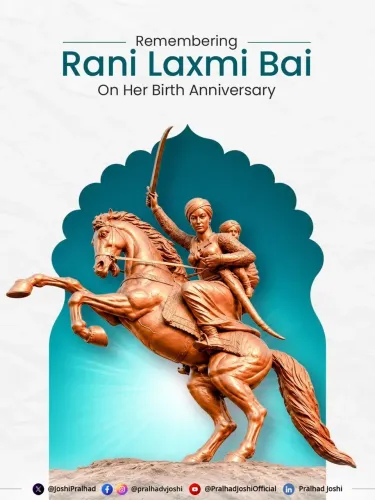
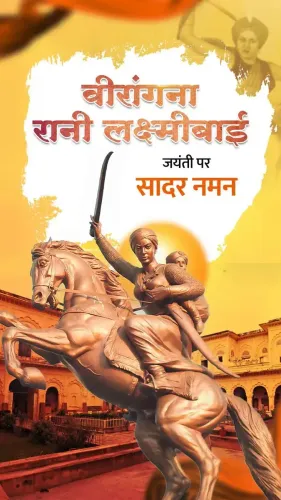
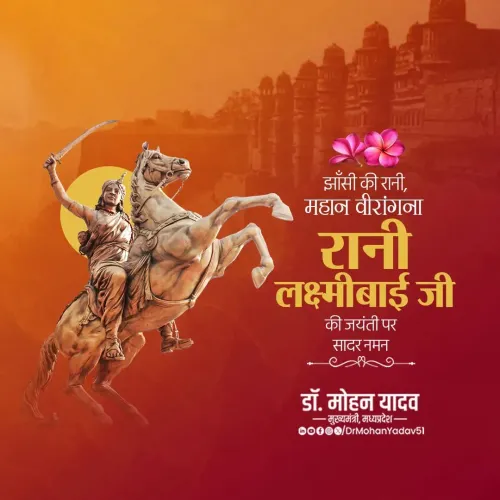
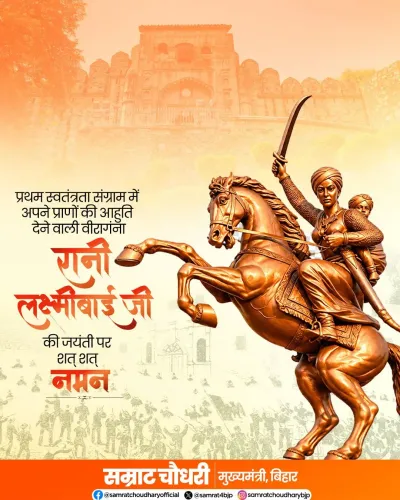
Nadda pays tribute to Rani Lakshmibai on her birth anniversary
Synopsis
Union Health Minister and BJP national president J. P. Nadda on November 19 honoured Rani Lakshmibai on her birth anniversary, calling her indomitable courage and sacrifice in the 1857 uprising a timeless inspiration for all Indians.
Key Takeaways
Nadda , Union Health Minister and BJP national president, posted a tribute to Rani Lakshmibai on her birth anniversary, November 19, 2026 .
Nadda praised her 'indomitable courage, valour, and patriotism' in the 1857 Swatantrata Sangram against British rule.
Rani Lakshmibai, born November 19, 1828 , led Jhansi's forces against the East India Company and died in battle in 1858 .
The 1857 uprising is widely regarded as India's first war of independence against colonial rule.
Annual tributes to Rani Lakshmibai on November 19 are observed across India, with major commemorations in Jhansi, Uttar Pradesh .
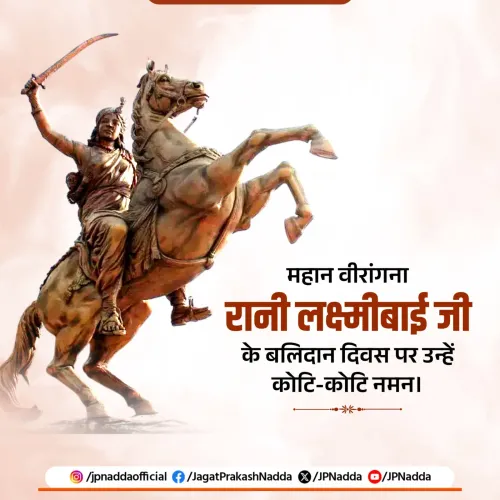
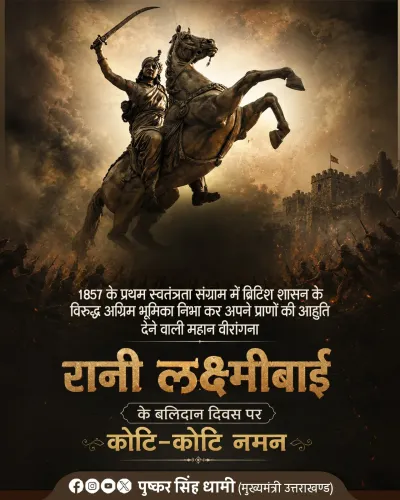
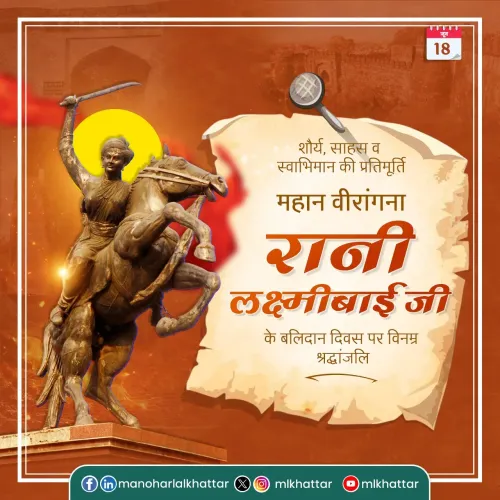
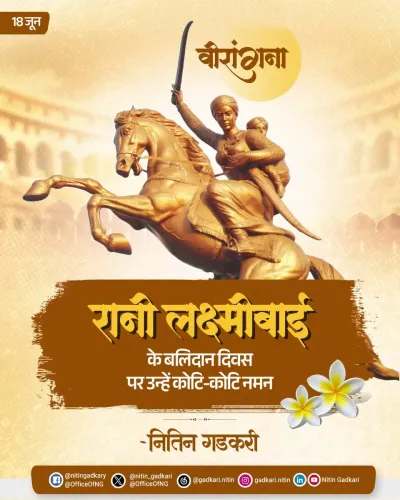
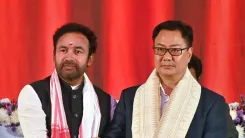
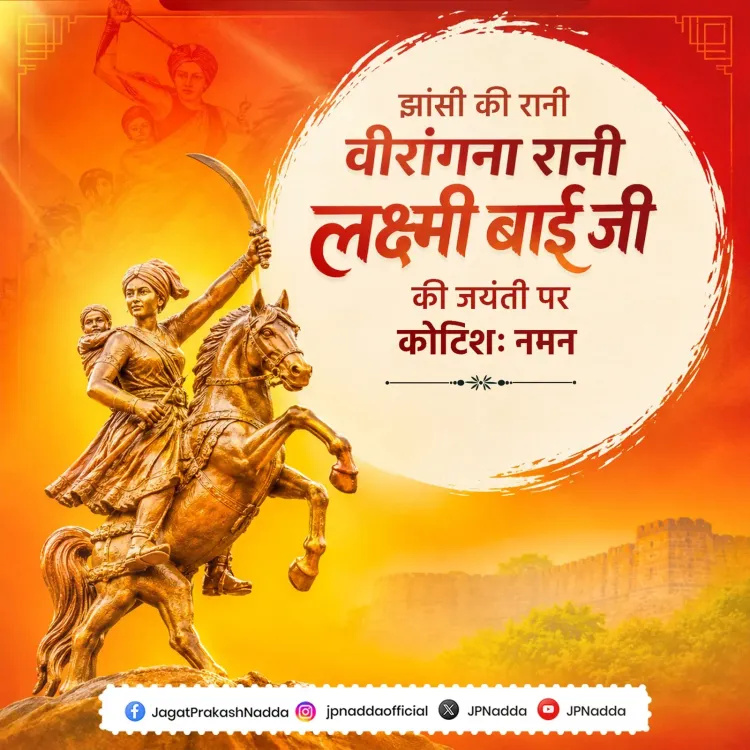
On the birth anniversary of one of India's most fearless freedom fighters, Union Health Minister J. P. Nadda offered his reverence to Rani Lakshmibai of Jhansi on Thursday, November 19, 2026, honouring her indomitable courage and sacrifice in the 1857 uprising against British rule.
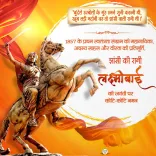
Nadda wrote in Hindi, 'स्वाधीनता संग्राम में अदम्य साहस, वीरता और राष्ट्रभक्ति का परिचय देने वाली महान वीरांगना रानी लक्ष्मीबाई जी की जयंती पर उन्हें कोटिशः नमन करता हूँ' — 'On the birth anniversary of the great warrior queen Rani Lakshmibai, who exemplified indomitable courage, valour, and patriotism in the freedom struggle, I bow to her a millionfold.' He added that her immortal sacrifice for the motherland would remain a source of inspiration for generations of Indians.
The warrior queen who refused to surrender Jhansi
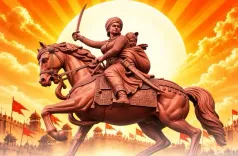
Rani Lakshmibai, born November 19, 1828, became the Rani of Jhansi and emerged as one of the most iconic commanders of the 1857 Swatantrata Sangram — the widespread armed uprising against the East India Company that is widely regarded as India's first war of independence. When British authorities sought to annex Jhansi under the Doctrine of Lapse, she famously refused to yield and led her forces in direct combat. She died in battle in 1858, sword in hand, ensuring her place in India's national memory as an emblem of unyielding resistance.
November 19 commemorations — from Jhansi to New Delhi
Every year on November 19, her birth anniversary draws formal tributes from political leaders across the spectrum — a rare moment of near-unanimous national reverence. The city of Jhansi in Uttar Pradesh, where she ruled and fought, holds commemorations at sites connected to her legacy. Nadda's tribute fits this annual tradition, with the BJP national president amplifying the themes of courage, anti-colonial struggle, and national devotion that Rani Lakshmibai has come to personify in India's public imagination. Her immortal line, as remembered in popular culture — 'Main apni Jhansi nahin doongi' ('I shall not give up my Jhansi') — still resonates as a rallying cry for national pride.
Point of View
Cutting across party lines but carrying particular resonance for the BJP, which has long foregrounded anti-colonial heritage in its national narrative. For J. P. Nadda — simultaneously the ruling party's national president and a Union minister — the annual jayanti post is both a cultural obligation and a soft assertion of ideological identity. The framing of Rani Lakshmibai as an eternal source of inspiration, rather than a purely historical figure, reflects a broader political project of keeping the memory of colonial-era sacrifice active in everyday civic consciousness. Such tributes also reinforce the BJP's effort to claim a wide arc of India's independence history, from 1857 all the way to 1947.
NationPress
19 Nov 2026
Frequently Asked Questions
When is Rani Lakshmibai's birth anniversary?
Rani Lakshmibai was born on November 19, 1828 , and her birth anniversary is observed every year on November 19 with tributes and commemorations across India, especially in Jhansi, Uttar Pradesh .
What did J. P. Nadda say about Rani Lakshmibai?
J. P. Nadda paid tribute to Rani Lakshmibai on her birth anniversary, saying she exemplified indomitable courage, valour, and patriotism in the 1857 freedom struggle, and that her immortal sacrifice for the motherland would inspire generations of Indians.
What was Rani Lakshmibai's role in the 1857 revolt?
Rani Lakshmibai of Jhansi was one of the foremost commanders of the 1857 Swatantrata Sangram against the East India Company. She refused to surrender Jhansi and led her forces in direct battle, dying in combat in 1858.
Why is the 1857 revolt important in Indian history?
The 1857 Swatantrata Sangram was a widespread armed uprising against East India Company rule across large parts of India and is widely regarded as the country's first war of independence against British colonial power.
Where are the main commemorations of Rani Lakshmibai held?
The main annual commemorations are held in Jhansi, Uttar Pradesh , the city where Rani Lakshmibai ruled and fought. Political leaders and citizens across India also observe the day with tributes and public events.