Nadda marks Samvidhan Hatya Diwas, slams Congress over Emergency
Synopsis
On the 51st anniversary of the 1975 Emergency, Union Health Minister J. P. Nadda marked Samvidhan Hatya Diwas by accusing Congress of throttling democracy — citing the 42nd Constitutional Amendment that extended elected tenures from five to six years and curtailed judicial review.
Key Takeaways
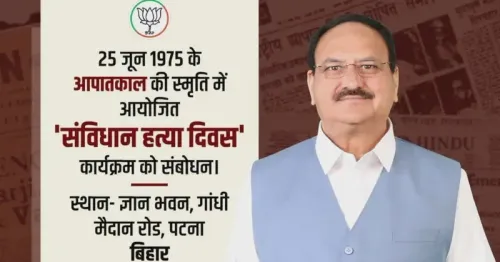
Nadda posted on 25 June 2026 marking Samvidhan Hatya Diwas , the BJP's annual commemoration of the 1975 Emergency.
He accused Congress of bringing the 42nd Constitutional Amendment in 1976 during the Emergency to extend elected representatives' terms from 5 to 6 years .
Nadda alleged that Congress enacted laws preventing courts from acting against those in power, amounting to an attack on judicial independence.
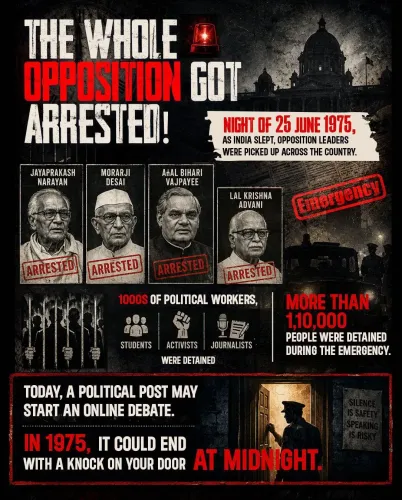
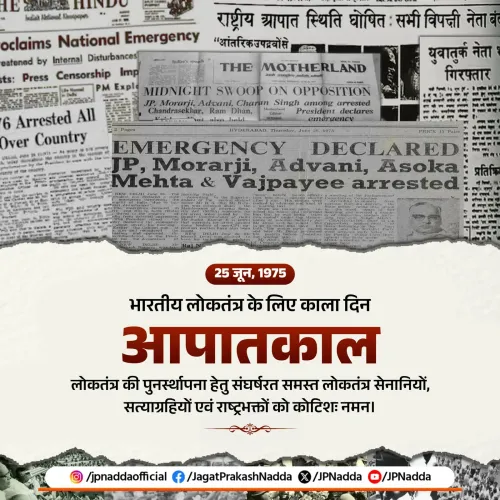
The Emergency was declared on 25 June 1975 under Article 352 by Prime Minister Indira Gandhi and lasted until March 1977 .
The 42nd Amendment's extension of legislative terms was later reversed by the 44th Amendment in 1978 after the Emergency ended.
The hashtag #SamvidhanHatyaDiwas is part of a sustained BJP campaign to mark this date as a symbol of democratic erosion under Congress.
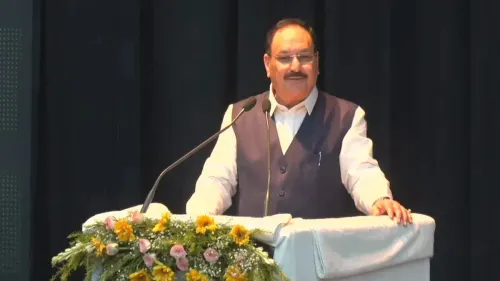
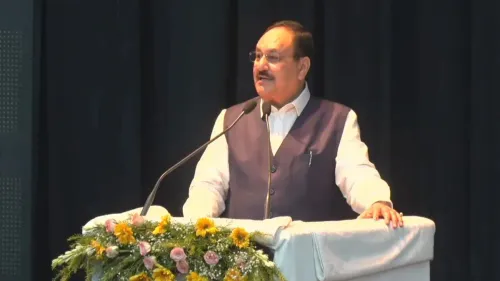
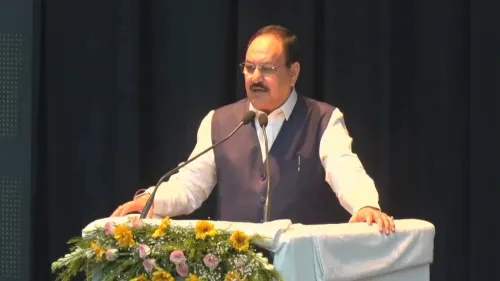
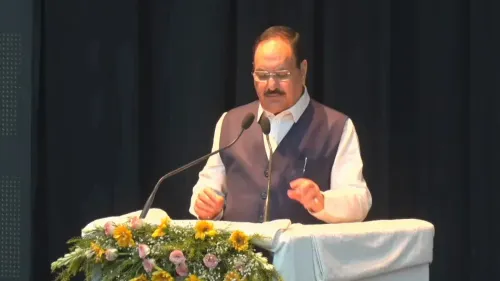
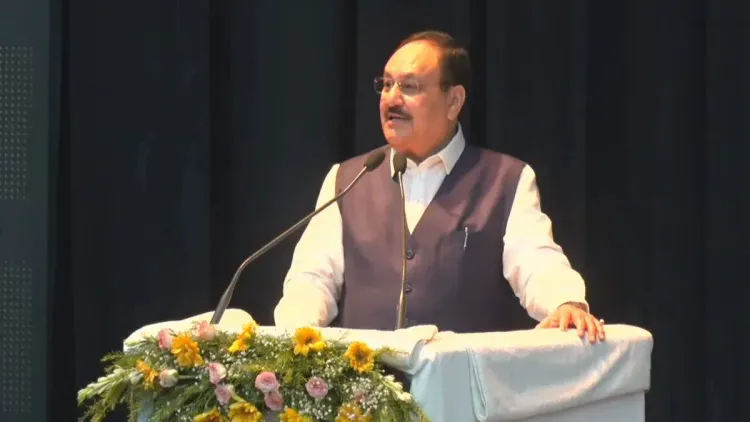
Union Health Minister J. P. Nadda on Thursday, 25 June 2026 marked Samvidhan Hatya Diwas by attacking the Indian National Congress over its actions during the 1975–77 Emergency, accusing the party of strangling democracy by extending elected representatives' tenures and shielding itself from judicial scrutiny through a constitutional amendment.
Context
Nadda's post, shared in Hindi on X, directly invokes the 42nd Constitutional Amendment of 1976, enacted while the Emergency was in force. He stated: 'aapatkaal ke dauran 42 vaan samvaidhanik sanshodhan lekar aaye' ('During the Emergency, they brought the 42nd Constitutional Amendment') and noted that the term of elected representatives was extended from five years to six years. He further alleged that a law was enacted ensuring courts could not act against those in power, and concluded that Congress openly throttled democracy.
The 25th of June marks the anniversary of the Emergency declared in 1975 under Article 352 of the Constitution by then Prime Minister Indira Gandhi, citing internal disturbance. The period lasted until March 1977 and saw the suspension of fundamental rights and curtailment of civil liberties.
Policy Backdrop
The 42nd Constitutional Amendment Act, 1976 — often called the 'Mini Constitution' — was one of the most sweeping amendments in India's constitutional history. Among its provisions, it extended the term of the Lok Sabha and state legislative assemblies from five to six years, a change later reversed by the 44th Amendment in 1978 after the Emergency ended.
The amendment also curtailed the power of courts to strike down certain laws by placing them in the Ninth Schedule and restricting judicial review in specific domains, a provision that has remained a subject of legal and constitutional debate. These measures have long been cited by critics as instruments used by the ruling party of the time to insulate itself from accountability.
Stakeholders and Impact
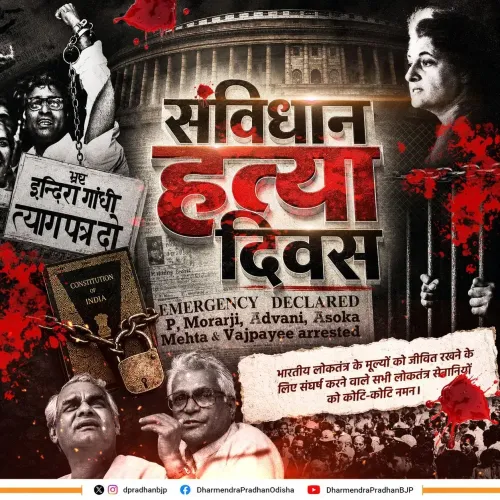
BJP leaders have observed 25 June as Samvidhan Hatya Diwas — loosely translated as 'Constitution Murder Day' — annually, using the occasion to frame the Emergency as the defining example of democratic backsliding in independent India. The hashtag #SamvidhanHatyaDiwas anchors the party's messaging on this date.
The Congress party and its allies typically contest this framing, arguing that constitutional and democratic institutions were subsequently restored and that the Emergency is a closed historical chapter. Responses from Congress leadership are expected, as the party faces recurring political pressure on this anniversary each year.
The judiciary and constitutional scholars remain key stakeholders in the ongoing debate over the limits of parliamentary power to amend fundamental rights — a question the Emergency and the 42nd Amendment brought into sharp relief.
What's Next
With Samvidhan Hatya Diwas now an established date in the BJP's political calendar, similar commemorations and statements from party leaders across the country are expected throughout the day. Parliamentary discussions on constitutional history and amendment procedures may follow, particularly if the opposition chooses to respond formally.
The broader contest over the narrative of the Emergency — who defended the Constitution and who undermined it — is likely to intensify as both parties position themselves ahead of future electoral cycles, with the 1975 Emergency remaining a live fault line in Indian political memory.
Point of View
Invoked annually to keep the party on the defensive over its democratic credentials. By foregrounding the 42nd Amendment's specific provisions — extended tenures and judicial curbs — rather than the Emergency in the abstract, Nadda signals a more legalistic attack aimed at constitutionally literate audiences. The timing on the anniversary's exact date, amplified with a dedicated hashtag, reflects a disciplined, coordinated party communication strategy. The framing also serves a defensive purpose: it positions the BJP as the guardian of constitutional norms at a moment when opposition parties have sought to use similar constitutional language against the ruling dispensation.
NationPress
25 Jun 2026
Frequently Asked Questions
What is Samvidhan Hatya Diwas?
Samvidhan Hatya Diwas, meaning 'Constitution Murder Day', is observed by the BJP on 25 June each year to mark the anniversary of the Emergency declared in 1975 by Prime Minister Indira Gandhi, which suspended fundamental rights and curtailed democratic institutions.
What did the 42nd Constitutional Amendment do?
The 42nd Constitutional Amendment of 1976 , passed during the Emergency, extended the term of the Lok Sabha and state assemblies from five to six years and restricted the power of courts to review certain laws. It was one of the most extensive amendments to the Indian Constitution and was partially reversed by the 44th Amendment in 1978.
What did JP Nadda say about the Emergency on 25 June 2026?
J. P. Nadda accused Congress of openly strangling democracy during the Emergency by enacting the 42nd Amendment to extend elected tenures and by passing laws that prevented courts from taking action against those in power.
When was the Emergency declared in India?
The Emergency was declared on 25 June 1975 under Article 352 of the Constitution by Prime Minister Indira Gandhi , citing internal disturbance. It remained in force until March 1977 .
Did courts challenge the 42nd Constitutional Amendment?
The 42nd Amendment's restrictions on judicial review were a subject of significant legal controversy. The amendment sought to limit the Supreme Court's power to strike down certain laws, a provision that constitutional scholars and the judiciary have debated extensively. Many of its provisions were subsequently reversed or diluted after the Emergency ended.