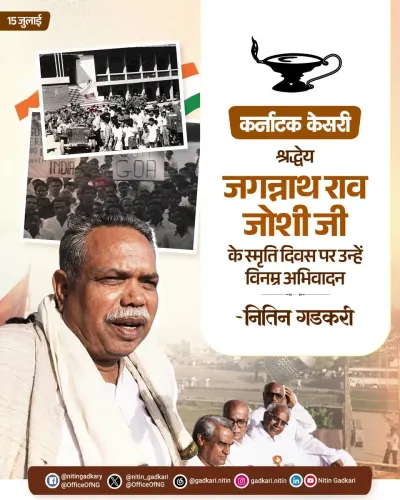
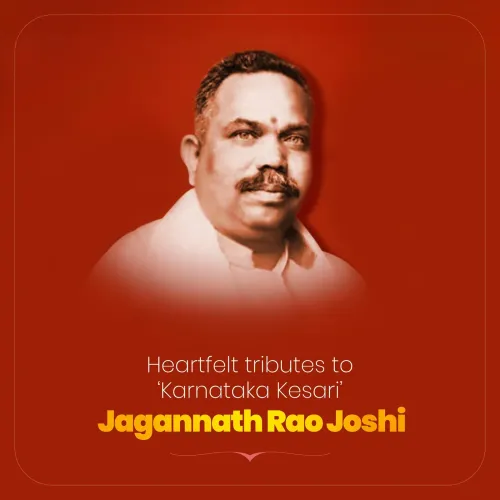
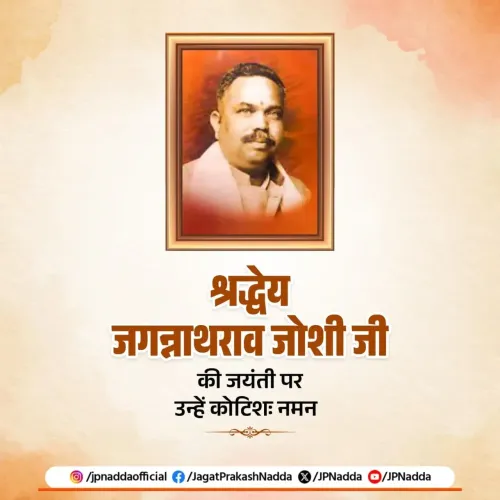
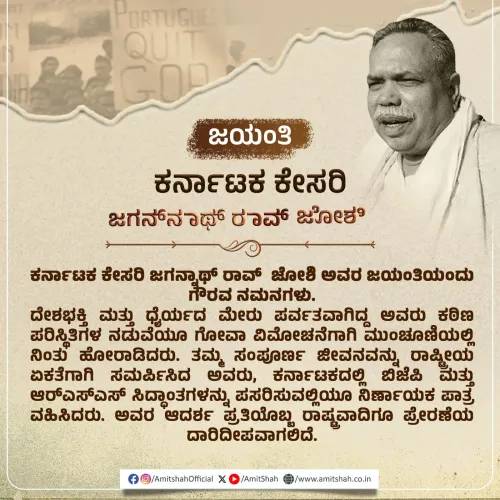
Nadda pays tribute to Jan Sangh leader Jagannath Rao Joshi on death anniversary
Synopsis
Union Health Minister J. P. Nadda paid tribute to Bharatiya Jan Sangh leader and 'Karnataka Kesari' Jagannath Rao Joshi on his death anniversary on 15 July 2026, honouring his role in ending the colonial-era permit system that had restricted Indian entry into Goa.
Key Takeaways
Nadda paid homage to Jagannath Rao Joshi on his death anniversary on 15 July 2026 .
Joshi was a senior Bharatiya Jan Sangh leader known by the title 'Karnataka Kesari' (Lion of Karnataka).
Nadda credited Joshi with a key role in ending the permit system that had restricted Indian citizens from entering Goa during Portuguese rule.
Goa was liberated from Portuguese control in December 1961 through Operation Vijay .
The Bharatiya Jan Sangh , founded in 1951 , is the ideological predecessor of the present-day BJP .
Nadda described Joshi's life as an ideal of national service and inspiration for every party worker.
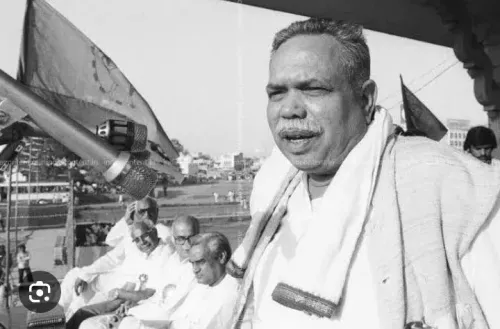
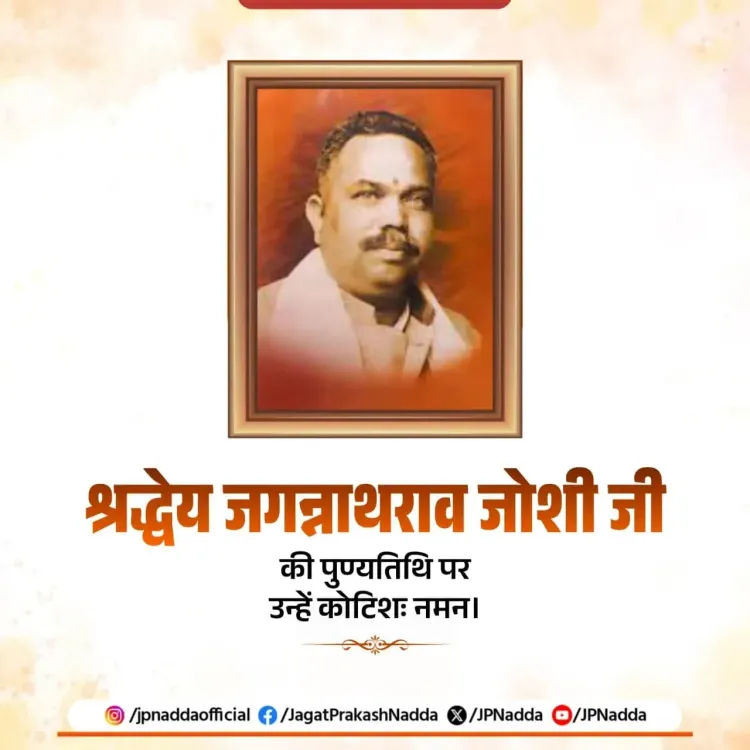
Union Health Minister and BJP national president J. P. Nadda on Wednesday, 15 July 2026 paid homage to senior Bharatiya Jan Sangh leader and Goa liberation movement veteran Jagannath Rao Joshi on his death anniversary, crediting him with a pivotal role in ending the permit system that had barred Indian citizens from freely entering Goa.
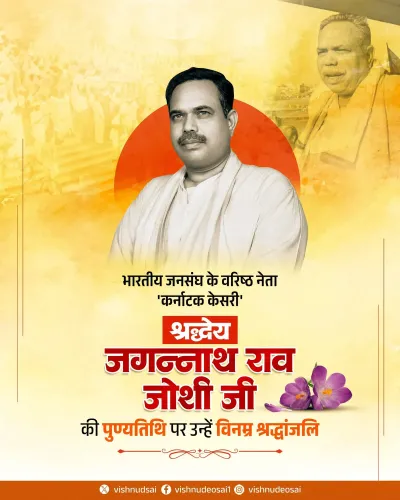
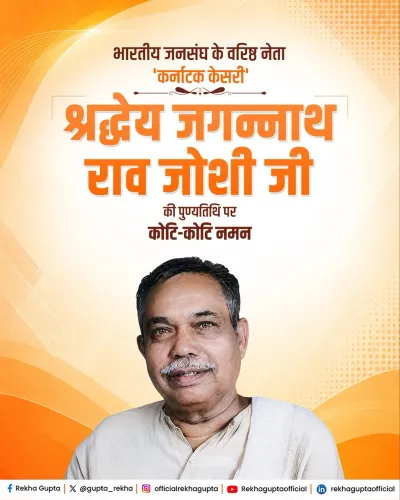
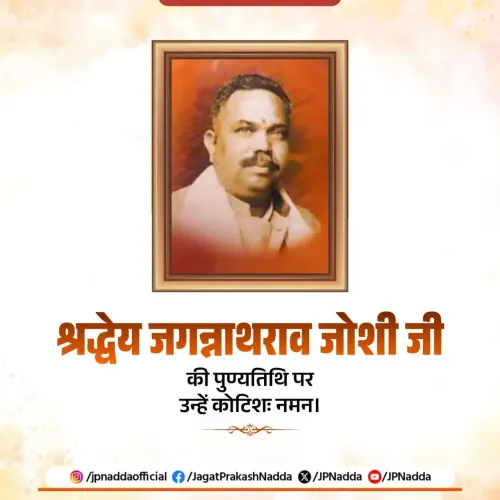
Posting in Hindi on X, Nadda wrote: 'भारतीय जनसंघ के वरिष्ठ नेता... श्रद्धेय जगन्नाथ राव जोशी जी की पुण्यतिथि पर उन्हें कोटिशः नमन करता हूँ' ('I offer countless salutations to revered Jagannath Rao Joshi Ji, senior leader of the Bharatiya Jan Sangh, on his death anniversary'). He described Joshi as 'कर्नाटक केसरी' — 'Lion of Karnataka' — and called his life a model of national service for every party worker.
Context
Nadda specifically highlighted Joshi's role in dismantling the permit system under which Indians required special permission to enter Goa while it remained a Portuguese enclave. The permit arrangement was a colonial administrative legacy that physically and symbolically separated Goa from the rest of India. Nadda stated that Joshi's contribution to making Goa 'an inseparable part of India' would be 'forever memorable and worthy of reverence.'
He further noted that Joshi's ascetic life — dedicated to national unity, integrity, and cultural consciousness — stands as an inspiration for every political worker committed to national service.
Policy backdrop
Goa was liberated from Portuguese colonial rule in December 1961 through Operation Vijay, a military action that ended over four centuries of Portuguese presence and integrated Goa, Daman and Diu into the Indian Union. The liberation paved the way for the removal of entry restrictions that had kept Goan territory effectively sealed off from the rest of the country.
The Bharatiya Jan Sangh, founded in 1951, was among the political formations that championed national integration and the removal of colonial administrative remnants. It is widely recognised as the direct ideological predecessor of the present-day BJP.
Stakeholders and impact
The tribute resonates with Goan residents, historians of post-independence territorial integration, and Karnataka-based political communities who remember Joshi's legacy as 'Karnataka Kesari.' For the BJP, commemorating Jan Sangh-era figures serves to reinforce the party's self-positioning as the political heir to India's national integration movement after 1947.
Joshi's advocacy against the permit system is cited as a concrete civil and political contribution that complemented the military action of Operation Vijay, underscoring that integration required both armed and political effort.
What's next
State-level commemorations in Goa and Karnataka may follow in the coming days, and the tribute could be referenced in upcoming parliamentary or party-forum discussions on regional integration history. BJP leaders have consistently used such death anniversaries to draw a direct line between Jan Sangh-era activism and the party's present-day governance narrative on national unity.
Point of View
Framing contemporary politics as the fulfilment of post-1947 national integration. By spotlighting Joshi's civil agitation against the Goa permit system alongside the better-known military narrative of Operation Vijay, the tribute broadens the integration story to include political and grassroots activism. The 'Karnataka Kesari' honorific also signals outreach to Karnataka's political constituency, a state of continued electoral significance for the party. Such commemorations function simultaneously as historical remembrance and as soft political messaging about the BJP's custodianship of national unity.
NationPress
15 Jul 2026
Frequently Asked Questions
Who was Jagannath Rao Joshi?
Jagannath Rao Joshi was a senior leader of the Bharatiya Jan Sangh, known by the title 'Karnataka Kesari' (Lion of Karnataka), who played a prominent role in the Goa liberation movement and in efforts to end the permit system that restricted Indian citizens from entering Goa during Portuguese rule.
What was the permit system in Goa?
The permit system was a colonial-era administrative arrangement under Portuguese rule that required Indian citizens to obtain special permission to enter Goa. It physically and symbolically separated Goa from the rest of India until it was dismantled following Goa's liberation.
When was Goa liberated from Portuguese rule?
Goa was liberated from Portuguese colonial rule in December 1961 through Operation Vijay , a military action that ended over four centuries of Portuguese presence and integrated Goa, Daman and Diu into the Indian Union.
What is the Bharatiya Jan Sangh?
The Bharatiya Jan Sangh was a Hindu nationalist political party founded in 1951 that championed national integration and the removal of colonial administrative remnants. It is widely regarded as the direct ideological predecessor of the present-day BJP.
Why did J. P. Nadda post a tribute to Jagannath Rao Joshi?
J. P. Nadda posted the tribute on 15 July 2026 , which marks Jagannath Rao Joshi's death anniversary. As BJP national president, Nadda regularly commemorates Jan Sangh-era leaders to honour their contributions to national integration and to reinforce the party's ideological continuity with that era.