Nadda Pays Tribute to Sardar Udham Singh on Martyrdom Day
Synopsis
Union Health Minister J. P. Nadda marked the martyrdom anniversary of Sardar Udham Singh on 31 July 2026, honouring the revolutionary who assassinated Michael O'Dwyer in London in 1940 to avenge the Jallianwala Bagh massacre and was executed the same day.
Key Takeaways
31 July 2026 : Union Health Minister J.
Nadda posted a tribute on X marking Sardar Udham Singh's martyrdom anniversary.
Sardar Udham Singh was hanged on 31 July 1940 at Pentonville Prison, London, after assassinating Michael O'Dwyer on 13 March 1940 .
O'Dwyer was the former Lieutenant Governor of Punjab who had approved the Jallianwala Bagh massacre of 13 April 1919 .
Nadda highlighted Udham Singh's work through the Ghadar Party , which mobilised Indian diaspora communities against British colonial rule.
The Government of India commemorated the centenary of the Jallianwala Bagh massacre in 2019 with nationwide events.
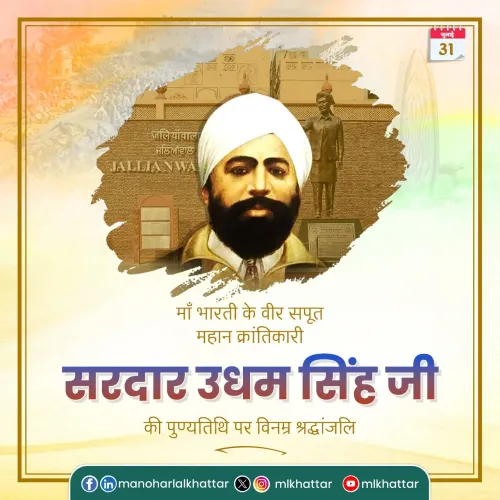
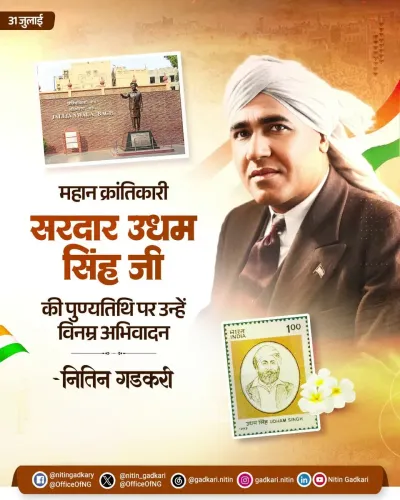
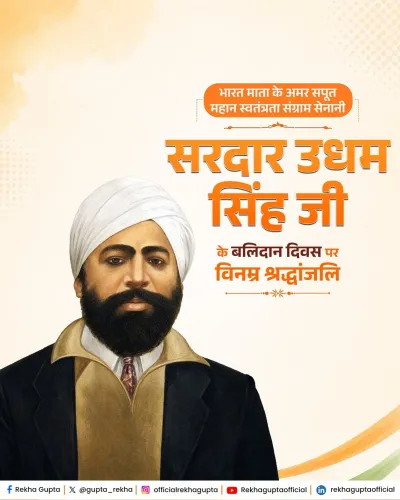
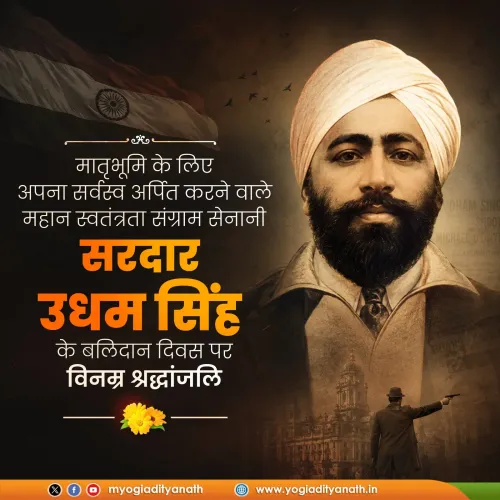
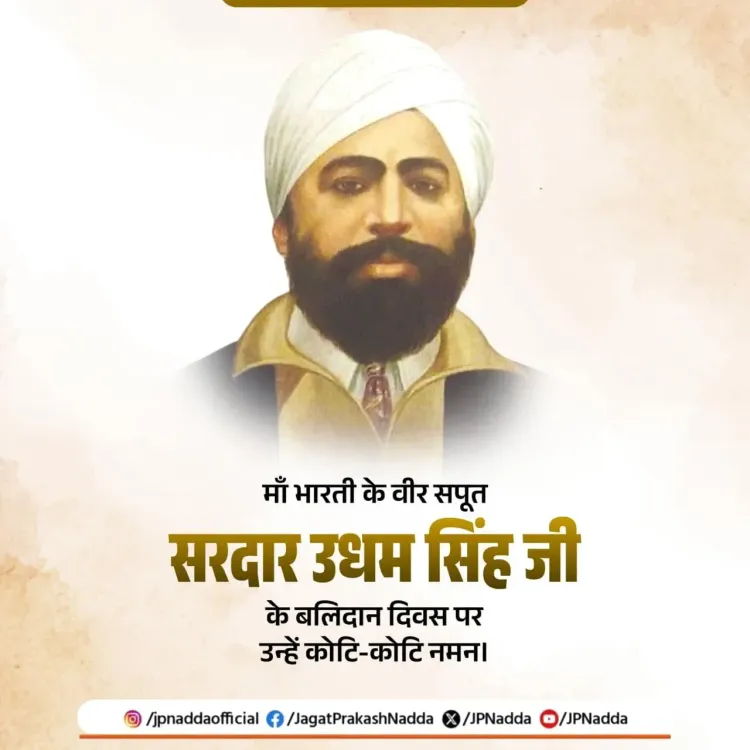
On the martyrdom anniversary of one of India's most fearless revolutionaries, Union Health Minister J. P. Nadda on Friday, 31 July 2026 offered tribute to Sardar Udham Singh — the man who crossed oceans to deliver justice for the dead of Jallianwala Bagh.
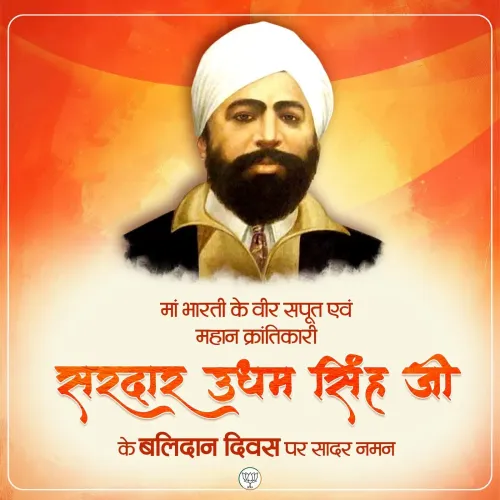
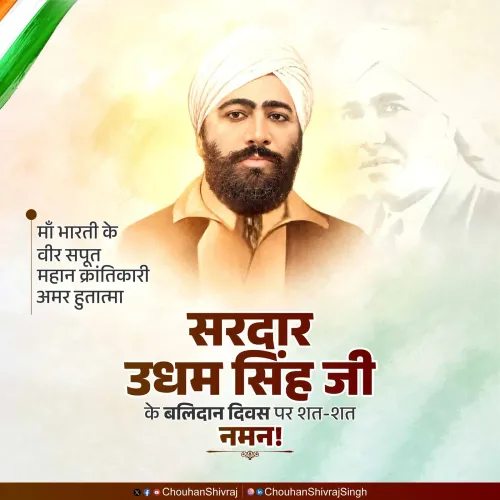
In a Hindi post on X, Nadda wrote: 'माँ भारती के वीर सपूत... कोटिशः नमन' ('A crore salutes to the brave son of Mother India'). He described Udham Singh as a fearless fighter against British tyranny whose supreme sacrifice remains a golden chapter of India's freedom struggle.
The wound of Amritsar, the act in London
The thread connecting Sardar Udham Singh to history runs through one catastrophic afternoon: 13 April 1919, when British troops under the command of Brigadier Reginald Dyer opened fire on an unarmed crowd gathered at Jallianwala Bagh, Amritsar, killing hundreds. Udham Singh, who witnessed the massacre as a young man, carried that wound for two decades.
On 13 March 1940, at Caxton Hall in London, he shot dead Michael O'Dwyer — the former Lieutenant Governor of Punjab who had approved Dyer's action — and surrendered immediately. He was hanged on 31 July 1940, the date India observes as his martyrdom anniversary.
Ghadar Party and the diaspora's role in the freedom struggle
Nadda's tribute specifically highlighted Udham Singh's work through the Ghadar Party, the early 20th-century revolutionary network built by Indian expatriates — primarily in North America — to organise anti-colonial resistance from abroad. The party seeded nationalist feeling among Indians living far from the subcontinent, a contribution that official remembrance has increasingly foregrounded.
The Government of India marked the centenary of the Jallianwala Bagh massacre in 2019 with nationwide commemorations, underscoring the continued resonance of that event — and the figures it produced — in the country's official historical memory.
A pattern of official remembrance
Indian political leaders across parties issue tributes to independence-era revolutionaries on their martyrdom and birth anniversaries — but Udham Singh occupies a particular place in that calendar. His story fuses domestic atrocity, transnational resistance, and individual sacrifice into a single arc that carries emotional weight well beyond textbook history.
Nadda's post frames that arc precisely: from the horror of Jallianwala Bagh to the resolve it ignited, to the act in London, to an enduring legacy that, in his words, will 'forever keep the flame of patriotism alive in the heart of every Indian.'
Eighty-six years after the gallows at Pentonville Prison, the tribute arrives on time — and the fire, it seems, has not gone out.
Point of View
The post gestures toward a transnational dimension of the independence struggle that resonates with today's politically engaged Indian diaspora. The tribute carries no new policy content but reinforces a consistent pattern of official remembrance that shapes how younger Indians encounter revolutionary history. On a day with no competing national headlines, it is also clean, uncontested political communication.
NationPress
31 Jul 2026
Frequently Asked Questions
Why is 31 July observed as Sardar Udham Singh's martyrdom day?
31 July 1940 is the date on which Sardar Udham Singh was executed by hanging at Pentonville Prison in London after being convicted of assassinating former Punjab Lieutenant Governor Michael O'Dwyer .
What was the Jallianwala Bagh massacre and how did it shape Udham Singh?
On 13 April 1919 , British troops fired on an unarmed crowd at Jallianwala Bagh in Amritsar , killing hundreds. Udham Singh, who was present, spent the next two decades driven by the resolve to hold those responsible to account.
Who was Michael O'Dwyer and why did Udham Singh target him?
Michael O'Dwyer was the Lieutenant Governor of Punjab who had approved the order for troops to fire at Jallianwala Bagh. Udham Singh shot him at Caxton Hall, London , on 13 March 1940 .
What was the Ghadar Party?
The Ghadar Party was an early 20th-century revolutionary organisation founded by Indian expatriates, primarily in North America , to organise anti-colonial resistance against British rule from abroad. Udham Singh was associated with the movement.
What did J. P. Nadda say about Sardar Udham Singh?
Union Health Minister J. P. Nadda described Udham Singh as a 'brave son of Mother India' who waged a fearless struggle against British tyranny, and said his courage and sacrifice would forever keep the flame of patriotism alive in every Indian's heart.