Nadda pays tribute to VHP founder Ashok Singhal on death anniversary
Synopsis
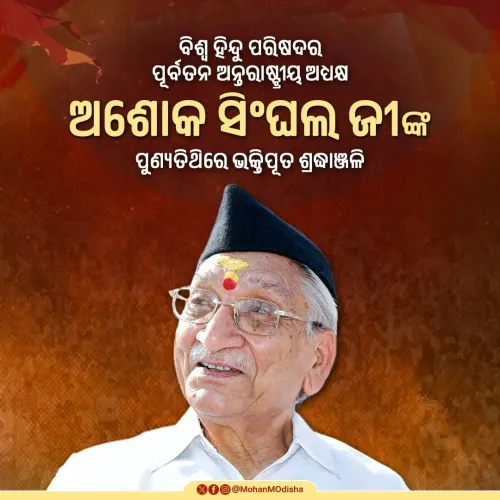
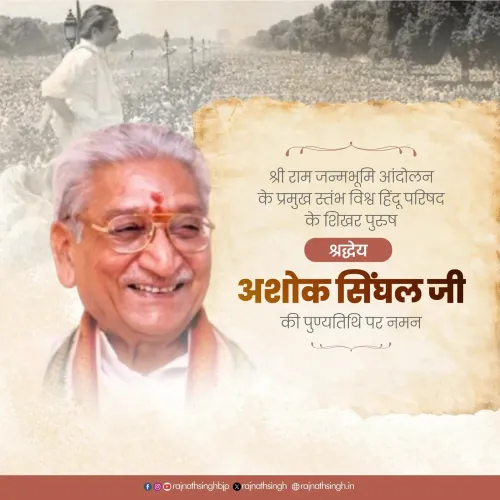
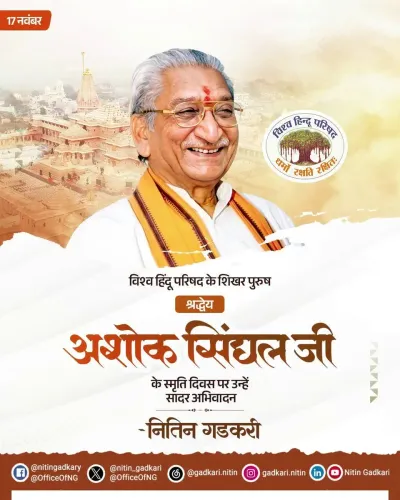
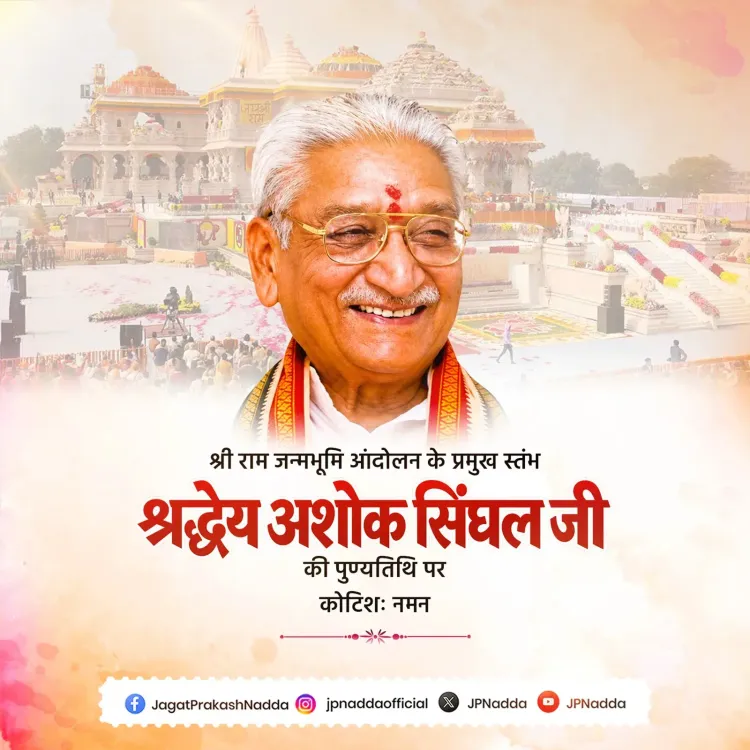
Union Health Minister and BJP national president J. P. Nadda on November 17, 2026, paid tribute to Vishva Hindu Parishad founder Ashok Singhal on his death anniversary, citing his lifelong commitment to Sanatan culture, Emergency resistance, and the Ram Janmabhoomi movement.
Key Takeaways
Union Health Minister and BJP national president J.
Nadda posted a tribute to Ashok Singhal on his death anniversary on November 17, 2026 .
Ashok Singhal was the founder of the Vishva Hindu Parishad (VHP) , established in 1964 , and the foremost organiser of the Shri Ram Janmabhoomi movement .
Nadda praised Singhal's dedication to Sanatan culture , Indian traditions, and his resistance to the 1975 Emergency .
The tribute described Singhal's life as defined by simplicity, resolve, and devotion to the nation ( saadhgi, sankalp aur rashtranishtha ).
BJP leaders regularly issue such tributes to RSS and VHP figures, reinforcing the party's ideological lineage to the Hindutva movement.
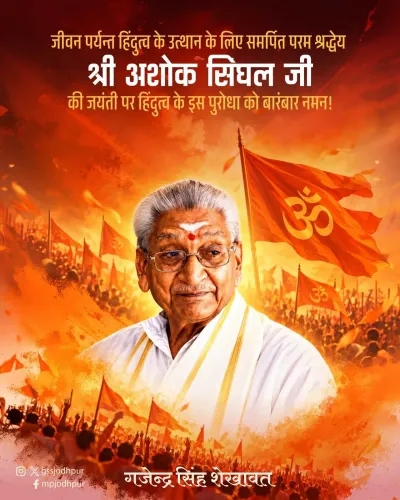
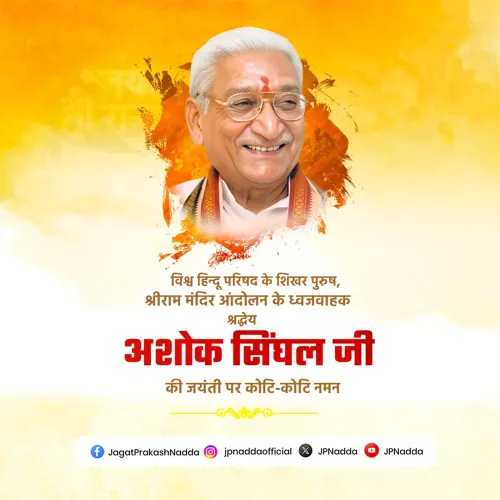
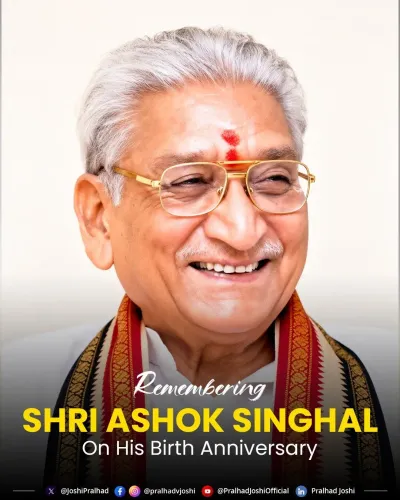
On the death anniversary of Ashok Singhal — the architect of the Vishva Hindu Parishad and the most recognisable face of the Shri Ram Janmabhoomi movement — Union Health Minister J. P. Nadda offered a public tribute on Tuesday, November 17, 2026, remembering a life defined by cultural nationalism, grassroots service, and an unflinching resistance to the 1975 Emergency.
Posting in Hindi, Nadda wrote: 'Shri Ram Janmabhoomi andolan ke agrani stambh evam Vishva Hindu Parishad ke sansthapak shraddhey Ashok Singhal ji ki punyatithi par smaran kar naman karta hoon' — 'On the death anniversary of the revered Ashok Singhal ji, the pioneering pillar of the Shri Ram Janmabhoomi movement and founder of the Vishva Hindu Parishad, I bow in remembrance.' He added that Singhal's life — marked by simplicity, resolve, and devotion to the nation — remains an enduring inspiration for the preservation of Sanatan culture and Indian traditions.Who was Ashok Singhal and why the VHP still looms large
Ashok Singhal was the driving organisational force behind the Vishva Hindu Parishad, which was founded in 1964 with the stated mission of unifying Hindu society and preserving its cultural heritage. Over decades, he shaped the VHP into one of India's most influential Hindu nationalist organisations. His most consequential role came as the central mobiliser of the Ram Janmabhoomi campaign — the decades-long movement demanding a temple at Ayodhya, the site traditionally believed to be Lord Ram's birthplace, a campaign that fundamentally reshaped Indian politics through the 1980s and 1990s.
Emergency resistance — a thread BJP never lets fade
Nadda's tribute specifically invoked Singhal's resistance to the Emergency of 1975, a period of suspended civil liberties that remains a defining political reference point for the BJP and the broader Sangh Parivar. For the party, those who fought the Emergency occupy a hallowed place in the nationalist canon — and citing that struggle in a death-anniversary tribute is a deliberate act of political memory. It frames Singhal not merely as a religious organiser, but as a defender of democratic freedoms, broadening his legacy for a wider audience.
A BJP ritual of remembrance — and what it signals
BJP leaders consistently mark the death anniversaries of RSS and VHP figures with public statements, particularly around November, when several movement leaders' anniversaries cluster. These tributes serve a dual purpose: they reinforce the party's ideological lineage to the Hindutva movement, and they signal continuity of mission to the party's core base. As BJP's national president, Nadda's voice carries the weight of the entire organisation — making this tribute an institutional statement, not merely a personal one.
In a political season where cultural nationalism remains central to the BJP's identity, the annual remembrance of Ashok Singhal is less a backward glance than a forward declaration.
Point of View
Using death anniversaries as moments to restate ideological continuity. By emphasising both Singhal's cultural mission and his Emergency-era resistance, the statement attempts to fuse religious nationalism with democratic credentials — a framing that has long served the party's broader political narrative. As BJP national president, Nadda's voice lends this an institutional rather than merely personal weight. In an election-aware landscape, such commemorations also serve as quiet mobilisation signals to the party's core base.
NationPress
17 Nov 2026
Frequently Asked Questions
Who was Ashok Singhal?
Ashok Singhal was the founder of the Vishva Hindu Parishad (VHP), established in 1964, and the leading organisational figure in the Shri Ram Janmabhoomi movement that campaigned for a temple at Ayodhya. He dedicated his life to the preservation of Sanatan culture and Hindu nationalist causes.
When is Ashok Singhal's death anniversary?
Ashok Singhal's death anniversary falls on November 17, as marked by J. P. Nadda's tribute post on that date in 2026.
What is the Vishva Hindu Parishad (VHP)?
The Vishva Hindu Parishad (VHP) is a Hindu nationalist organisation founded in 1964. It focuses on the cultural unity and preservation of Hindu society and played a central role in the Ram Janmabhoomi movement.
Why did J. P. Nadda pay tribute to Ashok Singhal?
As BJP national president and Union Health Minister, J. P. Nadda paid tribute to mark Ashok Singhal's death anniversary, honouring his role as VHP founder, Ram Janmabhoomi movement leader, and opponent of the 1975 Emergency.
What was Ashok Singhal's role in the Ram Janmabhoomi movement?
Ashok Singhal was the primary organisational leader of the Ram Janmabhoomi movement, the decades-long campaign to build a temple at Ayodhya at the site believed to be Lord Ram's birthplace, a movement that profoundly influenced Indian politics from the 1980s onward.