Nadda Reviews AIIMS Raebareli: 610 Beds, 34 Departments Live
Synopsis
Union Health Minister J. P. Nadda virtually reviewed AIIMS Raebareli on 13 October 2026, confirming all 610 sanctioned beds and 34 departments — including 9 super-specialty units — are operational, with daily patient footfall exceeding 3,000.
Key Takeaways
Union Health Minister J.
Nadda conducted a virtual review of AIIMS Raebareli on 13 October 2026 .
All 610 sanctioned beds at the institute are now fully operational.
34 departments are functional, including 9 super-specialty departments .
The institute records an average daily footfall of over 3,000 patients from Rae Bareli and neighbouring districts.
AIIMS Raebareli was established under the Pradhan Mantri Swasthya Suraksha Yojana (PMSSY) , launched in 2003 to decentralise tertiary healthcare.
The review reflects ongoing Health Ministry monitoring of new AIIMS operationalisation across India.
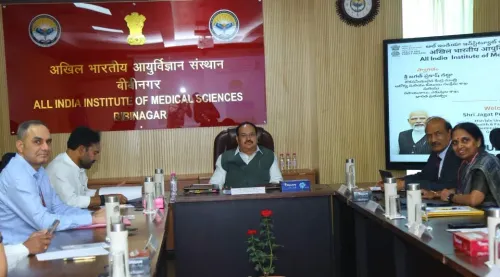
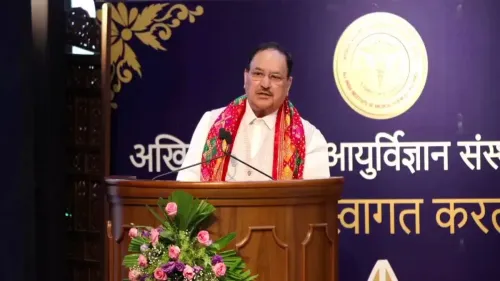
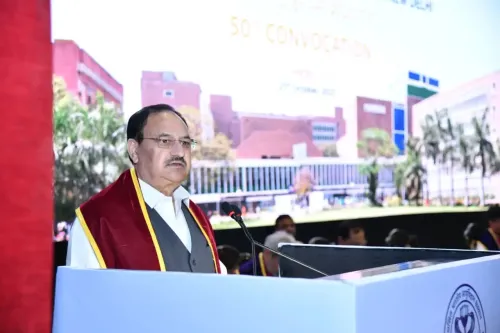
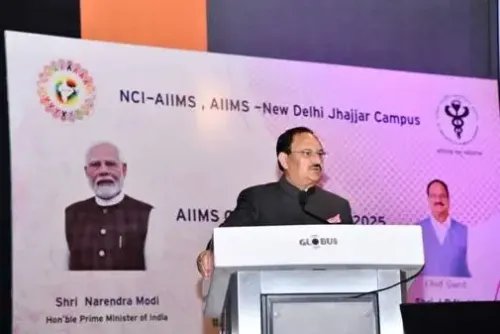
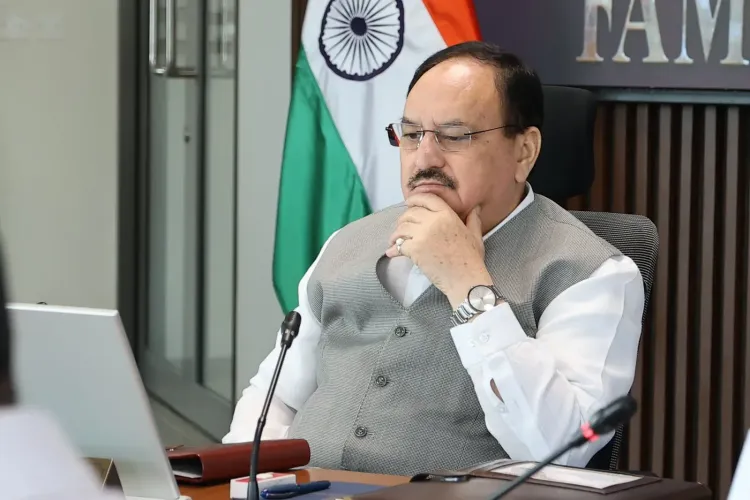
A government medical institute in eastern Uttar Pradesh is quietly rewriting what specialised healthcare looks like for millions of people who once had to travel hundreds of kilometres for it. Union Health Minister J. P. Nadda conducted a virtual review of AIIMS Raebareli on Tuesday, 13 October 2026, and the numbers he cited tell a story of rapid institutional buildout in a region long underserved by tertiary care.
610 beds, 34 departments — and a daily footfall crossing 3,000
All 610 sanctioned beds at AIIMS Raebareli are now operational, the Minister confirmed, alongside 34 functional departments — of which 9 are super-specialty units. That last figure matters: super-specialty care — think neurology, cardiology, oncology — has historically been concentrated in Delhi, Mumbai, and Lucknow. Bringing nine such departments to Raebareli compresses the geography of hope for patients in Rae Bareli and its neighbouring districts.
The institute is now seeing an average daily footfall of over 3,000 patients, a figure that signals genuine community uptake, not just paper capacity. Nadda described the institute as 'a major centre for high-quality medical education, advanced and comprehensive healthcare in the region.'
AIIMS expansion and the Pradhan Mantri Swasthya Suraksha Yojana
AIIMS Raebareli is one of several new institutes established under the Pradhan Mantri Swasthya Suraksha Yojana (PMSSY), a central scheme launched in 2003 specifically to set up new AIIMS across states and reduce the stark regional imbalance in access to advanced medical infrastructure. For decades, the original AIIMS New Delhi bore an impossible patient load because no comparable public tertiary facility existed across vast swathes of the country.
The expansion wave — accelerated through successive administrations — aimed to decentralise that expertise. Raebareli's progress is a data point in that longer arc: a fully operational institute, not just a foundation stone and a promise.
What Nadda's virtual review signals for Health Ministry oversight
The choice of a virtual review format is itself a governance signal — routine, systematic, scalable. With multiple new AIIMS institutions at varying stages of operationalisation across India, the Ministry of Health and Family Welfare has been conducting progress checks to ensure sanctioned capacity translates into functional, patient-facing services. Nadda's post reaffirms the government's stated commitment to 'affordable, accessible, high-quality and technology-enabled healthcare for all.'
The next question — and the one worth watching — is whether the super-specialty departments at Raebareli and peer institutions are being staffed to match their structural capacity, and whether technology integration (telemedicine, digital health records) keeps pace with the physical buildout.
Point of View
If sustained, do represent a genuine policy delivery moment under PMSSY, a scheme that predates the current government but has seen its fastest expansion under it. The political salience of Raebareli — long a Congress stronghold — makes the showcase of a functioning AIIMS there doubly deliberate. The real policy test, however, is faculty depth and equipment utilisation at these new institutes, which routine ministerial reviews rarely surface.
NationPress
13 Oct 2026
Frequently Asked Questions
How many beds does AIIMS Raebareli have?
AIIMS Raebareli has 610 sanctioned beds , all of which are now operational as confirmed by Union Health Minister J. P. Nadda during his virtual review on 13 October 2026.
How many departments are functional at AIIMS Raebareli?
34 departments are currently functional at AIIMS Raebareli, including 9 super-specialty departments covering advanced care disciplines.
What is the daily patient footfall at AIIMS Raebareli?
The institute sees an average daily footfall of over 3,000 patients , drawn from Rae Bareli and surrounding districts.
Under which scheme was AIIMS Raebareli established?
AIIMS Raebareli was set up under the Pradhan Mantri Swasthya Suraksha Yojana (PMSSY) , a central government scheme launched in 2003 to establish new AIIMS across India and reduce regional disparities in tertiary healthcare.
Why did J. P. Nadda review AIIMS Raebareli?
As Union Health Minister , J. P. Nadda conducted a routine virtual progress review of AIIMS Raebareli on 13 October 2026 to assess the operational status of the institute's beds, departments, and patient services as part of ongoing Health Ministry monitoring of new AIIMS institutions.