Chandrababu Naidu tours cyclone-hit Guntur, Bapatla; vows aid to farmers
Synopsis
Chandrababu Naidu walked muddy field embankments from Jillellamudi to Returu to see for himself what cyclone Murasu did to Andhra's coastal farmers — and found crops destroyed on the eve of harvest. With 30,000 poles already restored, 10,000 more still down, and relief teams pulled from three neighbouring states, the scale of the disaster is only now becoming clear.
Key Takeaways
Andhra Pradesh CM N.
Chandrababu Naidu visited cyclone-hit Guntur and Bapatla districts on 6 November .
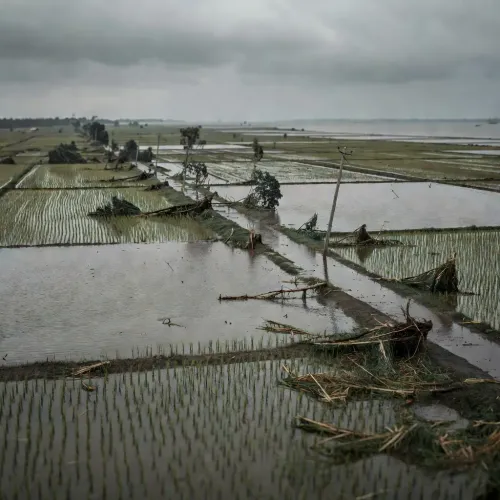
Cyclone 'Murasu' submerged paddy fields and caused severe losses across Guntur , Bapatla , and Prakasam districts.
Crop insurance and government input subsidies to be deployed; officials directed to boost farmer awareness on insurance enrolment.
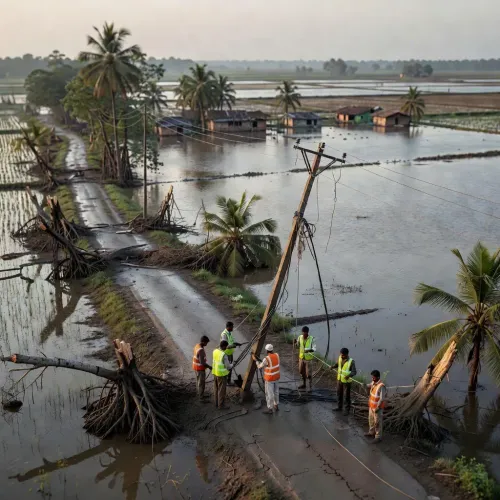
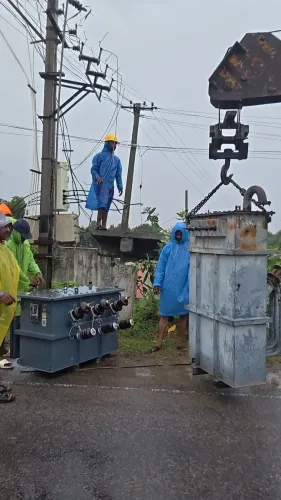
30,000 electricity poles restored after one cyclone; another 10,000 poles damaged by a subsequent storm, with restoration ongoing.
Relief assistance sought from Telangana , Karnataka , and Tamil Nadu ; Prime Minister Narendra Modi has personally inquired about the situation.
Completion of the Polavaram project cited as a long-term measure to enable early-season cultivation and reduce cyclone risk.
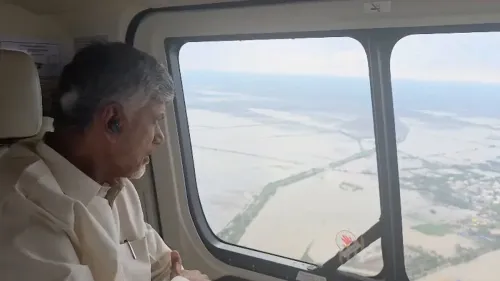
Andhra Pradesh Chief Minister N. Chandrababu Naidu on Friday, 6 November conducted a ground-level inspection of cyclone-devastated areas across Guntur and Bapatla districts, assuring every affected resident of government assistance. The visit follows the destruction wrought by cyclone 'Murasu', which submerged standing crops and caused extensive infrastructure damage across the two districts and neighbouring Prakasam.
CM Walks the Field
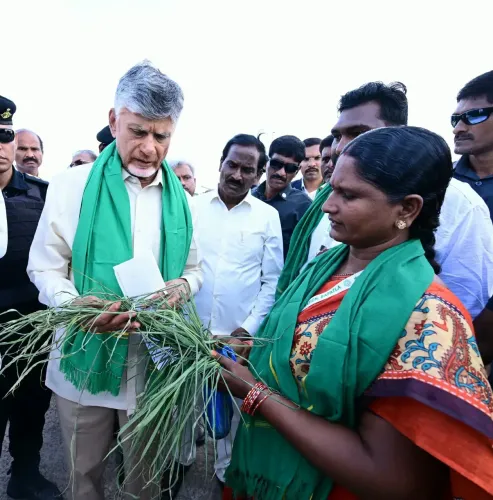
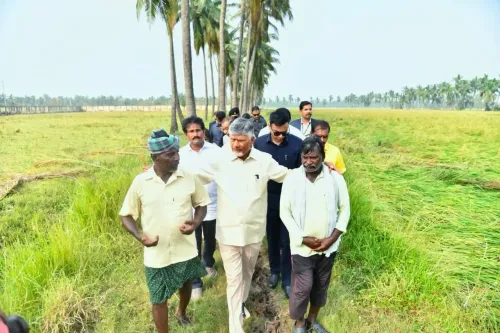
In a visible show of solidarity with the farming community, Naidu walked on foot from Jillellamudi to Returu village in Bapatla district, traversing embankments of irrigation canals and submerged field channels. He stopped repeatedly to speak directly with farmers, officials, and public representatives, inquiring about crop investments, projected yields, and specific losses sustained.
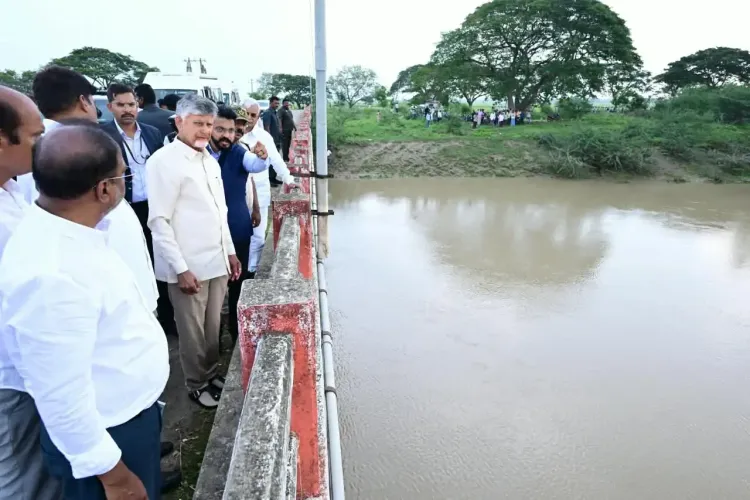
At the Jillellamudi bridge, the Chief Minister assessed the intensity of floodwaters first-hand, with officials and farmers explaining how the surge had inundated surrounding agricultural land. In Returu, he waded through paddy fields still under floodwater, listening to farmers who described harvesting their crops after receiving irrigation water through the Pattiseema project — only for the cyclone to deliver a devastating blow just before harvest.
Relief Measures Announced
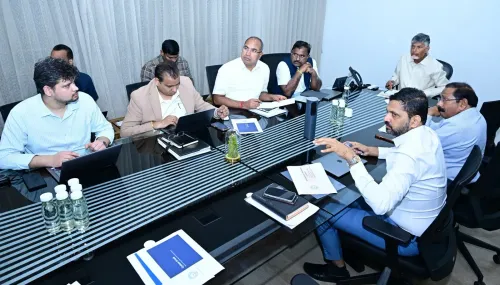
Naidu confirmed that a comprehensive damage assessment is currently underway. He assured that crop insurance and government input subsidies will be deployed to compensate farmers for a portion of their lost investment. Officials were directed to intensify awareness drives on crop insurance enrolment among the farming community.
The Chief Minister also instructed authorities to devise plans for supplying irrigation water ahead of the regular cultivation season, enabling early sowing that would reduce cyclone-season exposure. He noted that the completion of the Polavaram project would open up further early-cultivation opportunities, reducing farmers' vulnerability to late-season storms.
Scale of Damage and Recovery Efforts
Naidu disclosed that 30,000 electricity poles downed by one cyclone have been restored, while a subsequent storm damaged a further 10,000 poles. Efforts to rapidly restore power to aquaculture ponds are ongoing. He added that assistance has been formally sought from the states of Telangana, Karnataka, and Tamil Nadu for relief operations.
The Chief Minister noted that the cyclones struck at a particularly cruel time — just as crops were approaching harvest — compounding hardship for farmers who had already battled the effects of El Niño earlier in the season. He acknowledged that proactive government measures had helped contain some of the potential damage.
Centre Informed, PM Modi Inquires
Naidu confirmed that the Central government has been kept fully briefed on the scale of the disaster, and that Prime Minister Narendra Modi has personally inquired about the situation in the affected districts. He urged citizens not to take cyclone warnings lightly and to remain on high alert whenever such advisories are issued.
With damage assessments still in progress, the full relief package is expected to be finalised in the coming days as the state works to restore normalcy across its cyclone-battered coastal belt.
Point of View
And the Pattiseema project that delivered water this season also prolonged the cultivation window into peak storm season. Directing officials to advance sowing timelines is sensible, but it requires calibrated water release schedules and early infrastructure readiness, not just advisories. The Polavaram project has been cited as a future safeguard for years; until it is commissioned, the relief cycle — disaster, assessment, subsidy, repeat — will continue.
NationPress
6 Nov 2026
Frequently Asked Questions
Which districts did CM Chandrababu Naidu visit after cyclone Murasu?
Naidu visited Guntur and Bapatla districts on 6 November to inspect areas damaged by cyclone Murasu. The cyclone also caused significant damage in Prakasam district, according to the Chief Minister's remarks.
What relief has the Andhra Pradesh government announced for affected farmers?
The government has announced deployment of crop insurance and input subsidies to compensate farmers for a portion of their crop losses. Officials have also been directed to raise awareness about crop insurance enrolment among the farming community.
How much infrastructure damage did the cyclones cause in Andhra Pradesh?
According to the Chief Minister, 30,000 electricity poles fell due to one cyclone and have since been restored, while a subsequent cyclone damaged another 10,000 poles, with restoration work currently underway. Power supply to aquaculture ponds is being prioritised.
Is the Central government involved in the cyclone relief efforts?
Yes. Chief Minister Naidu confirmed that the Centre has been fully briefed on the disaster's impact, and Prime Minister Narendra Modi has personally inquired about the situation. Andhra Pradesh has also sought assistance from Telangana, Karnataka, and Tamil Nadu.
What long-term measures is the Andhra Pradesh government considering to reduce cyclone risk to farmers?
The government plans to advance irrigation water supply ahead of the regular cultivation season so that farmers can sow early and harvest before peak cyclone season. The completion of the Polavaram project is also cited as a key step toward enabling early-season cultivation and reducing storm-related crop losses.