Narmada Award dues settled: Four states sign one-time payment pact in Delhi
Synopsis
A dispute that outlasted multiple governments across four states was quietly closed in New Delhi on 7 July. With Maharashtra, Gujarat, Rajasthan, and Madhya Pradesh signing a one-time Narmada Award settlement, the Sardar Sarovar Project's long-contested cost-sharing row is finally off the table — and farmers in Rajasthan's driest border districts stand to gain the most.
Key Takeaways
Maharashtra , Gujarat , Rajasthan , and Madhya Pradesh signed a one-time settlement on 7 July to resolve outstanding Narmada Award payment disputes.
The agreement was signed in New Delhi in the presence of Union Home Minister Amit Shah and Union Jal Shakti Minister C.R.
The pact resolves decades-old cost-sharing disputes over the Sardar Sarovar Project .
Farmers in Rajasthan's Jalore and Barmer border districts are among the primary beneficiaries cited.
Shah also referenced recent resolution of the Rajasthan-Haryana water dispute and progress on the Kishau Dam as parallel cooperative federalism wins.
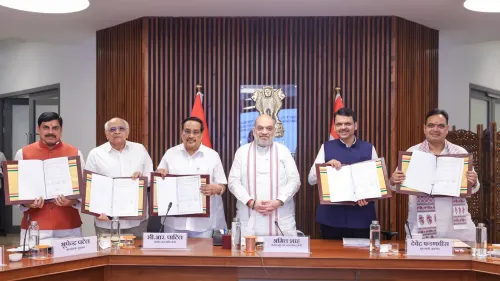
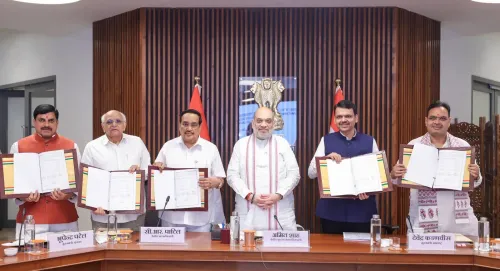
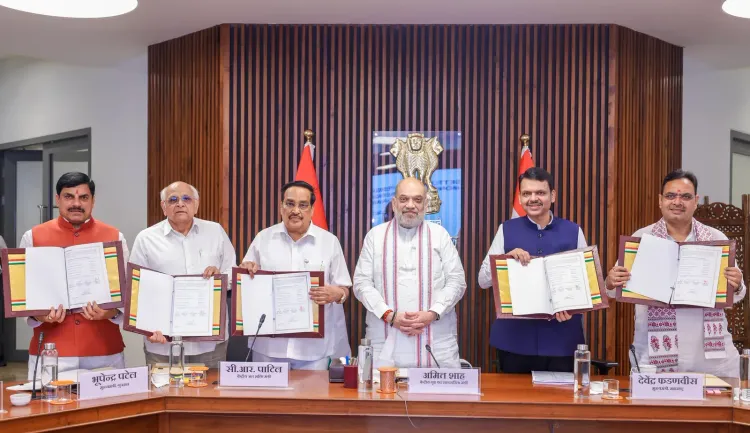
Maharashtra, Gujarat, Rajasthan, and Madhya Pradesh on Tuesday, 7 July signed a landmark one-time settlement agreement in New Delhi to resolve decades-old outstanding payment disputes tied to the Narmada Award and the Sardar Sarovar Project. The signing, chaired by Union Home and Cooperation Minister Amit Shah, brings closure to long-pending inter-state financial claims over cost-sharing for one of India's largest river infrastructure projects.
The Agreement and Who Signed It
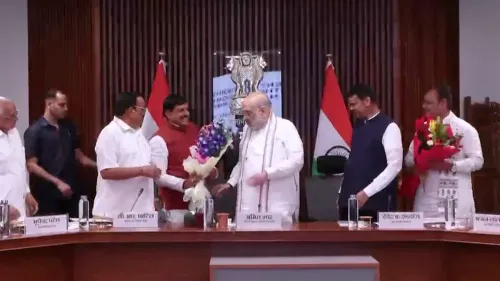
The pact was inked by Maharashtra Chief Minister Devendra Fadnavis, Gujarat Chief Minister Bhupendra Patel, Rajasthan Chief Minister Bhajanlal Sharma, and Madhya Pradesh Chief Minister Mohan Yadav. Union Jal Shakti Minister C.R. Patil was also present, alongside senior officials from the Centre and all four state governments.
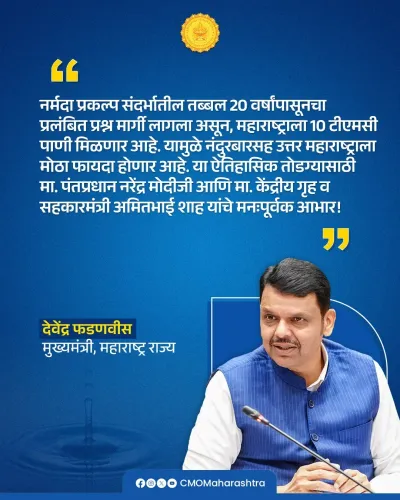
The agreement resolves the dispute over cost-sharing for the construction of the Sardar Sarovar Project through a one-time settlement mechanism, ending financial claims that had remained unresolved for years among the beneficiary states.
What the Leaders Said
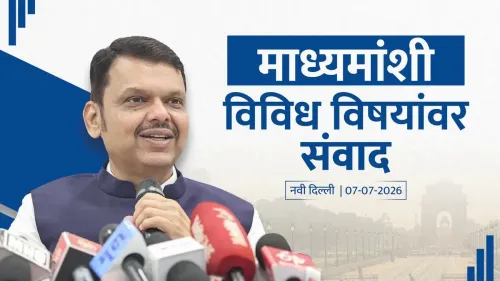
Addressing the gathering, Shah called the pact a landmark achievement in inter-state cooperation, noting that the outstanding Narmada Award payment dispute had persisted for years before being resolved through consensus. He credited Prime Minister Narendra Modi's leadership for advancing cooperative federalism and strengthening water security through what he described as several historic initiatives.
Shah also pointed to the presence of 'double-engine' governments in the participating states as a factor that reduced political friction and enabled faster resolution. He cited the recent settlement of the Rajasthan-Haryana water dispute and progress on the Kishau Dam project as further examples of inter-state cooperation gaining momentum.
Rajasthan Chief Minister Sharma, posting on his X handle, described the agreement as historic and amicable, saying it demonstrated that complex, long-standing issues can be resolved through dialogue, coordination, and firm resolve.
Impact on Rajasthan's Border Districts
Shah noted that while Rajasthan's share of Narmada water may appear limited in proportion, its arrival has materially improved agricultural productivity, raised land values, and transformed livelihoods in beneficiary regions. Sharma specifically highlighted expected long-term benefits for farmers in Rajasthan's border districts of Jalore and Barmer, stating the settlement would significantly bolster the state's water security.
Shah underscored a broader principle: whether Narmada water flows to Gujarat, Madhya Pradesh, Rajasthan, Haryana, or Maharashtra, the ultimate beneficiary is an Indian citizen, and water resources must be managed in the national interest rather than through a regional lens.
Broader Significance for Cooperative Federalism
The Sardar Sarovar Project has long been a source of inter-state tension, spanning irrigation rights, construction cost apportionment, and electricity sharing. This settlement marks a significant administrative milestone, as disputes of this nature have historically taken decades to reach adjudication — let alone amicable resolution. Notably, it follows a broader pattern of the Centre stepping in as a mediator to accelerate resolution of water disputes that state-level negotiations had failed to close.
With the financial dispute now resolved, attention is expected to shift to implementation — specifically, how the one-time settlement amounts will be disbursed and whether the agreement will unlock further infrastructure cooperation among the four states.
Point of View
Yet its financial liabilities remained unresolved for decades. The one-time settlement mechanism is pragmatic, but the details of how much each state pays, and on what timeline, have not been made public — which matters for accountability. Shah's invocation of 'double-engine' governments as a facilitator of resolution is politically convenient but worth scrutinising: the Rajasthan-Haryana dispute, also cited, involved states with different ruling parties at various points, suggesting institutional frameworks may matter as much as political alignment. The real test of this agreement will come at disbursement stage, not signing stage.
NationPress
8 Jul 2026
Frequently Asked Questions
What is the Narmada Award one-time settlement agreement?
It is an agreement signed on 7 July in New Delhi by Maharashtra, Gujarat, Rajasthan, and Madhya Pradesh to resolve long-pending financial disputes over cost-sharing for the construction of the Sardar Sarovar Project under the Narmada Award. The settlement uses a one-time payment mechanism to bring closure to inter-state financial claims.
Who chaired the signing of the Narmada Award settlement?
Union Home and Cooperation Minister Amit Shah chaired the meeting. Union Jal Shakti Minister C.R. Patil was also present, along with the chief ministers of all four signatory states and senior officials from the Centre.
Which districts in Rajasthan benefit from the Narmada settlement?
Rajasthan Chief Minister Bhajanlal Sharma specifically cited the border districts of Jalore and Barmer as primary beneficiaries, noting that Narmada water access would boost agricultural productivity and strengthen water security in these arid regions.
Why had the Narmada Award payment dispute persisted for so long?
The dispute centred on cost-sharing for the Sardar Sarovar Project's construction among the four beneficiary states, a complex multi-state financial negotiation that had remained unresolved for decades due to differing claims and political friction. The agreement represents the first consensus-based closure of these financial liabilities.
What other inter-state water disputes has the Centre recently resolved?
Amit Shah cited the recent settlement of the Rajasthan-Haryana water dispute and progress on the Kishau Dam project as examples of cooperative federalism delivering results on long-standing inter-state water issues under the current central government.