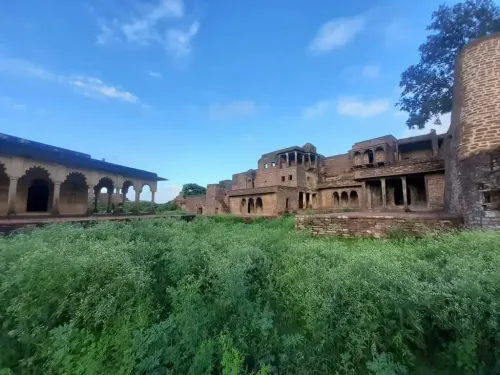
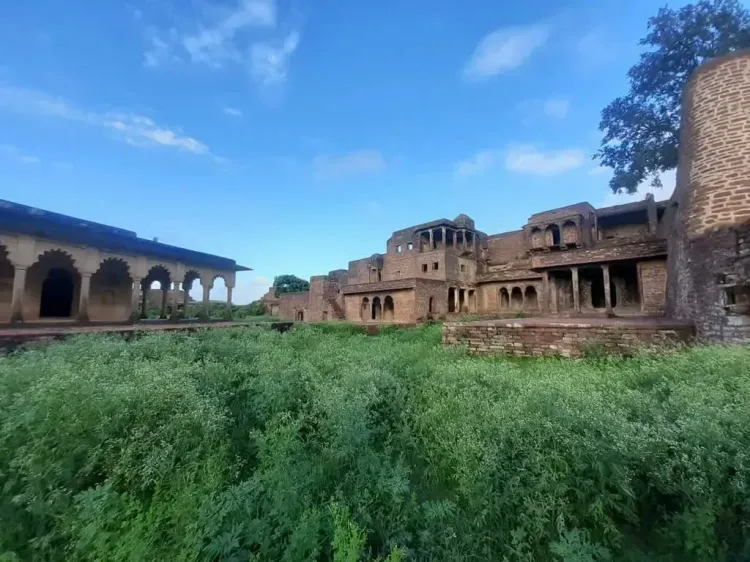
400-year-old Narwar Fort cannon theft: Search spreads to Rajasthan's Karauli
Synopsis
A 3,500-kg, 400-year-old cannon from Narwar Fort — valued at up to ₹5 crore on the black market — was spirited away using mattresses, bearings, and a heavy vehicle while both night guards had abandoned their posts. The trail has now crossed into Rajasthan, pointing to an organised international antique smuggling network.
Key Takeaways
A 400-year-old cannon weighing 3,500 kg was stolen from Narwar Fort , Shivpuri , on the night of 15 July .
The artefact is reportedly valued at ₹3–5 crore on the international antique black market.
Rajasthan Police deployed 50+ personnel and JCB machines in Gavda Meena village, Karauli — no cannon found after excavating 5–6 sites .
Both night-duty guards at the fort had reportedly left their posts; one guard admitted the initial armed-robbery claim was fabricated.
The cannon is one of 14 Scindia-era artefacts at the fort; only 13 remain.
The pieces bear Persian and Devanagari inscriptions.
Investigators suspect an organised international antique smuggling network ; a joint MP–Rajasthan Police probe is ongoing.
A 400-year-old historic cannon stolen from Narwar Fort in Madhya Pradesh's Shivpuri district has triggered a large-scale inter-state search operation, with Rajasthan Police conducting intensive excavations in Karauli district after intelligence suggested the artefact may have been concealed in Hindaun. The cannon, one of 14 rare pieces from the Scindia princely state era, was stolen on the night of 15 July and is reportedly valued at ₹3–5 crore on the international antique black market.
Search Operation in Rajasthan
Acting on intelligence shared by Madhya Pradesh Police, Rajasthan Police deployed more than 50 personnel to Gavda Meena village under Hindaun Sadar police station limits. The operation involved excavation at multiple sites using JCB machines, alongside a metal detector team brought in from Bharatpur. Despite digging at five to six suspected locations between 9 am and 2 pm, no trace of the cannon was found.
Hindaun Sadar SHO Girraj Prasad confirmed that Shivpuri Police had provided specific leads pointing to the village as a possible concealment site. Both state police forces are jointly investigating to determine when and how the cannon was moved across state lines.
How the Theft Was Executed
According to investigators, the operation was meticulously planned. The accused allegedly wrapped the cannon — weighing nearly 3,500 kilograms — in mattresses to prevent damage, then lowered it approximately 3,000 feet from the fort using an iron trolley fitted with bearings, before loading it onto a heavy transport vehicle. Tyre marks of heavy vehicles and drag marks discovered near the fort corroborate this account.
Investigators suspect the involvement of an organised international antique smuggling network, given the scale and precision of the operation.
Security Lapses at Narwar Fort
The theft has exposed serious security failures at Narwar Fort. Although six guards are officially posted at the site, both night-duty guards reportedly abandoned their posts on the night of the incident. During questioning, one guard admitted to leaving due to the absence of basic facilities including lighting and accommodation. Another guard confessed that an initial claim of armed robbery was fabricated, according to investigators.
Narwar SHO Vinay Yadav confirmed that a case has been registered against unidentified persons and that efforts are ongoing to recover the cannon and apprehend those responsible.
Significance of the Stolen Artefact
The missing cannon was among 14 rare cannons preserved in the open court of Narwar Fort, dating to the Scindia princely state era. With the theft, only 13 now remain. The cannons are crafted from brass, bronze, copper, and Ashtadhatu (an eight-metal alloy) and bear inscriptions in both Persian and Devanagari scripts, lending them exceptional historical and cultural value.
A joint team from the Madhya Pradesh State Archaeology Department and police has inspected the crime scene, recovering mattresses, quilts, iron pipes, and vehicle tyre marks as key evidence. Deputy Director of the State Archaeology Department Tarun Kumar Mahobia described the incident as 'extremely serious' and said both the theft and security arrangements at the fort are under active investigation.
What Happens Next
Authorities are analysing the recovered evidence to identify suspects and trace the transport vehicle. The inter-state joint investigation between Madhya Pradesh and Rajasthan Police continues, with the search likely to expand if current leads do not yield results. The case has also prompted questions about the adequacy of heritage site protection protocols across the country.
Point of View
Fabricated robbery claims, and zero deterrent infrastructure at a fort housing 400-year-old artefacts worth crores on the black market reveal a protection framework that exists only on paper. The involvement of a suspected international smuggling network suggests this cannon may already be en route out of the country, making every hour of delay in the investigation costlier. India has lost significant heritage to organised antique trafficking before; without mandatory security audits and real-time monitoring at ASI and state archaeology sites, Narwar will not be the last.
NationPress
21 Oct 2026
Frequently Asked Questions
What was stolen from Narwar Fort in Madhya Pradesh?
A 400-year-old cannon weighing approximately 3,500 kilograms was stolen from Narwar Fort in Shivpuri district, Madhya Pradesh, on the night of 15 July. The cannon dates to the Scindia princely state era and is reportedly valued at ₹3–5 crore on the international antique black market.
Where is the search for the stolen cannon currently focused?
Rajasthan Police are conducting the search in Karauli district, specifically in Gavda Meena village under Hindaun Sadar police station limits, based on intelligence from Madhya Pradesh Police. Despite excavating five to six suspected locations using JCB machines and metal detectors, no trace of the cannon had been found as of 23 July.
How was the 3,500-kg cannon removed from the fort?
According to investigators, the accused wrapped the cannon in mattresses, lowered it roughly 3,000 feet from the fort using an iron trolley fitted with bearings, and loaded it onto a heavy transport vehicle. Tyre marks and drag marks found near the fort support this account.
What security failures allowed the theft to happen?
Both night-duty guards at Narwar Fort reportedly left their posts on the night of the theft. One guard cited the absence of basic facilities such as lighting and accommodation, while another admitted that an initial claim of armed robbery was fabricated, according to investigators.
Why are the Narwar Fort cannons considered significant heritage artefacts?
The cannons are made from brass, bronze, copper, and Ashtadhatu — an eight-metal alloy — and bear inscriptions in Persian and Devanagari scripts. Dating to the Scindia princely state era, they are among 14 rare pieces preserved in the fort's open court, making them irreplaceable historical and cultural artefacts.