Navratri Day 3: Devotees worship Maa Chandraghanta with red flowers, chants
Synopsis
From New Delhi's Kalkaji Temple to Varanasi's Nav Durga Mandirs, millions of devotees rose before dawn on Day 3 of Navratri to honour Maa Chandraghanta — the ten-armed goddess of courage seated on a tiger. One devotee has kept the ritual for 22 unbroken years; another wakes at 3 a.m. for all nine days. This is what mass devotion looks like at its most disciplined.
Key Takeaways
The third day of Navratri on 13 October 2026 was dedicated to Maa Chandraghanta , the goddess of courage and protection.
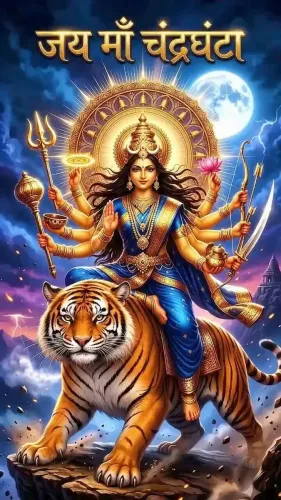
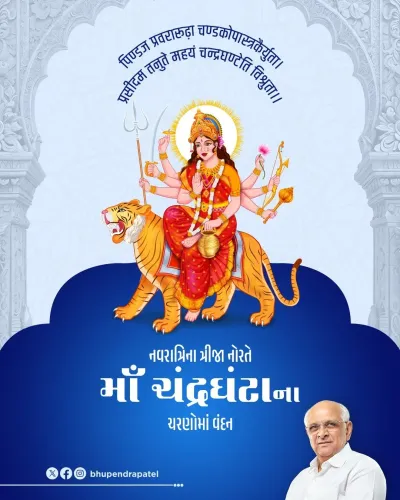
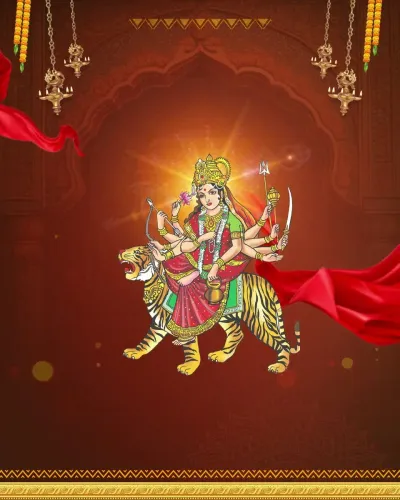
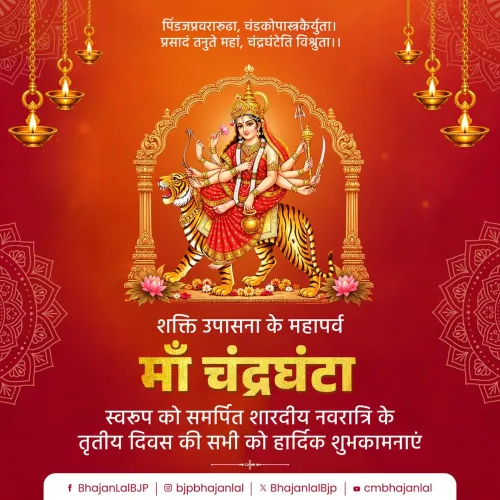
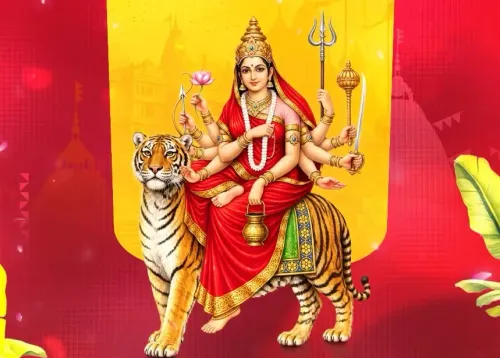
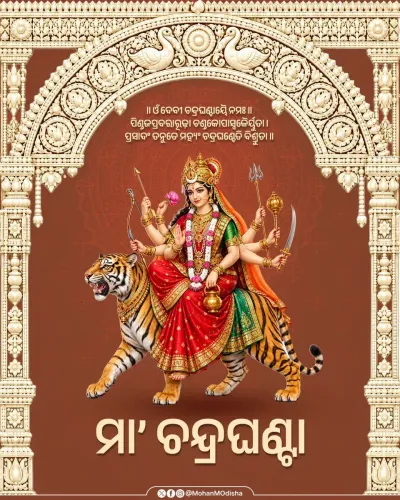
Maa Chandraghanta is depicted seated on a tiger with ten arms , holding weapons and a lotus; her name comes from the crescent moon-shaped bell on her forehead.
Mahant Surendranath Avadhut of Kalkaji Temple, New Delhi , said devotees began arriving the night before for early darshan.
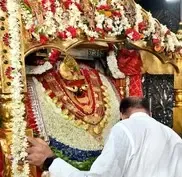
Large crowds thronged the Maa Chandraghanta Temple in Varanasi , part of the Nav Durga Mandirs, with long queues and chants of 'Jai Mata Di' .
Devotee Vinay Kumar Singh has travelled 25 km daily for Navratri for the past 22 years ; Sandhya Singh wakes at 3 a.m. for all nine days.
The festival continues for six more days , concluding with Maha Navami and Vijayadashami (Dussehra) .
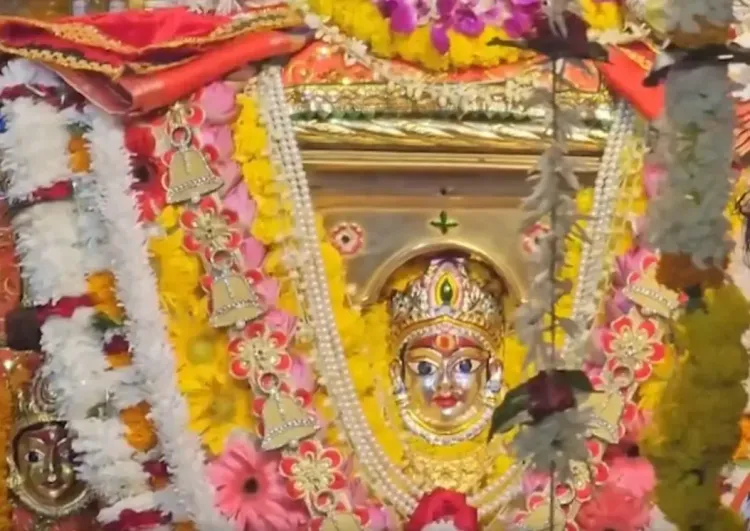
Devotees across India observed the third day of Navratri on Tuesday, 13 October 2026, offering prayers to Maa Chandraghanta — the third form of Goddess Durga — at temples from New Delhi to Varanasi, as chants of 'Jai Mata Di' filled the air. The day is associated with courage, strength, and protection, and devotees marked it with offerings of red flowers, early-morning vigils, and long queues for darshan.
Significance of Maa Chandraghanta
Maa Chandraghanta derives her name from the crescent moon-shaped bell — or ghanta — adorning her forehead. Depicted seated on a tiger with ten arms, she holds a lotus flower, bow, arrow, garland, sword, mace, trident, and water pot, and displays the posture of granting fearlessness to her devotees. The colour red holds special importance on this day, with worshippers offering red blooms at the deity's feet.
What the Kalkaji Temple Mahant Said
Mahant Surendranath Avadhut, Peethadhishwar of the renowned Kalkaji Temple in New Delhi, explained the day's rituals, saying, 'On the third day of Navratri, worship and prayers are offered to Goddess Chandraghanta.' He elaborated that devotees should first meditate on the goddess and then worship their Kul devi and devtas, offering red flowers as a mark of devotion. He noted that 'when a bell is rung, the sound of the ringing of the bell removes all the negative energies from the atmosphere, and the devotees are blessed.' Notably, devotees had begun arriving at the Kalkaji temple the night before to seek blessings.
Varanasi Temples Draw Large Crowds
In Varanasi, large gatherings were seen at the Maa Chandraghanta Temple, part of the city's historic Nav Durga Mandirs cluster. Pilgrims waited in long queues with flowers in hand, while the air echoed with chants of 'Jai Mata Di' and 'Jai, Maiyaa ki Jai'. A devotee at the site said, 'Baba (Lord Shiva) and Maa reside in Kashi; they have been called the Ardhnareshwar. You cannot seek darshan of Maa Durga and Lord Shiva without coming to Kashi.'
Voices from the Devotees
Devotee Sandhya Singh shared that she visits the temple every single day of Navratri, waking up as early as 3 a.m. 'All happiness and prosperity are bestowed upon us with the blessings of Maa Durga,' she said. Another devotee, Vinay Kumar Singh, said he travels 25 km each day to reach the temple and has maintained this ritual for the past 22 years. 'It gives me a lot of peace,' he said. He also noted that 'all nine forms of the Devi have distinct significance' and each bestows happiness and prosperity upon the faithful.
Navratri Celebrations Continue
This year's Navratri has drawn especially fervent participation across major temple cities, with authorities at several shrines reporting record footfall in the early days of the festival. The remaining six days of the nine-night festival will see devotees honour successive forms of Goddess Durga, culminating in Maha Navami and Vijayadashami (Dussehra).
Point of View
But the human detail here is worth pausing on: a devotee who has made a 25-km daily journey for 22 straight years, and pilgrims queuing through the night in Varanasi. That level of sustained personal devotion speaks to the festival's deep social and psychological function beyond ritual. What mainstream coverage often misses is that for millions of Indians, Navratri is not nine days of worship — it is the single most anchoring event of their year, structuring community, routine, and identity in ways that go far beyond religion.
NationPress
13 Oct 2026
Frequently Asked Questions
Who is Maa Chandraghanta and why is she worshipped on Day 3 of Navratri?
Maa Chandraghanta is the third form of Goddess Durga, worshipped on the third day of Navratri. She is depicted seated on a tiger with ten arms and symbolises courage, strength, and protection; her name comes from the crescent moon-shaped bell (ghanta) on her forehead.
What are the rituals observed on Navratri Day 3?
Devotees offer red flowers to Maa Chandraghanta, ring bells to drive away negative energy, and meditate on the goddess before worshipping their Kul devi. Many devotees begin queuing at temples from the previous night to secure early darshan.
Which temples saw major celebrations on Navratri Day 3?
The Kalkaji Temple in New Delhi and the Maa Chandraghanta Temple in Varanasi — part of the Nav Durga Mandirs — witnessed large gatherings. Devotees in Varanasi waited in long queues with flowers while chanting 'Jai Mata Di'.
What is the significance of the colour red on Navratri Day 3?
Red is the colour associated with Maa Chandraghanta and the third day of Navratri. Devotees traditionally offer red flowers at the deity's feet as a mark of devotion and to seek her blessings.
When does Navratri 2026 end?
Navratri 2026 continues for six more days after Day 3, concluding with Maha Navami and Vijayadashami (Dussehra). Each of the nine days honours a distinct form of Goddess Durga.