Navratri Day 9: Devotees throng temples nationwide on Maha Navami
Synopsis
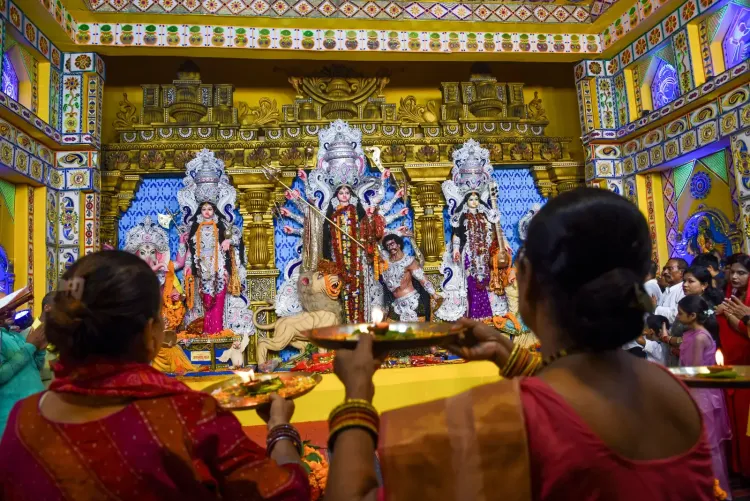
On the ninth and final day of Sharadiya Navratri, millions of devotees visited temples from Varanasi to Dewas to New Delhi to worship Maa Siddhidatri — a deity believed to confer the blessings of all nine goddess forms in a single darshan. From knee-crawling vows at Mata Tekri to the ancient Rakta Peeth in Dewas, India's Maha Navami fervor wrapped up a nine-day festival of unparalleled spiritual scale.
Key Takeaways
Maha Navami on 19 October 2026 marked the ninth and concluding day of Sharadiya Navratri across India.
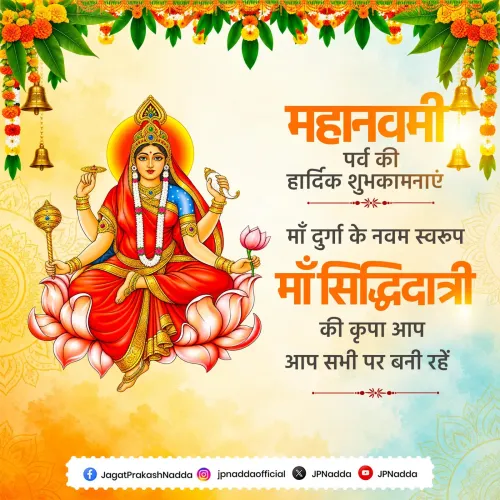
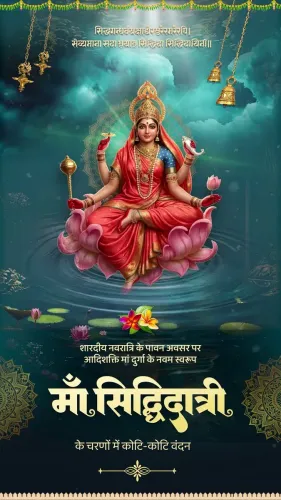
Devotees worshipped Maa Siddhidatri , believed to confer the blessings of all nine forms of Goddess Durga in a single visit.
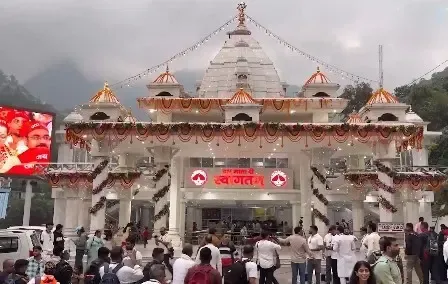
Major celebrations were reported at the Maa Siddhidatri Devi Temple in Varanasi , Jhandewalan Temple in New Delhi , and Chamunda Mata and Tulja Bhawani temples in Dewas, Madhya Pradesh .
The Chamunda Mata Temple in Dewas is revered as a Rakta Peeth , a site of rare significance in the Shakti pilgrimage circuit.
Many devotees observed Kanya Pujan , a ritual worshipping young girls as manifestations of the goddess.
The festival concludes ahead of Vijayadashami (Dussehra) the following day.
Millions of devotees across India thronged prominent temples on 19 October 2026, the ninth and concluding day of Sharadiya Navratri, to worship Maa Siddhidatri — the ninth form of Goddess Durga — and seek blessings for prosperity, well-being and spiritual fulfilment. Devotional chants, bell-ringing and elaborate special prayers marked the auspicious occasion of Maha Navami at shrines from Varanasi to Dewas to the national capital.
Varanasi: Maa Siddhidatri Temple draws large crowds
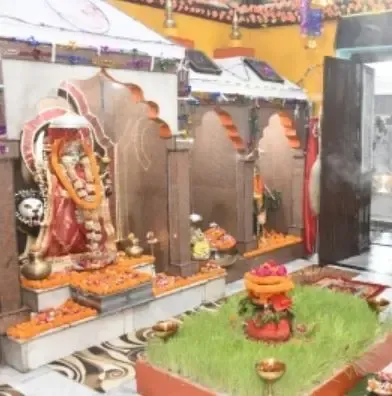
In Varanasi, Uttar Pradesh, a large number of worshippers visited the revered Maa Siddhidatri Devi Temple to pay obeisance on the festival's concluding day. Priest Bachcha Lal Mishra explained the theological significance of the occasion, saying: '…Devotees who for any reason were unable to worship the other goddesses throughout the festival can receive the blessings of all nine forms simply by having the darshan of Maa Siddhidatri on this final day…' The remark underscores a widely held belief that Maha Navami holds a cumulative sanctity for those unable to observe all nine days of the festival.
Delhi and Dewas Join the Nationwide Celebration
In New Delhi, the prominent Jhandewalan Temple witnessed a steady influx of devotees offering prayers and taking part in religious rituals as the festival drew to a close. In Dewas, Madhya Pradesh, thousands gathered at Mata Tekri to offer prayers at the Chamunda Mata and Tulja Bhawani temples. Several devotees fulfilled religious vows by crawling on their knees towards the shrines as a traditional expression of devotion, while others attended the morning aarti.
Priest Mukesh Nath of the Tulja Bhawani Mata Temple in Dewas spoke about the site's spiritual stature, saying: 'Because the gods reside here, the city is named Dewas. She is self-manifested, and such a large manifestation of Goddess Chamunda is not found anywhere else in the world.'
Chamunda Mata Temple: A Rakta Peeth of Rare Significance
The ancient Chamunda Mata Temple in Dewas is revered as a Rakta Peeth, based on the belief that the blood of Goddess Sati fell at the site. The temple holds a place of singular importance among Shakti pilgrimage circuits in central India. This year, the site drew thousands who attended both early-morning aartis and daytime rituals, with the temple premises decorated to mark the festive culmination.
Maa Sharda Shaktipeeth and the Meaning of Maha Navami
At the Maa Sharda Shaktipeeth shrine atop Trikuta Hill, devotees gathered to seek blessings, with the temple adorned in yellow and red decorations. Maa Siddhidatri was worshipped with traditional rituals, completing the nine-day cycle of goddess veneration.
Maha Navami is the final day of Sharadiya Navratri, dedicated to Maa Siddhidatri, who is traditionally associated with spiritual fulfilment, wisdom and the granting of siddhis — divine accomplishments. Many devotees also observed fasts and participated in Kanya Pujan, a ritual in which young girls are worshipped as living manifestations of the divine feminine. The festival concludes ahead of Vijayadashami (Dussehra), which follows the next day.
Point of View
City administration and crowd management simultaneously across dozens of major pilgrimage sites. What stands out in 2026 is the unchanged depth of participation despite rapid urbanisation: devotees in Dewas still crawl on their knees towards shrines, and priests in Varanasi still articulate a theology that makes the final day a complete substitute for nine. The festival's socio-religious architecture — Kanya Pujan, fasting, vow-fulfilment — also speaks to an intergenerational cultural transmission that no policy has managed to replicate or disrupt. Coverage often reduces this to crowd visuals; the more revealing story is the ritual grammar that keeps hundreds of millions returning year after year.
NationPress
19 Oct 2026
Frequently Asked Questions
What is Maha Navami and why is it significant?
Maha Navami is the ninth and final day of Sharadiya Navratri, dedicated to the worship of Maa Siddhidatri, the ninth form of Goddess Durga. It is considered especially significant because devotees believe that a single darshan of Maa Siddhidatri on this day confers the blessings of all nine goddess forms, making it spiritually cumulative for those who could not observe every day of the festival.
Which temples saw the biggest gatherings on Navratri Day 9?
Major gatherings were reported at the Maa Siddhidatri Devi Temple in Varanasi, the Jhandewalan Temple in New Delhi, and the Chamunda Mata and Tulja Bhawani temples at Mata Tekri in Dewas, Madhya Pradesh. The Maa Sharda Shaktipeeth atop Trikuta Hill also drew significant crowds.
What is the Chamunda Mata Temple in Dewas known for?
The ancient Chamunda Mata Temple in Dewas, Madhya Pradesh, is revered as a Rakta Peeth — a sacred site believed to be where the blood of Goddess Sati fell. It is considered one of the most important Shakti pilgrimage sites in central India and draws especially large crowds during Navratri.
What is Kanya Pujan and when is it performed?
Kanya Pujan is a Navratri ritual in which young girls are worshipped as living manifestations of the divine feminine. It is traditionally performed on Maha Ashtami (Day 8) or Maha Navami (Day 9), and involves offering food, clothing and gifts to the girls as an act of devotion.
What comes after Maha Navami?
Maha Navami is followed by Vijayadashami, also known as Dussehra, the next day. Dussehra marks the victory of good over evil and is celebrated across India with the symbolic burning of effigies of Ravana, Kumbhakarna and Meghnada.