Shardiya Navratri 2026: Devotees pack temples nationwide on Day 1
Synopsis
On the first day of Shardiya Navratri 2026, devotees poured into temples from Katra to Karnataka before sunrise — including a 400-year-old Surat shrine that Shivaji and Mahatma Gandhi once visited. The nationwide turnout underscores how Navratri has grown into one of India's largest annual religious mobilisations, with millions expected to participate over the nine-day festival.
Key Takeaways
Thousands of devotees visited temples across India on Sunday, 11 October , the first day of Shardiya Navratri 2026 .
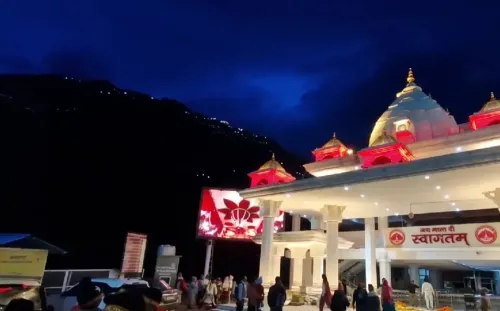
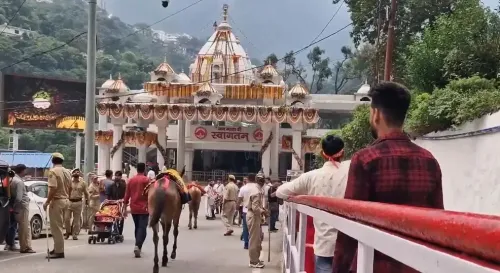
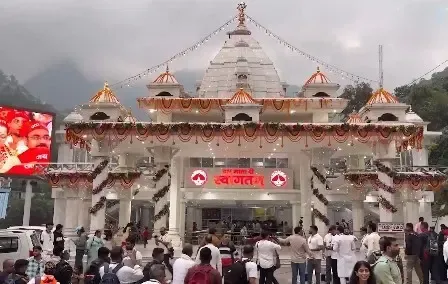
Heavy crowds gathered at Mata Vaishno Devi Shrine in Katra , with pilgrims queuing at RFID card counters from early morning.
The 400-year-old Juna Ambaji Temple in Surat saw devotees arriving from 3 a.m. ; its priest recounted visits by Shivaji and Mahatma Gandhi .
In Prayagraj , worshippers visited the Alop Shankari Shaktipeeth Temple and took holy dips in the Ganga at Dashashwamedh Ghat.
Shardiya Navratri begins on the first day of the Hindu month of Ashwin and concludes with Vijayadashami (Dussehra) , marking the victory of good over evil.
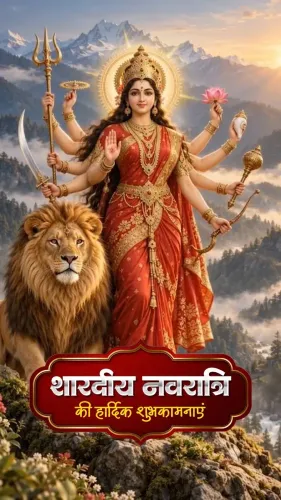
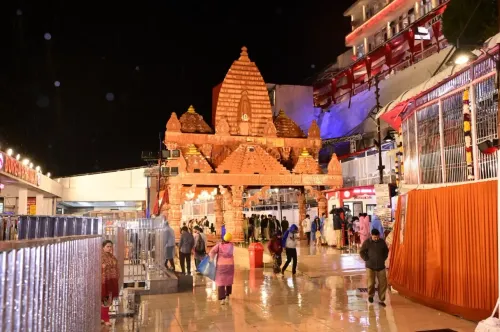
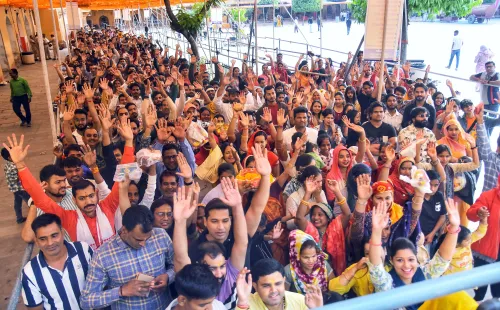
Thousands of devotees thronged temples across India on Sunday, 11 October, marking the first day of Shardiya Navratri with prayers, fasting, and elaborate rituals dedicated to Goddess Durga. From Jammu and Kashmir to Karnataka, long queues formed at major shrines well before dawn, reflecting the festival's deep pan-Indian resonance.
Vaishno Devi and North India
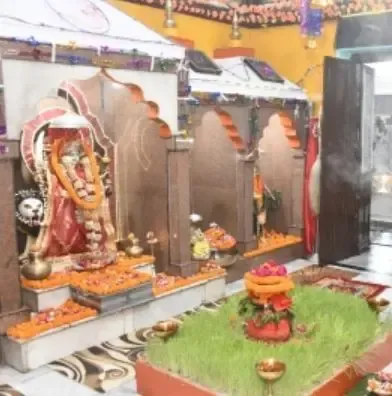
At the Mata Vaishno Devi Shrine in Katra, Jammu and Kashmir, heavy crowds gathered at RFID card counters as pilgrims collected their passes before beginning their ascent to seek the goddess's blessings. In Varanasi, Uttar Pradesh, devotees assembled at the Maa Shailputri Temple in Alaipura. One worshipper said, 'It's the first day of Shardiya Navratri, and we keep fasts throughout the entire period. We perform rituals, worship with complete devotion, and have come here for darshan. The crowd is massive, even more than usual.'
Prayagraj: Shaktipeeth and Holy Ganga
In Prayagraj, devotees visited the Alop Shankari Shaktipeeth Temple, one of the most revered Shakti shrines in the country. Mansukh Maharaj, chief priest of the temple, explained the site's significance: 'Here, the right ring finger of Mata Sati fell, and it became invisible. Therefore, it is renowned by the names Alopi Mata and Shaktipeeth Mahadeshwari.' Long queues had formed since morning, with arrangements in place for the large influx. Devotees also took a holy dip in the Ganga at Dashashwamedh Ghat in Daraganj and offered prayers to Maa Shailputri. Pramod Tiwari, a purohit in Prayagraj, noted that many worshippers were collecting Ganga water and soil for home worship, following the conclusion of Pitru Paksha.
Gujarat: The 400-Year-Old Temple of Maa Amba
In Surat, Gujarat, thousands visited the 400-year-old Juna Ambaji Temple in the historic Gopipura area for the morning Mangala Aarti. Jitendra Bharti Goswami, the temple's priest, recounted its storied past: 'This temple is very old, it is about 400 years old. Even Shivaji had visited this temple. Back then, whenever Shivaji set out on a military campaign, he would first come here for darshan, and then go ahead with his campaigns... Mahatma Gandhi also came here for darshan.' He noted that devotees had been arriving since 3 a.m. to seek blessings.
Maharashtra, Uttarakhand and Central India
In Mumbai, Maharashtra, large crowds gathered at the Shri Mumba Devi Temple, while worshippers in Haridwar, Uttarakhand assembled at the Maa Mansa Devi Temple. In Dewas, Madhya Pradesh, devotees attended morning aartis at the Maa Chamunda and Maa Tulja Bhavani temples. Harshal, priest at the Badi Mata Temple, said, 'Every person and devotee desires to have darshan of Maa on the very first day. Having darshan on the first day is considered a new beginning in one's life.'
Karnataka and the Festival's Significance
In Vijayapura, Karnataka, a grand candlelit procession of hundreds of devotees made its way to the Laxmi Temple, marking the start of Navratri celebrations. Shardiya Navratri begins on the first day of the Hindu lunar month of Ashwin and is observed across nine nights with devotion, fasting, and cultural festivities. The festival culminates with Vijayadashami, also known as Dussehra, which symbolises the victory of good over evil. This year's observance comes immediately after the conclusion of Pitru Paksha, adding to its spiritual weight for many devotees.
Point of View
Rivalling major political rallies in scale. The detail that devotees are collecting Ganga water and soil at Prayagraj, following Pitru Paksha, points to an often-overlooked continuity in the ritual calendar: these are not isolated events but a linked devotional sequence. State governments and shrine trusts managing pilgrimage infrastructure — RFID systems at Vaishno Devi, crowd management at Mumbai's Mumba Devi — face growing logistical pressure as participation expands year on year. The deeper story is India's festival economy and the administrative capacity required to serve it safely.
NationPress
11 Oct 2026
Frequently Asked Questions
When does Shardiya Navratri 2026 start and end?
Shardiya Navratri 2026 began on Sunday, 11 October, the first day of the Hindu lunar month of Ashwin. It is observed over nine nights and concludes with Vijayadashami, also known as Dussehra, which marks the victory of good over evil.
Which temples saw the largest crowds on Navratri Day 1?
Major temples across India reported heavy footfall, including Mata Vaishno Devi Shrine in Katra (Jammu and Kashmir), the Juna Ambaji Temple in Surat (Gujarat), the Alop Shankari Shaktipeeth in Prayagraj (Uttar Pradesh), Shri Mumba Devi Temple in Mumbai, and Maa Mansa Devi Temple in Haridwar (Uttarakhand).
What is the historical significance of the Juna Ambaji Temple in Surat?
The Juna Ambaji Temple in Surat's Gopipura area is approximately 400 years old. According to its priest, Jitendra Bharti Goswami, Chhatrapati Shivaji used to visit the temple before military campaigns, and Mahatma Gandhi also came here for darshan.
What is Ghatasthapana and why is it observed on Navratri Day 1?
Ghatasthapana is the ritual installation of a sacred pot (kalash) that marks the commencement of Navratri. It is performed on the first day of the festival to invoke the goddess and formally begin the nine-day period of worship and fasting.
Why is the Alop Shankari Shaktipeeth in Prayagraj significant?
The Alop Shankari Shaktipeeth is one of India's revered Shakti shrines. According to its chief priest, Mansukh Maharaj, the site is believed to be where the right ring finger of Mata Sati fell and became invisible — hence the names Alopi Mata and Shaktipeeth Mahadeshwari.