CM Yogi invokes Maitreyi, Gargi and Ahilyabai Holkar
Synopsis
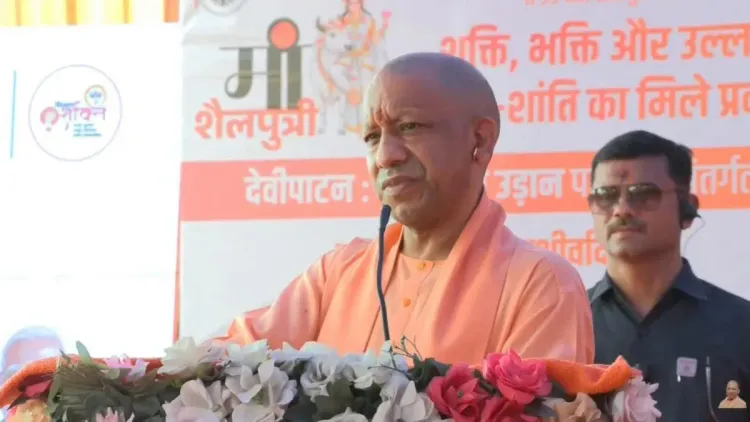
UP Chief Minister Yogi Adityanath posted a Hindi video tribute on 11 October 2026 honouring India's tradition of learned women, from Vedic philosophers Maitreyi and Gargi to 18th-century Maratha ruler Ahilyabai Holkar, whom he called Lokamata.
Key Takeaways
CM Yogi Adityanath posted on 11 October 2026 invoking Maitreyi, Gargi, and Ahilyabai Holkar as icons of India's tradition of learned and sovereign women.
Maitreyi and Gargi Vachaknavi are celebrated in the Upanishads as among the earliest named women philosophers in recorded history.
Ahilyabai Holkar (1725–1795) ruled the Maratha Malwa Sultanate for nearly three decades and is credited with rebuilding the Kashi Vishwanath temple in Varanasi.
The post included a video , indicating a produced cultural tribute rather than a spontaneous message.
The tribute connects to CM Yogi's identity as head of the Gorakhnath Math and his close association with Varanasi's Shaivite heritage.
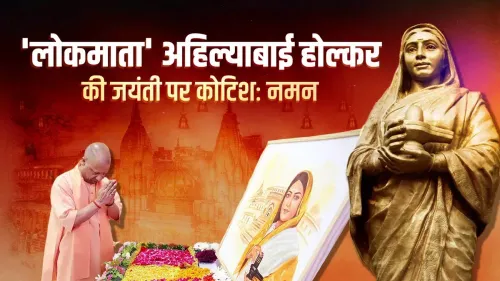
From the Vedic sage Maitreyi to the philosopher-queen Gargi and the 18th-century administrator Lokamata Ahilyabai Holkar, India's civilisational memory is populated by women whose intellect and moral courage shaped entire epochs. Uttar Pradesh Chief Minister Yogi Adityanath invoked that lineage on Sunday, 11 October 2026, sharing a video tribute that traces the arc of India's learned and sovereign women across millennia.
The post, written in Hindi, opens: 'Bharat mein Maitreyi va Gargi se lekar Lokamata Ahilyabai Holkar tak, vidushi nariyon ki anek gathayen hain...' — 'In India, from Maitreyi and Gargi to Lokamata Ahilyabai Holkar, there are countless sagas of learned women.' The phrasing is deliberate: it spans roughly three thousand years of Indian history in a single breath, anchoring the present in an unbroken tradition of female scholarship and governance.
Who are Maitreyi, Gargi and Ahilyabai Holkar?
Maitreyi and Gargi Vachaknavi are among the earliest named women philosophers in recorded history, both celebrated in the Upanishads — ancient Sanskrit texts dated broadly to the first millennium BCE. Maitreyi is remembered for her dialogue with the sage Yajnavalkya on the nature of the immortal self; Gargi for her fearless cross-examination of Yajnavalkya at a royal court debate, questioning him on the ultimate ground of existence. Their presence in canonical scripture has made them enduring reference points in arguments about India's indigenous intellectual tradition.
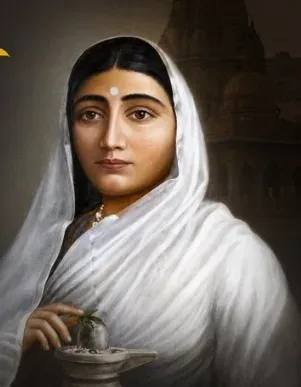
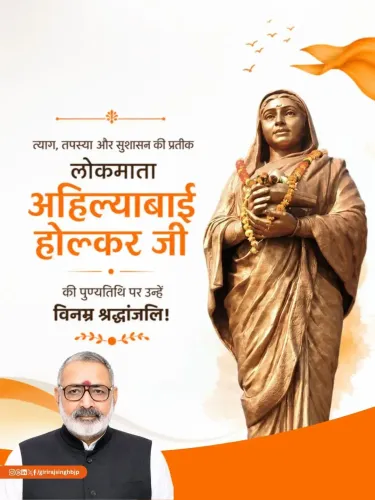
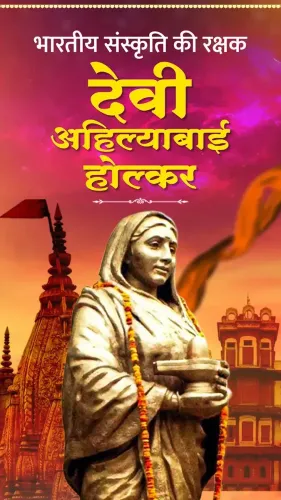
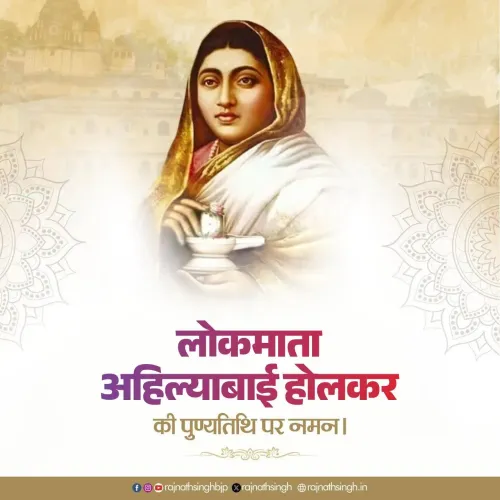
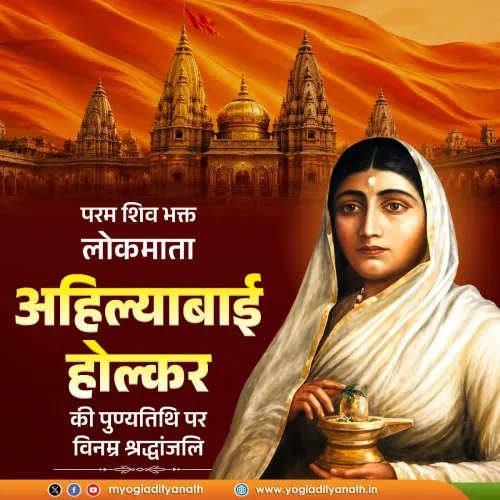
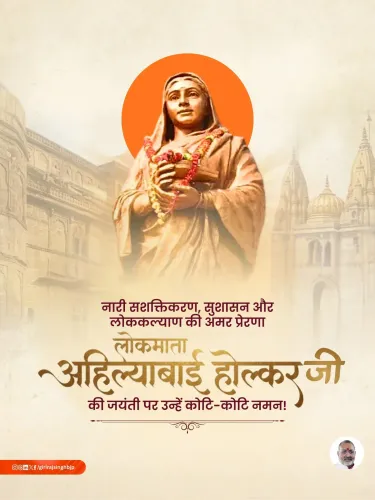
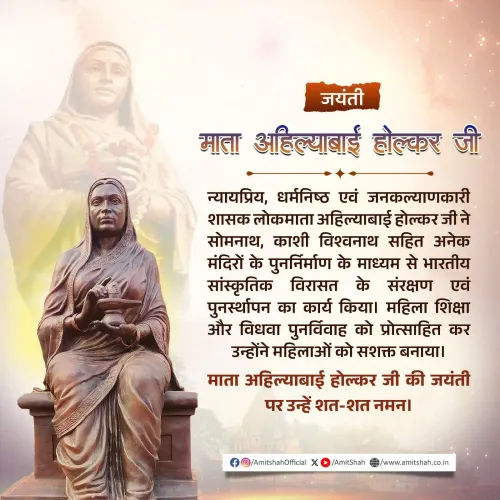
Ahilyabai Holkar (1725–1795) ruled the Maratha Malwa Sultanate from Maheshwar for nearly three decades after the death of her son and father-in-law. A gifted administrator, she rebuilt and endowed temples, ghats, and dharamshalas across the subcontinent — from Varanasi to Dwarka — and is credited with restoring the Kashi Vishwanath temple. She has been canonised in popular memory as 'Lokamata' (Mother of the People), a title that frames governance as an act of maternal care. Her connection to Varanasi — which falls within CM Yogi's political and spiritual orbit — gives the reference an additional resonance.
Why Varanasi and Gorakhnath Math frame this tribute
CM Yogi's identity as head of the Gorakhnath Math in Gorakhpur shapes how he engages with cultural and religious history. The Math's tradition has long emphasised Shakti — the divine feminine principle — alongside the Nath sect's ascetic lineage. Invoking Ahilyabai Holkar, who rebuilt the Kashi Vishwanath Jyotirlinga, places the tribute at the intersection of feminine administrative authority and Shaivite sacred geography — both central to the Chief Minister's public identity.
The post accompanies a video, suggesting a produced segment rather than a spontaneous reflection — a format CM Yogi's office has used regularly to communicate cultural messaging on significant dates and occasions.
Three thousand years of Indian women's history, compressed into one post — and the Chief Minister is betting the audience still knows every name.
Point of View
000-year sweep — from Upanishadic sages to a Maratha queen — reflects a recurring BJP and Hindutva-adjacent strategy of civilisational framing: presenting contemporary political values as continuous with ancient Indian excellence. The specific choice of Ahilyabai Holkar, who rebuilt the Kashi Vishwanath temple, is not incidental given Yogi's stewardship of the Kashi Vishwanath Corridor project. The post is light on policy but heavy on cultural identity-building — a mode the CM has deployed consistently to consolidate a narrative of Hindu renaissance with women as its historical backbone.
NationPress
11 Oct 2026
Frequently Asked Questions
Who is Ahilyabai Holkar and why is she called Lokamata?
Ahilyabai Holkar (1725–1795) was the ruler of the Maratha Malwa kingdom, known for her just administration and for building and restoring temples across India, including the Kashi Vishwanath temple. She earned the title 'Lokamata' (Mother of the People) for her welfare-oriented governance.
Who were Maitreyi and Gargi in ancient India?
Maitreyi and Gargi Vachaknavi were women philosophers celebrated in the Upanishads, the ancient Sanskrit philosophical texts. Maitreyi is known for her dialogue on the immortal self; Gargi for boldly questioning the sage Yajnavalkya at a royal court debate.
Why did CM Yogi Adityanath post about Indian women scholars?
CM Yogi posted a Hindi video tribute on 11 October 2026 honouring India's tradition of learned and governing women, spanning from Vedic-era philosophers to the 18th-century ruler Ahilyabai Holkar. No specific occasion was named in the post.
What is the Gorakhnath Math and what is CM Yogi's role there?
The Gorakhnath Math is a prominent Hindu monastery in Gorakhpur, Uttar Pradesh, associated with the Nath sect. CM Yogi Adityanath is its head (mahant), a role that shapes his public engagement with religious and cultural history.
What connection does Ahilyabai Holkar have with Varanasi?
Ahilyabai Holkar is credited with rebuilding the Kashi Vishwanath temple in Varanasi in the 18th century, making her a central figure in the city's Shaivite heritage — a connection that carries special significance for CM Yogi, who oversaw the Kashi Vishwanath Corridor project.