Crude oil, inflation data, earnings: 5 factors to watch for markets next week

Synopsis
Indian markets just snapped an eight-week losing streak with a sharp Friday bounce — but the recovery faces an immediate stress test. Crude above $100, back-to-back inflation prints in India and the US, a fragile rupee, and the start of earnings season will all converge in the coming week to determine whether the rebound is real or just a relief rally.
Key Takeaways
The Nifty50 rose 288.65 points (1.30%) to 22,520.45 and the Sensex gained 879.09 points (1.23%) to 72,472.33 on Friday, 11 October , snapping an eight-week losing streak .
Brent crude above $100 a barrel and WTI above $90 remain the dominant macro risk, amplified by tensions around Iran and the Strait of Hormuz .
US September CPI data is due Wednesday and will shape Federal Reserve rate expectations; India's September CPI and WPI prints are also due during the week.
Continued FII outflows and a weakening rupee remain structural headwinds despite Friday's recovery.
The corporate earnings season accelerates next week, with revenue growth, margins, and management guidance all under the microscope.
Global 'higher for longer' rate signals continue to pressure emerging-market capital flows, adding to the uncertainty.
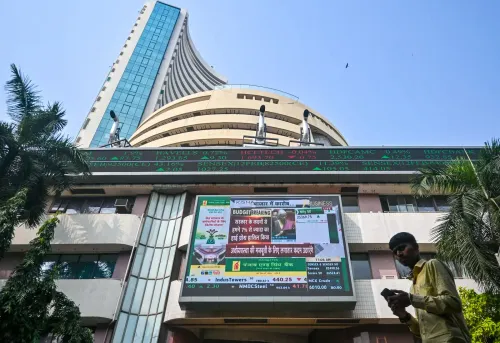
Indian equities are headed into a pivotal week, with crude oil prices above $100 a barrel, key inflation prints in India and the US, rupee movements, global bond yields, and the start of the corporate earnings season all set to determine whether the recent recovery can hold after eight consecutive weeks of losses on Dalal Street.
Friday's Recovery Snaps a Bruising Streak
Domestic benchmark indices staged a sharp rebound on Friday, 11 October, driven by broad-based buying in information technology (IT), fast-moving consumer goods (FMCG), automobile, and financial stocks. The Nifty50 surged 288.65 points, or 1.30%, to close at 22,520.45, while the BSE Sensex advanced 879.09 points, or 1.23%, to settle at 72,472.33. The gains snapped an eight-week losing run for both benchmarks — the longest such streak in recent memory. That said, structural headwinds including persistent foreign investor outflows, a weakening rupee, and elevated oil prices have not gone away.
Crude Oil in Focus as Iran Tensions Simmer
Brent crude is trading above the $100-per-barrel mark, while West Texas Intermediate (WTI) remains above $90. Uncertainty surrounding Iran, the Strait of Hormuz, and regional energy infrastructure has heightened fears of potential supply disruptions. For India — which imports roughly 85% of its crude oil requirements — any sustained price spike translates directly into a wider current account deficit, a weaker rupee, and inflationary pressure. Crude at these levels is arguably the single biggest macro risk overhanging Indian equities right now.
Inflation Prints: India and US Both Due
In the United States, the September Consumer Price Index (CPI) report is scheduled for release on Wednesday and will offer fresh insight into price pressures ahead of the Federal Reserve's next policy decision. US retail sales data will also be in focus — stronger-than-expected readings could keep Treasury yields and the dollar elevated, which typically weighs on emerging-market equities including India. Back home, India's September CPI and wholesale price index (WPI) inflation figures are due, providing clues on domestic price trends. Any signal of persistent inflation could harden expectations for a tighter Reserve Bank of India (RBI) policy stance, directly affecting rate-sensitive sectors such as banking, real estate, and auto.
Corporate Earnings Season Gathers Pace
A busy corporate results calendar will be another key driver during the week. Investors will scrutinise revenue growth, profit margins, management commentary, and demand outlook to judge whether earnings can support current market valuations amid a challenging macro environment. Results from major Indian listed companies, alongside significant corporate announcements in the US, could trigger sector-specific swings and set the tone for broader market direction. Earnings quality — not just the headline profit number — will be closely watched given elevated input costs.
Rupee and Global Bond Yields Round Out the Picture
Movements in the Indian rupee will remain a critical barometer of stress from elevated oil prices and continued foreign institutional investor (FII) outflows. A sharper depreciation could amplify imported inflation and prompt tighter domestic financial conditions. Meanwhile, global monetary policy expectations and US bond-market movements will keep investor nerves on edge throughout the week. This comes amid a broader global repricing of risk as central banks in advanced economies signal a 'higher for longer' rate environment — a dynamic that has historically pressured emerging-market capital flows.
Whether Friday's rebound marks a genuine turning point or merely a technical bounce will become clearer as these five factors play out over the coming sessions.
Point of View
The Fed repricing will hit emerging markets swiftly, and India's fragile rupee and elevated current account deficit leave little buffer. What markets need is not one good day but a sustained moderation in oil, a dovish data surprise, and earnings that validate valuations — all three look uncertain right now. The earnings season will be the decisive swing factor: if margins hold despite input cost pressure, the bull case for a sustained recovery strengthens; if they disappoint, the eight-week losing streak may simply have been interrupted rather than ended.
NationPress
11 Oct 2026
Frequently Asked Questions
Why did the Sensex and Nifty rebound on 11 October?
The Sensex and Nifty50 recovered sharply on Friday, 11 October , driven by broad buying in IT, FMCG, automobile, and financial stocks. The rebound snapped eight consecutive weeks of losses for both benchmark indices, though structural headwinds such as high crude oil prices and FII outflows remain in place.
How will crude oil prices affect Indian stock markets next week?
Brent crude trading above $100 a barrel is a significant headwind for Indian equities. Higher oil prices widen India's current account deficit, weaken the rupee, stoke inflation, and increase pressure on the RBI to keep rates elevated — all factors that dampen equity sentiment, particularly in rate-sensitive and import-dependent sectors.
What inflation data is due next week and why does it matter?
The US September CPI report is due on Wednesday , alongside US retail sales data , which will shape expectations for the next Federal Reserve rate decision. In India, September CPI and WPI prints are also expected during the week; persistent inflation could harden the RBI's policy stance and weigh on rate-sensitive equities.
What role will corporate earnings play in market direction next week?
The corporate earnings season accelerates next week, with investors focusing on revenue growth, profit margins, and management guidance. Strong results could support the case for a sustained recovery in valuations; disappointing numbers — especially on margins given elevated input costs — could renew selling pressure.
What are the key risks that could reverse the market recovery?
The main risks include crude oil remaining elevated above $100 , a hotter-than-expected US CPI print triggering further Fed hawkishness, continued FII outflows weakening the rupee, and weak corporate earnings. Any combination of these could quickly erase Friday's gains and resume the previous losing streak.