CM Yogi: Housing scheme funds to go in women's names
Synopsis
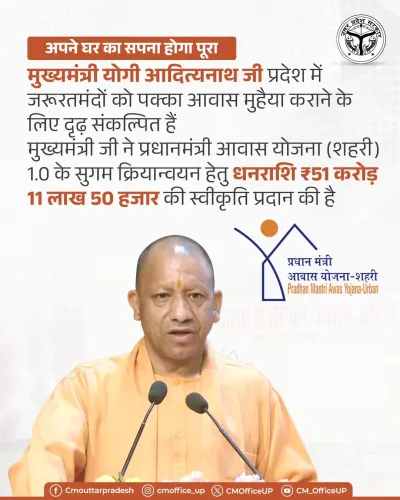
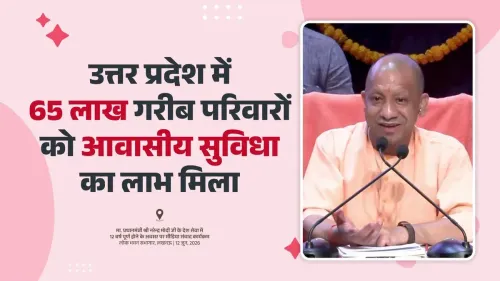
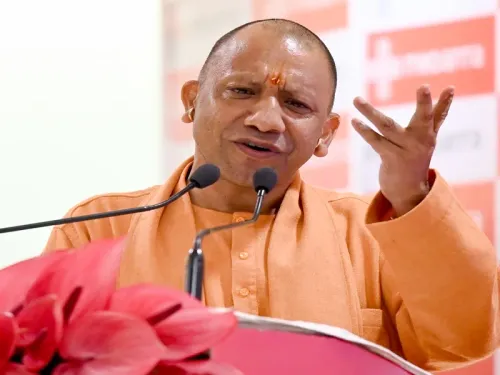
Uttar Pradesh CM Yogi Adityanath announced on 11 October 2026 that housing grant amounts under both PMAY and the state's Mukhyamantri Awas Yojana will be credited and registered in the name of the woman of the beneficiary household.
Key Takeaways
CM Yogi Adityanath announced on 11 October 2026 that housing funds under PMAY and CMAY will go in the woman's name.
The policy covers beneficiaries under both the central Pradhan Mantri Awas Yojana and the state-level Mukhyamantri Awas Yojana .
The move shifts property ownership — not just benefit transfer — to the female head of household.
Uttar Pradesh is one of the largest beneficiary states under PMAY, meaning the impact could reach hundreds of thousands of families.
The decision extends a broader national pattern of routing welfare assets through women to improve household outcomes.
A single policy line — quietly consequential — emerged from Uttar Pradesh Chief Minister Yogi Adityanath on Sunday, 11 October 2026: every family receiving a home under a central or state housing scheme will have the grant amount registered in the name of the woman of the house. Not the head of household. The woman.
Sharing the announcement on X, the Chief Minister stated: 'सरकार ने यह भी तय किया है कि जिस परिवार को प्रधानमंत्री आवास योजना या मुख्यमंत्री आवास योजना के तहत आवास मिलेगा, उसकी राशि घर की मालकिन के नाम पर जाएगी' — ('The government has also decided that whichever family receives a house under the Pradhan Mantri Awas Yojana or Mukhyamantri Awas Yojana, the amount for it will go in the name of the woman of the house.')
What PMAY and CMAY mean on the ground in UP
The Pradhan Mantri Awas Yojana (PMAY) is the central government's flagship affordable-housing programme, channelling direct benefit transfers to economically weaker and low-income households. The Mukhyamantri Awas Yojana (CMAY) is its state-level counterpart in Uttar Pradesh, designed to cover beneficiaries who may fall outside PMAY's eligibility net. Together, they represent the largest pipeline of residential assets reaching rural and urban poor families in India's most populous state.
By routing the disbursement amount — and by implication, the ownership record — directly into the woman's name, the policy creates a property right where often none existed before. In much of rural Uttar Pradesh, land and housing have historically been registered in male names, leaving women financially invisible even within households that own assets.
Women's ownership as a policy lever
The move aligns with a broader national pattern of tying welfare delivery to female beneficiaries — from Jan Dhan accounts to Ujjwala LPG connections — on the evidence that resources routed through women are more reliably spent on family welfare and generate stronger long-term economic outcomes. Housing, however, is a step beyond consumption benefits: it is an asset that can be collateralised, inherited, and leveraged.
Making the woman the named owner of a government-funded home does not merely shift paperwork. It shifts bargaining power inside the household and legal standing outside it — in courts, in banks, and in land records offices.
With Uttar Pradesh running one of the largest beneficiary bases for both PMAY and CMAY in the country, the cumulative effect — measured in title deeds bearing women's names — could reach hundreds of thousands of families in the coming years.
A government house in a woman's name is not just shelter. It is her first piece of the formal economy.
Point of View
High-signal policy move that converts a welfare transfer into a property right — one of the most durable forms of economic inclusion. For CM Yogi, it reinforces a governance narrative centred on women's welfare ahead of a politically active period in Uttar Pradesh. The decision also aligns UP with a proven national template: evidence consistently shows that when assets are titled in women's names, intra-household resource allocation improves and asset retention is stronger. The real test will be implementation — whether district-level land record offices and bank accounts are updated to reflect female ownership in practice, not just in policy announcements.
NationPress
11 Oct 2026
Frequently Asked Questions
What did CM Yogi announce about the housing scheme for women?
CM Yogi Adityanath announced that the grant amount for any family receiving a house under the Pradhan Mantri Awas Yojana or Mukhyamantri Awas Yojana in Uttar Pradesh will be credited and registered in the name of the woman of the household.
What is the Mukhyamantri Awas Yojana in Uttar Pradesh?
The Mukhyamantri Awas Yojana (CMAY) is a state-level housing scheme in Uttar Pradesh designed to provide homes to low-income families who may not qualify under the central PMAY programme.
Why is putting housing scheme funds in women's names significant?
It converts a welfare benefit into a formal property right for women, who have historically been excluded from land and housing records in much of rural Uttar Pradesh, giving them legal standing in banks, courts, and land registries.
Does PMAY already allow women to be primary owners?
The central PMAY guidelines have encouraged joint ownership or women-first registration, but UP's announcement makes it a firm state policy that the disbursement amount will go specifically in the woman's name.
How many families in UP could benefit from this policy?
Uttar Pradesh has one of the largest beneficiary bases under PMAY in the country; the cumulative number of families reached through both PMAY and CMAY could run into hundreds of thousands over the coming years.