CM Yogi Orders New Homes for Flood-Hit Families Under PMAY
Synopsis
Chief Minister Yogi Adityanath has ordered that flood-affected families in Uttar Pradesh whose homes are completely destroyed receive new houses under PMAY or MMAY, while families with repairable damage get cash grants — channelling existing welfare schemes for post-flood rehabilitation.
Key Takeaways
CM Yogi Adityanath directed on September 29, 2026 that families with completely flood-destroyed homes receive new houses under PMAY or MMAY .
Families with partially damaged but repairable homes will receive cash grants to fund repairs.
Pradhan Mantri Awas Yojana was launched in 2015 to provide pucca housing to low-income families across India.
Uttar Pradesh uses a two-scheme model — central PMAY plus state MMAY — to widen the eligibility net for flood victims.
Annual flooding along the Ganga and its tributaries makes post-flood housing relief a recurring governance challenge in UP.
District-level rollout of allotments and repair grants will determine the real-world impact of the directive.
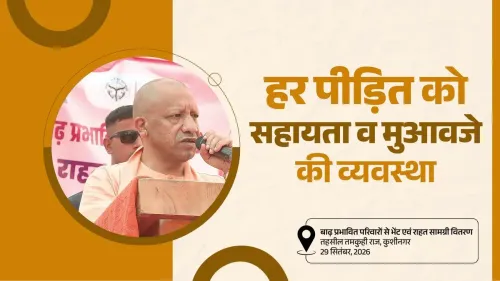
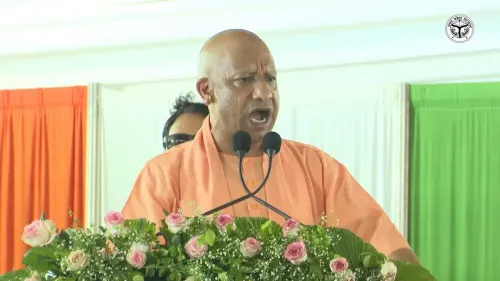
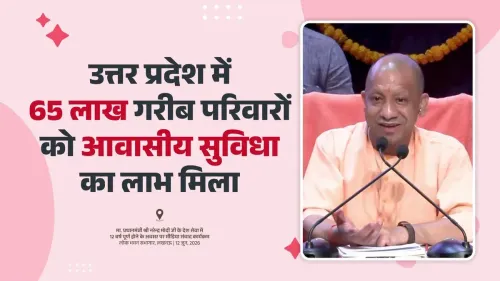
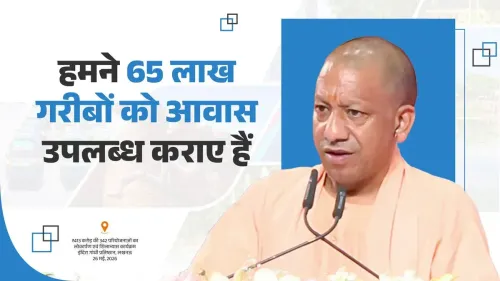
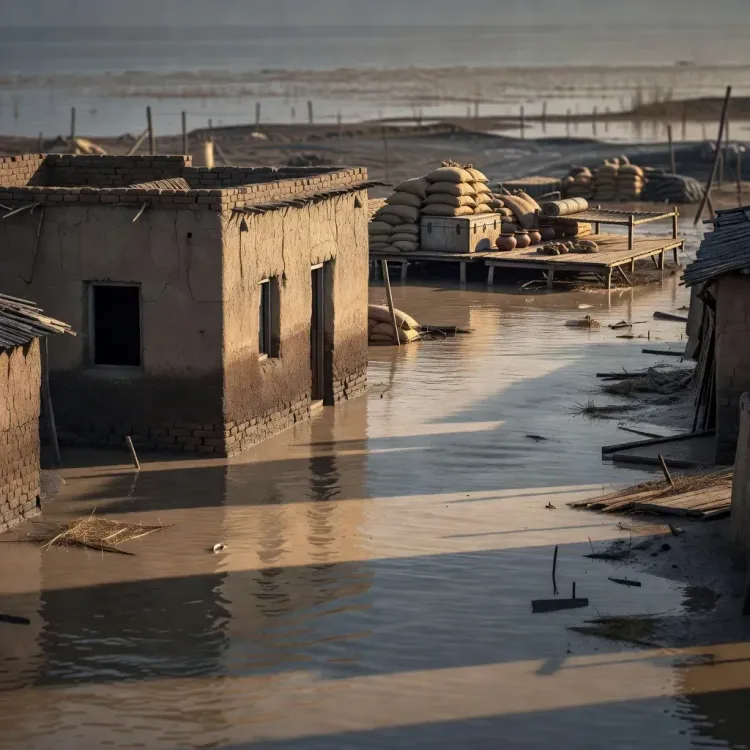
When a flood takes your home, the question is not just about shelter — it is about whether the government shows up fast enough to matter. On Tuesday, September 29, 2026, the Chief Minister's Office of Uttar Pradesh announced that Chief Minister Yogi Adityanath has directed officials to provide new houses to families whose homes were completely destroyed by floods, and to release repair funds for those whose homes suffered partial damage.
What CM Yogi Has Ordered — and for Whom
The directive is clear and two-tiered. Families whose homes have been completely destroyed by flooding will be entitled to a new house under either the Pradhan Mantri Awas Yojana (PMAY) or the Mukhya Mantri Awas Yojana (MMAY). Families whose homes are damaged but repairable will receive a cash grant to fund those repairs. The Chief Minister's Office quoted Yogi Adityanath directly: 'baadh ke kaaran agar kisi ka makaan poori tarah nasht ho gaya hai' — 'if anyone's house has been completely destroyed due to flooding' — that family will be given a new home under the relevant scheme.
Two Schemes, One Safety Net
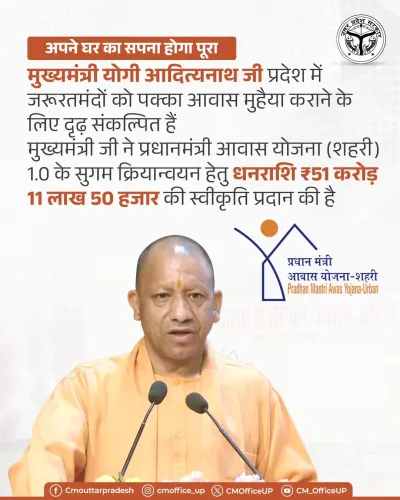
Pradhan Mantri Awas Yojana, launched nationally in 2015, was designed to deliver pucca — permanent, structurally sound — houses to low-income rural and urban families, with a target of housing for all. Uttar Pradesh, India's most populous state, has repeatedly used PMAY as the backbone of post-flood housing rehabilitation, supplementing it with the state-level Mukhya Mantri Awas Yojana to catch families who fall outside central eligibility criteria. The two-scheme architecture means the relief net is wider than either programme alone could provide.
A Recurring Crisis, a Familiar Response
Annual monsoon flooding is not an anomaly in Uttar Pradesh — it is a governance calendar event. Districts along the Ganga and its tributaries face inundation most years, displacing thousands of rural households. State governments here have consistently chosen to route post-disaster housing support through existing welfare architecture rather than launch standalone emergency programmes, keeping administrative pipelines familiar and theoretically faster to activate. The real test, as always, will be at the district level: how quickly beneficiary lists are verified, how swiftly funds move, and whether the most vulnerable households — often without formal land records — are included.
The orders have been issued. The clock on delivery starts now.
Point of View
The Yogi government is betting on institutional familiarity over bureaucratic novelty — a pragmatic choice that avoids setup delays but inherits existing bottlenecks around beneficiary verification and land records. The two-tiered structure, separating full reconstruction from repair grants, signals a more calibrated response than blanket relief, which could improve targeting. However, the directive's political value will be measured entirely by district-level speed of delivery, where UP's administrative machinery has historically been uneven. If the orders translate into timely allotments before the next monsoon season, they reinforce the government's welfare-delivery narrative; if not, they become a benchmark for criticism.
NationPress
29 Sept 2026
Frequently Asked Questions
What has CM Yogi ordered for flood-affected families in UP?
CM Yogi Adityanath has ordered that families whose homes were completely destroyed by floods receive a new house under PMAY or MMAY, and that families with partially damaged homes receive cash grants for repairs.
What is Pradhan Mantri Awas Yojana and how does it help flood victims?
Pradhan Mantri Awas Yojana (PMAY) is a central government housing scheme launched in 2015 to provide permanent pucca houses to low-income families. In Uttar Pradesh, it is used as a primary channel for post-flood housing rehabilitation.
What is Mukhya Mantri Awas Yojana in Uttar Pradesh?
Mukhya Mantri Awas Yojana (MMAY) is a UP state-level housing scheme that supplements PMAY by covering families who may not qualify under central eligibility criteria, widening the relief net for flood-affected households.
Will flood-affected families get money for house repairs in UP?
Yes. Families whose homes were damaged by floods but can be repaired will receive a cash grant from the UP government specifically for repair work, as per CM Yogi's September 2026 directive.
Which districts in UP are most affected by annual flooding?
Districts along the Ganga and its tributaries in Uttar Pradesh face recurring monsoon flooding each year, though the specific districts affected vary by season. The state government activates welfare schemes for these areas annually.