CM Yogi: UP Sanctions PMAY-G Homes for 6.18 Lakh Families
Synopsis
The Chief Minister's Office of Uttar Pradesh announced on 25 June 2026 that over 6.18 lakh poor rural families have been sanctioned homes under PMAY-G. CM Yogi Adityanath pledged the 'double engine' government will swiftly fulfil their dream of a permanent house.
Key Takeaways
More than 6.18 lakh poor rural families in Uttar Pradesh received new home sanctions under Pradhan Mantri Awas Yojana (Gramin) on 25 June 2026 .
CM Yogi Adityanath stated the 'double engine' government will soon turn the dream of a permanent house into reality for eligible families.
PMAY-G was launched in 2016 to replace the Indira Awas Yojana, originally targeting 2.95 crore rural houses nationally by 2022, later extended.
Uttar Pradesh consistently holds one of the largest shares of PMAY-G sanctions nationally due to its large rural population.
The conversion of sanctions into completed homes — and the pace of fund disbursement — remains the key metric to monitor going forward.
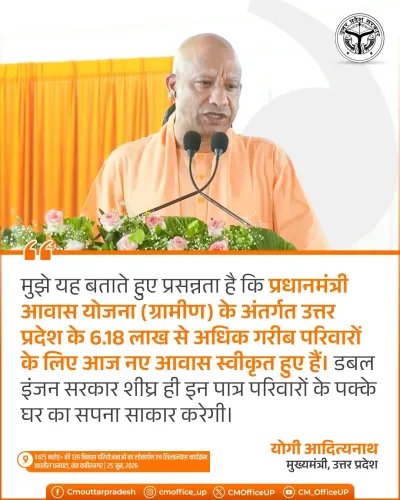
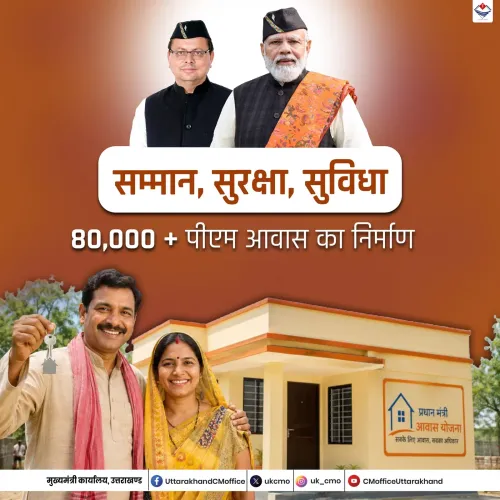
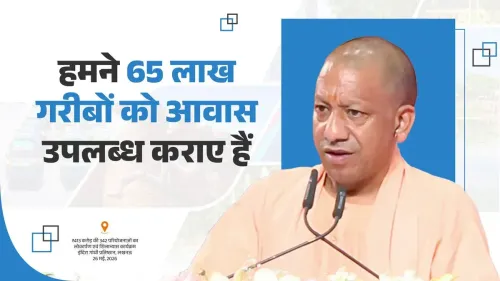
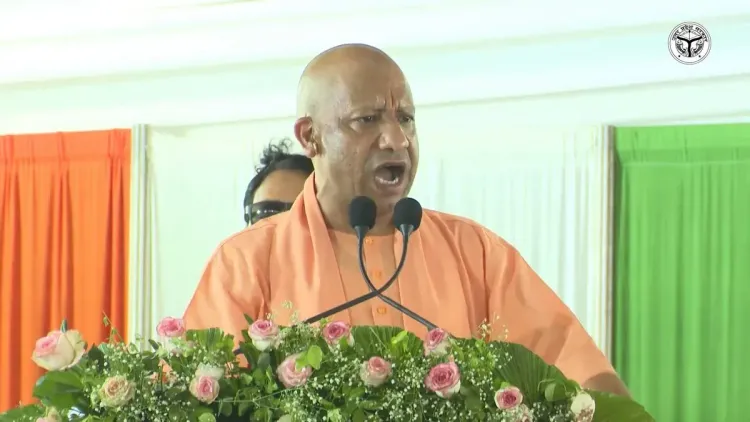
The Chief Minister's Office of Uttar Pradesh announced on Thursday, 25 June 2026 that more than 6.18 lakh poor rural families in the state have been sanctioned new homes under the Pradhan Mantri Awas Yojana (Gramin), with Chief Minister Yogi Adityanath pledging that the 'double engine' government will soon turn their dream of a permanent home into reality.
Context
The Chief Minister's Office posted on X, quoting CM Yogi Adityanath directly: 'Pradhan Mantri Awas Yojana (Gramin) ke antargat Uttar Pradesh ke 6.18 lakh se adhik garib parivaron ke liye aaj naye awas swikrit hue hain' — 'Under the Pradhan Mantri Awas Yojana (Gramin), new homes have been sanctioned today for more than 6.18 lakh poor families of Uttar Pradesh.' The Chief Minister added that the 'double engine' government — a term the BJP uses to describe aligned state and central administrations — will swiftly realise the dream of a permanent house for all eligible families.
Policy Backdrop
Pradhan Mantri Awas Yojana-Gramin (PMAY-G) was launched in 2016 by the central government, replacing the earlier Indira Awas Yojana, with an original target of building 2.95 crore rural houses across India by 2022. The scheme was subsequently extended with revised targets and continued funding to address remaining demand. Under PMAY-G, beneficiaries receive direct financial assistance to construct a pucca — that is, a permanent, structurally sound — house, along with convergence benefits such as toilets under the Swachh Bharat Mission and cooking gas connections.
Uttar Pradesh, as India's most populous state with a large and predominantly rural demographic, has consistently accounted for one of the largest shares of PMAY-G sanctions at the national level. The state government under CM Yogi Adityanath, in office since 2017, has repeatedly highlighted the scheme's implementation as evidence of 'double engine' governance — the idea that having the same party in power at both the state and central level accelerates welfare delivery.
Stakeholders and Impact
The immediate beneficiaries are more than 6.18 lakh rural households in Uttar Pradesh who have now received formal sanctions — the first step toward receiving funds and beginning construction of a permanent home. For families living in kutcha or semi-permanent structures, a PMAY-G sanction represents access to government-funded construction assistance, which typically includes multiple instalments disbursed directly to the beneficiary's bank account. The scale of this single-day sanction, if fully executed, would represent a significant addition to the state's rural housing stock.
Beyond individual families, the announcement carries implications for local construction economies in rural Uttar Pradesh, where PMAY-G activity generates demand for materials such as bricks, cement, and steel, as well as labour. Panchayat-level officials and district administrations will be responsible for verifying beneficiary eligibility, disbursing funds in tranches, and monitoring construction progress.
What's Next
The critical metric to watch is the conversion of sanctions into completed homes. Historically, the gap between sanctioned and completed houses under PMAY-G has been a point of scrutiny, with delays attributed to fund disbursement timelines, beneficiary documentation, and local administrative capacity. CM Yogi Adityanath's office has signalled urgency with the word 'shighra' — 'soon' — suggesting the state government intends to move quickly on disbursements and construction monitoring. Progress on completions in Uttar Pradesh, as well as any new funding allocations in upcoming central or state budgets, will determine whether today's sanctions translate into families moving into permanent homes.
Point of View
Where rural welfare delivery is a decisive vote-bank issue. The 'double engine' framing is a deliberate narrative strategy by the BJP to credit both the state and central governments simultaneously, reinforcing the political dividend of party alignment across levels of government. However, the real test lies in completion rates — sanctions are administrative approvals, and the state's track record on closing the gap between sanctioned and built homes will define the scheme's legacy. Analysts will watch whether this batch of sanctions is accompanied by accelerated fund releases or remains a headline figure that takes years to translate into occupied houses.
NationPress
24 Sept 2026
Frequently Asked Questions
What is Pradhan Mantri Awas Yojana Gramin?
Pradhan Mantri Awas Yojana-Gramin (PMAY-G) is a central government scheme launched in 2016 to provide financial assistance to rural poor households for constructing permanent, pucca homes, replacing the earlier Indira Awas Yojana.
How many houses were sanctioned in Uttar Pradesh under PMAY-G on 25 June 2026?
More than 6.18 lakh new homes were sanctioned for poor rural families in Uttar Pradesh under PMAY-G on 25 June 2026, as announced by the Chief Minister's Office.
What does 'double engine government' mean in the context of UP housing?
'Double engine government' is a term used by the BJP to describe states where the same party governs both at the state and central level, arguing this alignment speeds up the delivery of central welfare schemes like PMAY-G.
Who is eligible for PMAY-G benefits in Uttar Pradesh?
Eligibility under PMAY-G is determined by the Socio-Economic and Caste Census, targeting households without a pucca house or living in dilapidated structures, with priority given to the poorest rural families.
What is the difference between a PMAY-G sanction and a completed house?
A sanction is the formal government approval that a family will receive housing assistance; the house is built in stages as funds are disbursed directly to the beneficiary's bank account, so completion can take months after the initial sanction.