South Korea auto exports drop 5.5% in September on Mideast tensions
Synopsis
South Korea's auto export engine stalled in September — not uniformly, but selectively. While North America and the EU surged, Asia and the Middle East collapsed, and used-car tighter regulations carved into overall value. With Chinese automakers intensifying pressure and geopolitical risk unresolved, Seoul's auto sector faces a structural reckoning, not just a monthly dip.
Key Takeaways
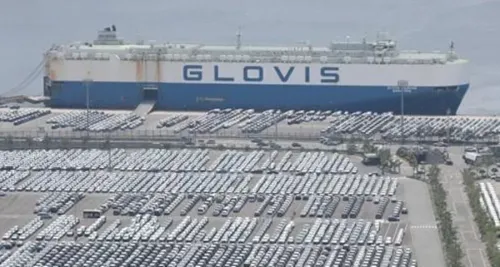
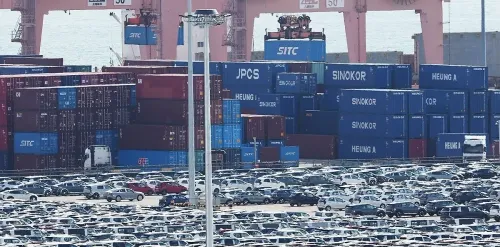
South Korea's automobile exports fell 5.5 per cent year-on-year in September 2026 to US$6.05 billion .
Exports to Asia and the Middle East plunged 60 per cent and 7.1 per cent respectively.
Exports to North America rose 9.2 per cent and the EU surged 15.3 per cent .
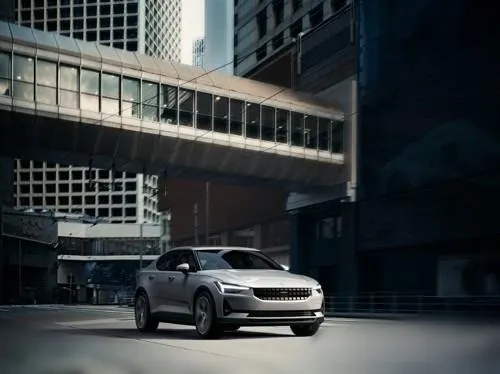
Eco-friendly vehicle exports grew 5.9 per cent to US$2.89 billion , a bright spot amid the decline.
Domestic sales fell 14.3 per cent to 135,000 units due to the Chuseok holiday, while production rose 3.7 per cent to 347,000 units .
The government flagged rising competition from Chinese automakers as a key risk to the sector's sustainable growth.
South Korea's automobile exports fell 5.5 per cent in September 2026 compared to the same month a year earlier, dragged down by persistent Middle East tensions and a sharp decline in used-car shipments, according to government data released on Monday, 19 October. The total export value slipped to US$6.05 billion from US$6.4 billion in the year-ago period.
Key Developments
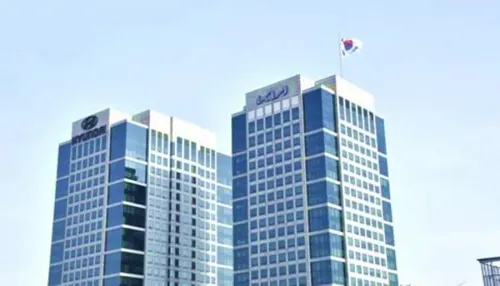
The Ministry of Trade, Industry and Resources attributed the decline to two primary factors: escalating geopolitical tensions in the Middle East and tighter regulations in major export markets that curbed used-car shipments. The ministry noted that these headwinds offset gains recorded in other regions.
Shipments to Asia and the Middle East bore the brunt of the decline, plunging 60 per cent and 7.1 per cent respectively, to US$330 million and US$350 million. This comes amid a broader fragmentation of global auto trade routes driven by geopolitical instability.
Bright Spots: North America, EU, and Eco-Friendly Vehicles
Not all regions moved in the same direction. Exports to North America rose 9.2 per cent to US$3.07 billion, while shipments to the European Union surged 15.3 per cent to US$1.11 billion. Together, these two markets now account for the dominant share of South Korea's automobile export value.
Eco-friendly vehicles — including battery electric and gasoline hybrid models — continued their upward momentum, with exports rising 5.9 per cent to US$2.89 billion. The resilience of the green vehicle segment signals a structural shift in South Korea's export mix, even as overall volumes face pressure.
Domestic Sales and Production
On the home front, domestic vehicle sales fell 14.3 per cent to 135,000 units in September, largely attributed to fewer working days during the Chuseok holiday period — a recurring seasonal factor that typically weighs on monthly sales figures.
Production, however, moved in the opposite direction, rising 3.7 per cent to 347,000 units as major automakers reached wage agreements with labour unions, improving factory productivity. Notably, this uptick in output could build inventory ahead of stronger demand months later in the year.
Government Response and Chinese Competition
The Ministry of Trade, Industry and Resources said it would maintain close engagement with the automobile industry to support sustainable growth, specifically flagging the intensifying competitive threat from Chinese automakers. The warning underscores a broader anxiety in the Korean auto sector: Chinese EV manufacturers have been aggressively expanding into markets where South Korean brands have traditionally held strong positions.
This is not the first time Seoul has flagged the China competition risk — policymakers have raised the concern at successive industry reviews this year, indicating the threat is shifting from potential to actual market-share pressure.
Market Reaction
South Korean equities reflected broader global jitters on Monday. The benchmark Korea Composite Stock Price Index (KOSPI) opened sharply lower, down 3.17 per cent, before paring losses significantly following institutional buying. By 11:20 am, the index was trading down just 14.8 points, or 0.26 per cent, at 5,653.25. A technology-led sell-off on Wall Street, linked to concerns over heavy spending on artificial intelligence (AI) infrastructure, had initially weighed on sentiment.
With the Middle East situation showing no clear sign of de-escalation and Chinese competition rising, South Korea's auto industry faces a complex environment heading into the final quarter of 2026.
Point of View
A figure that points to structural market-share erosion in its regional backyard — exactly where Chinese automakers are most aggressive. The North America and EU gains are real, but they reflect premium vehicle demand that is cyclical and rate-sensitive. Seoul's warning about Chinese competition is well-timed, but the data suggest the battle is already underway, not approaching. Eco-friendly vehicle export growth is the genuine positive, yet at US$2.89 billion it still trails the scale needed to offset the losses in traditional segments and Asia-Pacific routes.
NationPress
19 Oct 2026
Frequently Asked Questions
Why did South Korea's auto exports fall in September 2026?
South Korea's automobile exports declined 5.5 per cent in September 2026 to US$6.05 billion, primarily due to escalating Middle East tensions that disrupted shipments to that region and a fall in used-car exports linked to tighter regulations in key markets. Asia-bound shipments also dropped sharply by 60 per cent during the same period.
Which regions saw growth in South Korean auto exports?
North America and the European Union bucked the overall decline. Exports to North America rose 9.2 per cent to US$3.07 billion, while EU-bound shipments grew 15.3 per cent to US$1.11 billion in September 2026.
How did eco-friendly vehicle exports perform?
Exports of eco-friendly vehicles — including battery electric and gasoline hybrid models — rose 5.9 per cent to US$2.89 billion in September 2026, representing one of the few bright spots in an otherwise subdued month for the sector.
Why did domestic car sales fall in South Korea in September?
Domestic vehicle sales fell 14.3 per cent to 135,000 units in September 2026 primarily because of fewer working days during the Chuseok holiday period, a recurring seasonal factor, rather than any sustained demand weakness.
How is South Korea responding to competition from Chinese automakers?
The Ministry of Trade, Industry and Resources said it will maintain close engagement with the automobile industry to support sustainable growth as competition from Chinese automakers intensifies. The ministry has flagged Chinese EV makers as a key structural risk to South Korea's traditional export market positions.