S. Korea auto exports fall 5.5% in April as Middle East crisis hits shipments
Synopsis
South Korea's auto exports fell 5.5% in April — but the bigger story is the split: while the Middle East conflict gutted regional shipments by nearly 39%, it simultaneously drove a 139.7% domestic EV surge as higher oil prices pushed Korean consumers toward electric cars. Tesla and BYD were the surprise winners.
Key Takeaways
South Korea's auto exports fell 5.5 per cent to $6.17 billion in April , per the Ministry of Trade, Industry and Resources .
Exports to the Middle East plunged 38.7 per cent due to the ongoing US-Iran conflict.
Domestic EV sales surged 139.7 per cent to 38,927 units , driven by higher oil prices.
Tesla sales in South Korea skyrocketed 811.5 per cent to 13,190 units ; BYD rose 272.6 per cent to 2,023 units .
Domestic auto production contracted 6.1 per cent to 362,000 units amid supply chain disruptions, expected to normalise from June .
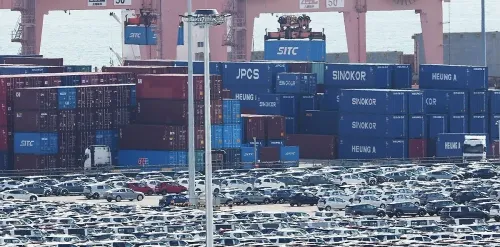
South Korea's automobile exports declined 5.5 per cent year-on-year to $6.17 billion in April, as a sharp contraction in shipments to the Middle East — triggered by the ongoing geopolitical conflict — weighed heavily on overall outbound sales, according to data released by the Ministry of Trade, Industry and Resources on Wednesday. The drop marks one of the steepest monthly export contractions for the sector in recent months.
Regional Export Breakdown
Exports to the Middle East plunged 38.7 per cent amid the ongoing war between the United States and Iran, while shipments to Asia fell 31.7 per cent and those to the European Union slid 13.1 per cent. Partially offsetting these declines, outbound shipments to North America, Latin America, and Oceania rose 2.4 per cent, 23.7 per cent, and 20.1 per cent respectively.
Eco-Friendly Vehicles Surge
Exports of eco-friendly vehicles bucked the broader trend, rising 13.5 per cent to $2.52 billion in April. Within that segment, electric vehicle (EV) and hydrogen car exports climbed 23.1 per cent, while hybrid car exports jumped 40.2 per cent.
Domestically, the shift toward cleaner vehicles was even more pronounced. Eco-friendly vehicles accounted for nearly 60 per cent of total domestic car sales, with 91,250 units sold — a 31 per cent increase from a year earlier. Domestic EV sales surged 139.7 per cent to 38,927 units, while hybrid car sales dipped 1.9 per cent to 50,872 units.
'Demand for EVs sharply increased on higher oil prices caused by the war in the Middle East and the introduction of a vehicle rotation system,' a ministry official said.
Tesla and BYD Lead Domestic Gains
The EV boom within South Korea benefited foreign manufacturers significantly. Sales of US EV giant Tesla skyrocketed 811.5 per cent year-on-year to 13,190 units in April. Chinese EV maker BYD also recorded strong growth, with sales rising 272.6 per cent to 2,023 units. Total domestic vehicle sales reached 152,000 units, up a modest 0.7 per cent.
Production Contracts Amid Supply Chain Disruptions
Domestic automobile production contracted 6.1 per cent year-on-year to 362,000 units in April, attributed to supply chain disruptions affecting certain auto parts and consumers deferring purchases ahead of new and facelifted model launches.
Hyundai Motor Co. saw production dip 16.2 per cent, while Renault Korea recorded a steeper 32.3 per cent decline. In contrast, GM Korea Co., KG Mobility Corp., and Kia Corp. posted production gains of 15.4 per cent, 8.6 per cent, and 0.5 per cent respectively. The ministry indicated that supply chain disruptions are expected to normalise starting June.
Point of View
The dependence on Middle East and Asian markets is now an exposed flank, while the domestic pivot to EVs is arriving faster than most forecasts anticipated. The Tesla and BYD numbers are the most uncomfortable detail for legacy Korean brands: foreign EV makers are absorbing a disproportionate share of the domestic demand surge that higher oil prices are generating. Hyundai and Kia need to convert their export-oriented production lines into domestic EV supply faster, or cede ground at home while losing it abroad.
NationPress
24 Sept 2026
Frequently Asked Questions
Why did South Korea's auto exports fall in April?
South Korea's auto exports fell 5.5 per cent to $6.17 billion in April primarily because shipments to the Middle East plunged 38.7 per cent amid the ongoing conflict between the United States and Iran. Exports to Asia and the EU also declined sharply, offsetting gains in North America, Latin America, and Oceania.
How did the Middle East crisis affect South Korean EV sales domestically?
Higher oil prices resulting from the Middle East conflict drove a sharp increase in domestic EV demand. Domestic EV sales surged 139.7 per cent year-on-year to 38,927 units in April, with eco-friendly vehicles accounting for nearly 60 per cent of all domestic car sales.
Which automakers saw the biggest gains in South Korea in April?
Tesla recorded the most dramatic gain, with sales skyrocketing 811.5 per cent year-on-year to 13,190 units. Chinese EV maker BYD also surged 272.6 per cent to 2,023 units, highlighting strong foreign EV brand penetration in the South Korean market.
Why did South Korea's domestic auto production fall in April?
Domestic production contracted 6.1 per cent to 362,000 units due to supply chain disruptions affecting certain auto parts and consumers delaying purchases ahead of new model launches. The ministry expects these disruptions to normalise from June onwards.
Which Korean automakers saw production declines in April?
Hyundai Motor Co. recorded a 16.2 per cent production decline, while Renault Korea saw a steeper 32.3 per cent drop. GM Korea, KG Mobility, and Kia posted production increases of 15.4 per cent, 8.6 per cent, and 0.5 per cent respectively.