South Korea auto exports fall 5.9% in May on factory fire supply disruption
Synopsis
A single factory fire in South Korea cascaded into a 5.9% drop in auto exports worth US$5.83 billion in May, dragging down output at Hyundai, Kia, Renault Korea, and others. While the government expects a June rebound as supplies normalise, Renault Korea's 46.5% production plunge signals the disruption was far from uniform — and markets are watching closely.
Key Takeaways
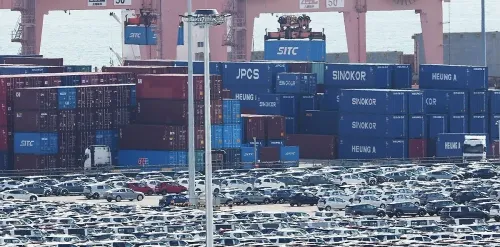
South Korea's auto exports fell 5.9 percent year-on-year to US$5.83 billion in May , according to the Ministry of Trade, Industry and Resources .
A fire at a domestic auto parts factory caused supply disruptions that hit production across multiple manufacturers.
Domestic automobile production contracted 8.2 percent on-year to 329,559 units ; Renault Korea saw the steepest drop at 46.5 percent .
Eco-friendly vehicle exports grew 9.9 percent to US$2.4 billion , bucking the overall trend.
Exports to Oceania and Africa rose 20.1 percent and 16.1 percent , respectively, offsetting some regional losses.
The ministry projects production and exports will recover gradually from June as parts supplies normalise.
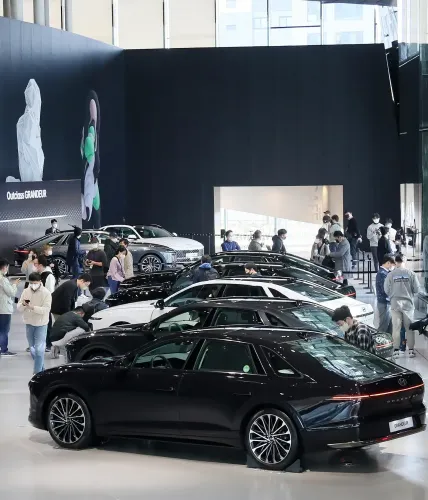
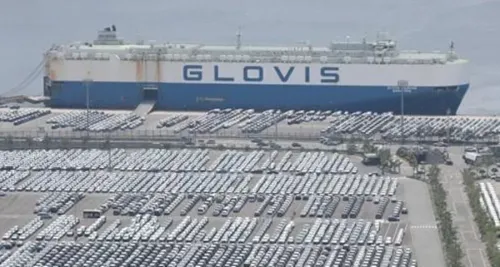
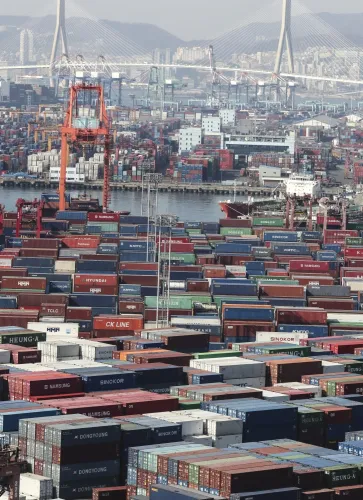
South Korea's automobile exports fell 5.9 percent year-on-year in May to US$5.83 billion, according to data released on Wednesday, 17 June by the Ministry of Trade, Industry and Resources. The decline was attributed to supply chain disruptions triggered by a fire at a domestic auto parts factory, which rippled through production lines across the country.
Regional Export Breakdown
Outbound shipments to North America declined 1 percent, while exports to Latin America and the European Union dropped 3.6 percent and 6.5 percent, respectively. Shipments to the Middle East also fell 4.2 percent.
Not all markets contracted, however. Exports to Oceania surged 20.1 percent and those to Africa rose 16.1 percent, offering some offset to the broader decline. Notably, eco-friendly automobile exports bucked the trend entirely, expanding 9.9 percent on-year to US$2.4 billion — signalling sustained global demand for electric and hybrid vehicles even as conventional segments struggled.
Domestic Sales and Production Contract
Inside South Korea, 127,315 vehicles were sold in May, a drop of 10.3 percent. Sales of locally manufactured cars fell sharper, down 14.2 percent to 96,240 units, while imported car sales moved against the trend, rising 4.8 percent to 31,075 units.
Total domestic automobile production contracted 8.2 percent on-year to 329,559 units. Among major manufacturers, Hyundai Motor Co. and Kia Corp. saw output fall 12 percent and 2 percent, respectively. The steepest production decline came at Renault Korea Motors Co., which recorded a 46.5 percent on-year drop. GM Korea Co. and KG Mobility Corp. reported contractions of 6.6 percent and 8 percent, respectively.
Government Outlook: Recovery Expected from June
The Ministry of Trade, Industry and Resources struck a cautiously optimistic note, stating: 'As the May figures reflect the fallout from a fire at an auto parts factory that led to manufacturing disruptions, production and exports are expected to gradually improve starting in June as supplies normalise.'
This is the kind of supply shock that tends to produce a sharp but short-lived contraction — provided the parts pipeline is restored quickly. The ministry's projection of a June recovery hinges on that assumption holding.
Seoul Markets Also Under Pressure
South Korean equities opened lower on the same day, with the benchmark Korea Composite Stock Price Index (KOSPI) falling 75.79 points, or 0.87 percent, to 8,650.81 as of 9:15 am. The decline followed a Wall Street sell-off overnight in which the S&P 500 shed approximately 0.5 percent and the Nasdaq dropped 1.15 percent, driven by a pullback in artificial intelligence-linked stocks.
Nvidia drew particular attention after announcing plans to issue US$25 billion in bonds — its first bond sale in five years — sending its shares down 2.4 percent. Investors were also cautious ahead of a policy update from the US Federal Reserve, with some market participants concerned that the new Fed chair could signal a more hawkish stance at the first meeting under new leadership.
Point of View
Exposing how thinly buffered the country's just-in-time parts ecosystem remains. Renault Korea's 46.5% production collapse is the starkest number in this data set and deserves more scrutiny than it typically receives. Meanwhile, the eco-friendly segment's 9.9% growth amid the chaos is the structural signal worth watching: global EV demand is proving resilient even when conventional output is in freefall. If Seoul's recovery forecast for June proves optimistic, the second-quarter export figures will tell a harder story.
NationPress
24 Sept 2026
Frequently Asked Questions
Why did South Korea's auto exports fall in May?
South Korea's auto exports fell 5.9 percent in May due to supply disruptions caused by a fire at a domestic auto parts factory, which disrupted manufacturing across multiple carmakers. The combined export value dropped to US$5.83 billion from the year-earlier period.
Which South Korean automakers were most affected by the production decline?
Renault Korea Motors recorded the steepest production drop at 46.5 percent on-year, followed by Hyundai Motor Co. at 12 percent, KG Mobility Corp. at 8 percent, GM Korea Co. at 6.6 percent, and Kia Corp. at 2 percent.
When is South Korea's auto sector expected to recover?
The Ministry of Trade, Industry and Resources expects production and exports to gradually improve from June as auto parts supplies normalise following the factory fire. The May data is seen as reflecting a temporary, fire-related disruption.
How did eco-friendly vehicle exports perform amid the overall decline?
Eco-friendly automobile exports grew 9.9 percent on-year to US$2.4 billion in May, bucking the broader contraction. This signals continued global demand for electric and hybrid vehicles despite the supply-side shock to conventional segments.
How did the KOSPI perform on 17 June amid these developments?
The KOSPI fell 75.79 points, or 0.87 percent, to 8,650.81 as of 9:15 am on 17 June, tracking a Wall Street overnight sell-off driven by a pullback in AI-linked stocks. Investor caution ahead of a US Federal Reserve policy update added to the downward pressure.