Rajnath Singh flies to Dushanbe for SCO HoG meeting
Synopsis
Union Defence Minister Rajnath Singh departed New Delhi on 19 October 2026 for Dushanbe, Tajikistan, to represent India at the SCO Heads of Government meeting focused on connectivity, economy, innovation, investment, culture and institutional reform.
Key Takeaways
Rajnath Singh left New Delhi on 19 October 2026 for Dushanbe, Tajikistan .
He will represent India at the SCO Heads of Government (HoG) meeting on 19–20 October 2026 .
The meeting agenda covers culture, connectivity, economy, innovation, investment and people-to-people ties .
Member states will also review progress in the SCO's financial and institutional functioning .
India has been a full SCO member since 2017 , when it joined at the Astana summit.
The HoG format focuses on economic cooperation, distinct from the Heads of State summits that address security and grand strategy.
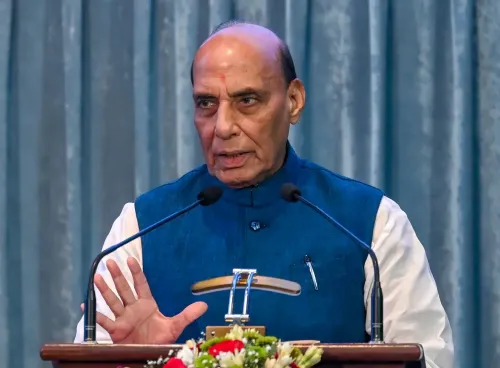
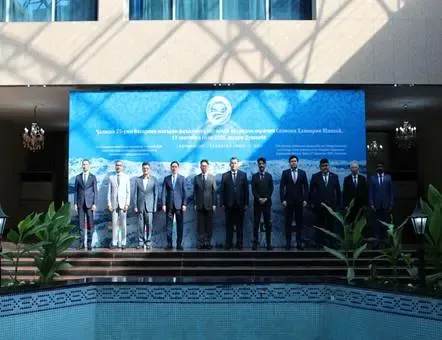
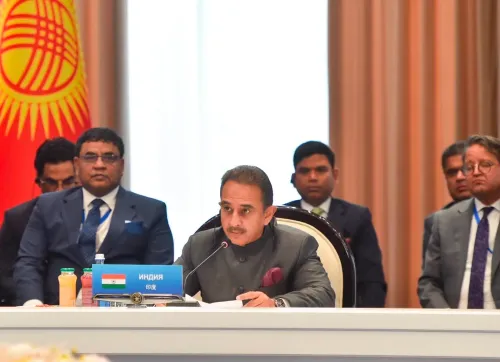
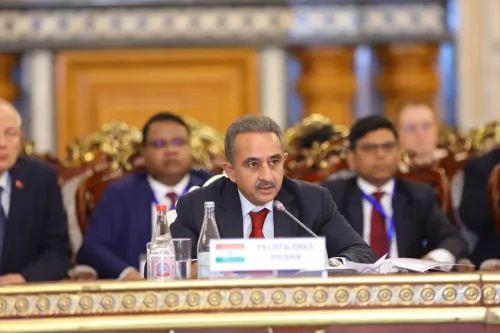
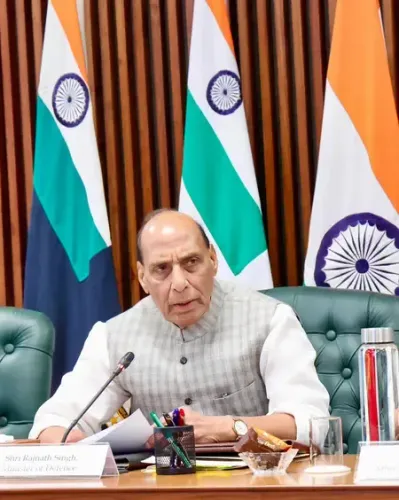
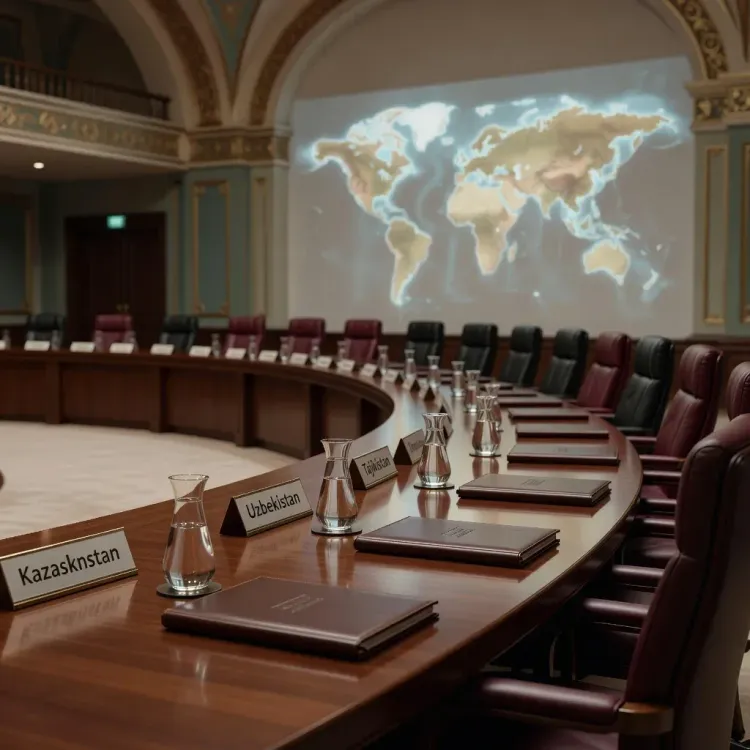
India's seat at one of Eurasia's most consequential multilateral tables is being filled this week by Union Defence Minister Rajnath Singh, who departed New Delhi on Monday, 19 October 2026, bound for Dushanbe, Tajikistan, to represent the country at the Shanghai Cooperation Organisation (SCO) Heads of Government (HoG) meeting scheduled for 19–20 October 2026.
What's on the SCO table in Dushanbe
Singh confirmed the agenda spans a wide sweep of priorities: strengthening cooperation in culture, connectivity, economy, innovation, investment and people-to-people ties, alongside a review of the grouping's financial and institutional functioning. That breadth signals this is not a ceremonial gathering — it is a working session where member states will take stock of how well the bloc's internal machinery is actually delivering. The SCO has expanded rapidly since India became a full member at the 2017 Astana summit, and periodic HoG meetings exist precisely to translate summit-level ambitions into ground-level institutional momentum.
Why a Defence Minister chairs India's economic diplomacy here
It is worth pausing on the optics: India is sending its Defence Minister to a forum whose immediate agenda is economics, connectivity and culture. The SCO's architecture separates Heads of State summits — where security and grand strategy dominate — from Heads of Government meetings, which focus on trade, investment and economic cooperation. India's participation at the HoG level is therefore a deliberate economic-diplomacy exercise. For New Delhi, the SCO offers a rare multilateral channel to engage Central Asian states on connectivity — including the International North-South Transport Corridor — without the bilateral friction that marks its relationships with fellow members China and Pakistan.
India's multi-alignment calculus in Central Asia
India's SCO engagement has consistently reflected its broader multi-alignment posture: cultivating economic and cultural links in a region it cannot reach overland without traversing rival territory. Dushanbe, sitting at the crossroads of Central and South Asia, is a fitting venue for that exercise. Progress on financial institutional reform within the SCO — one of the stated review items — matters to India as the grouping debates its own development financing mechanisms. Any decisions taken here feed upward to the next SCO summit or ministerial rounds, making this meeting a pressure point, not a footnote.
Singh's departure from New Delhi marks the start of a two-day diplomatic sprint. The outcomes will be watched for signals on whether the SCO's economic cooperation pillar can move beyond declarations and into deliverables India can point to back home.
Point of View
At least formally, bracketed. The agenda items around institutional and financial reform are also a quiet signal that India wants the SCO to function more efficiently as a development forum, not just a security talking-shop. Outcomes from Dushanbe will set benchmarks that the next SCO summit must answer for, making Singh's two days in Tajikistan more consequential than the modest optics suggest.
NationPress
19 Oct 2026
Frequently Asked Questions
Why is Rajnath Singh attending the SCO meeting instead of the Prime Minister?
The SCO has two distinct tracks: Heads of State summits and Heads of Government meetings. The HoG format specifically covers economic cooperation, trade and institutional matters, and India routinely deputes a senior cabinet minister — not the Prime Minister — to represent the country at this level.
What is the SCO Heads of Government meeting in Dushanbe about?
The October 2026 SCO HoG meeting in Dushanbe, Tajikistan is focused on deepening cooperation in culture, connectivity, economy, innovation, investment and people-to-people ties, as well as reviewing the grouping's financial and institutional performance.
When did India join the SCO?
India became a full member of the Shanghai Cooperation Organisation in 2017 at the Astana summit in Kazakhstan, expanding its engagement in Eurasian security and economic forums.
What is India's interest in the SCO?
India uses the SCO as a multilateral platform to build trade, connectivity and cultural links with Central Asian states — a region it cannot easily access overland — while managing its complex bilateral relationships with fellow members China and Pakistan within a rules-based forum.
Where is the SCO HoG meeting being held in 2026?
The SCO Heads of Government meeting is being held in Dushanbe , the capital of Tajikistan , on 19–20 October 2026 .