Navy to get 20 GNSS jammers in ₹449 crore deal with Bengaluru firm
Synopsis
India's Navy is set to receive 20 homegrown satellite signal jammers capable of spoofing and degrading enemy GNSS receivers — sourced from a Bengaluru private firm for ₹449 crore. The deal, signed under the highest indigenisation category, is a concrete data point in India's shift from defence importer to a country where private firms are now winning cutting-edge electronic warfare contracts.
Key Takeaways
The Ministry of Defence signed a ₹449 crore contract on 10 June with Accord Software and Systems Private Limited (ASSPL) , Bengaluru, for 20 ECGNSS jammers for the Indian Navy .
The jammers are capable of signal spoofing and degrading adversary GNSS receiver performance in multi-threat environments.
The product must carry a minimum 75 per cent indigenous content under the Buy (IDDM) category.
India's defence production has risen 174 per cent to ₹1.54 lakh crore over the last decade; exports grew 34 times to ₹23,622 crore .
The Union Budget 2026-27 allocates ₹6,81,000 crore for defence — 9.5 per cent more than the previous year.
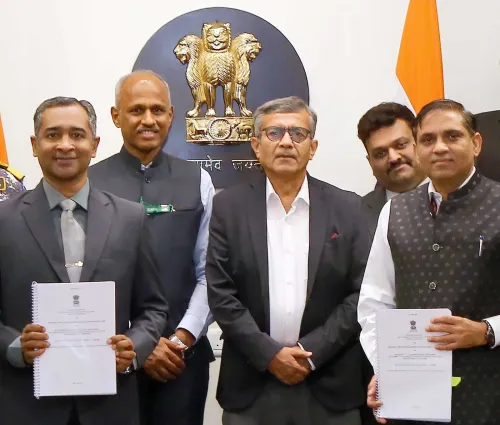
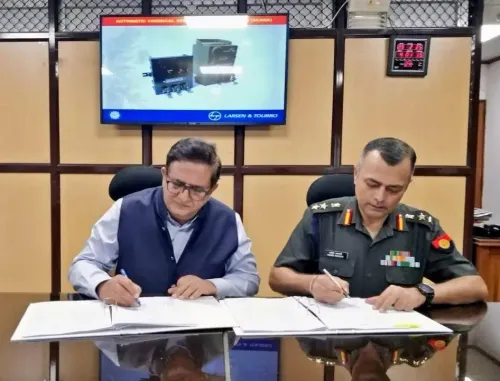
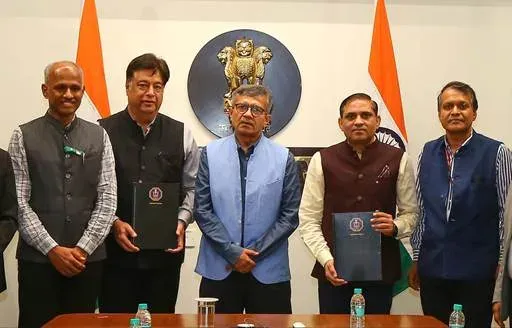
The Ministry of Defence on Wednesday, 10 June signed a ₹449 crore contract with Accord Software and Systems Private Limited (ASSPL), Bengaluru, for the procurement of 20 Enhanced Capability Global Navigation Satellite System (ECGNSS) jammers for the Indian Navy. The systems will carry a minimum 75 per cent indigenous content, according to an official ministry statement.
What the ECGNSS Jammers Do
The ECGNSS jammers are designed to degrade the satellite signal acquisition and tracking performance of adversary GNSS receivers, and are capable of signal spoofing and deceptive jamming. Their induction is intended to enable safe naval operations in a multi-threat environment, the ministry stated. This marks a significant upgrade in electronic warfare capability for Indian warships operating in contested maritime zones.
Contract Category and Key Officials
The deal was signed under the Buy (Indian-Indigenously Designed, Developed and Manufactured) category — the highest preference tier in India's defence procurement framework — in the presence of Defence Secretary Rajesh Kumar Singh. The ministry said the contract 'reinforces the government's commitment to Aatmanirbhar Bharat and Make-in-India while bolstering the maritime security architecture of the country.'
India's Defence Manufacturing Surge
The contract comes against a backdrop of a dramatic shift in India's defence industrial base. Over the last decade, defence production has recorded a 174 per cent leap to ₹1.54 lakh crore, while exports have grown 34 times to ₹23,622 crore. The private sector has contributed approximately ₹15,000 crore to total defence exports, reflecting a structural move toward collaborative manufacturing. ASSPL's win is consistent with this trend, with a private-sector Bengaluru firm displacing what would previously have been a public-sector or import-led procurement.
Broader Technology and Budget Context
Addressing the North Tech Symposium 2026 in Prayagraj last month, Minister of State for Science and Technology Dr Jitendra Singh said India has entered 'a decisive phase in its defence journey, where technology, indigenous innovation and private sector participation are shaping a new global identity.' He noted that warfare is increasingly driven by advanced technologies, real-time data systems, and automated platforms. The Union Budget 2026-27 has earmarked ₹6,81,000 crore for defence — 9.5 per cent higher than the previous year — underlining the Centre's intent to sustain this momentum. Sectors including space, artificial intelligence, and quantum technologies are now formally integrated into India's defence preparedness framework, the minister added.
What Comes Next
With the contract inked, ASSPL will now move into production and delivery phases. The Navy's induction of these jammers is expected to meaningfully strengthen its electronic warfare posture, particularly as maritime competition in the Indian Ocean Region intensifies. The deal also signals continued opportunity for private-sector defence firms capable of meeting the stringent indigenisation thresholds demanded by the Buy (IDDM) category.
Point of View
And sourcing it domestically closes a gap that adversaries would otherwise exploit. The 75 per cent indigenisation floor is the right structural demand, but the real test is delivery timelines and operational reliability, neither of which are disclosed in procurement announcements. India's defence export surge is real, but the more consequential metric is whether induction schedules hold — something the ministry's press releases have historically been reluctant to track publicly.
NationPress
29 Jul 2026
Frequently Asked Questions
What are the ECGNSS jammers being procured for the Indian Navy?
ECGNSS (Enhanced Capability Global Navigation Satellite System) jammers are electronic warfare systems designed to degrade the satellite signal acquisition and tracking performance of enemy GNSS receivers, and to carry out signal spoofing or deceptive jamming. The Indian Navy is procuring 20 such systems for ₹449 crore from Bengaluru-based Accord Software and Systems Private Limited.
Who is Accord Software and Systems Private Limited (ASSPL)?
ASSPL is a Bengaluru-based private defence technology firm that has been awarded the ₹449 crore contract by the Ministry of Defence for the design, development, and manufacture of ECGNSS jammers. The contract falls under the Buy (IDDM) category, which mandates the highest level of domestic content in Indian defence procurement.
What does the Buy (IDDM) category mean in Indian defence procurement?
The Buy (Indian-Indigenously Designed, Developed and Manufactured) or Buy (IDDM) category is the highest-priority tier in India's Defence Acquisition Procedure. It requires that the product be designed, developed, and manufactured in India with a minimum specified indigenous content — in this case, at least 75 per cent.
How significant is this deal in the context of India's defence indigenisation push?
The deal reflects a broader structural shift: India's defence production has grown 174 per cent to ₹1.54 lakh crore over the last decade, and exports have risen 34 times to ₹23,622 crore. The private sector now contributes around ₹15,000 crore to defence exports, and contracts like the ASSPL deal demonstrate that private firms are winning advanced electronic warfare programmes — not just legacy hardware.
What is India's defence budget for 2026-27?
The Union Budget 2026-27 allocates ₹6,81,000 crore for defence, which is 9.5 per cent higher than the previous year's allocation, according to Minister of State for Science and Technology Dr Jitendra Singh.