NBA releases ₹8.22 crore ABS funds to rice research bodies, 33 state boards
Synopsis
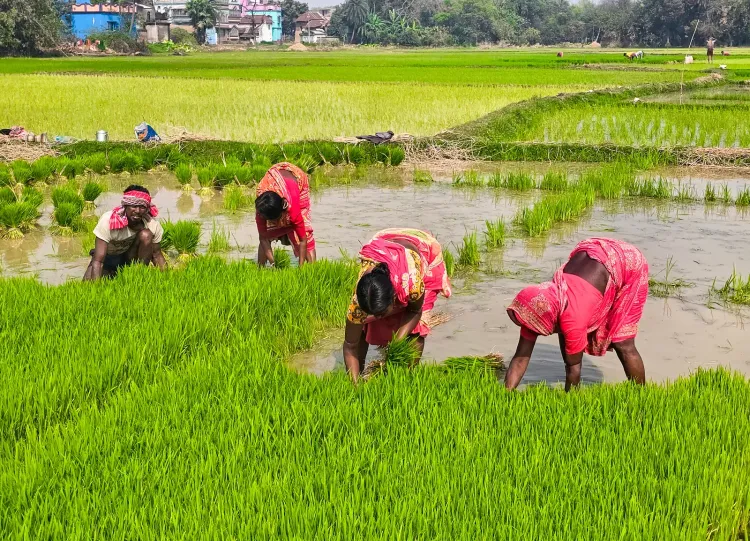
An international seed company paid ₹8.22 crore to India for using native rice varieties — and the NBA has now routed that money to the scientists who conserved the seeds and the states that grow the crop. It is one of the largest single-crop ABS payouts in India's history, and a signal that bio-prospecting on Indian germplasm carries a measurable price tag.
Key Takeaways
The National Biodiversity Authority (NBA) released ₹8.22 crore as access and benefit-sharing funds for rice on 2 August .
Funds were paid by Pioneer Overseas Corporation for commercially utilising Indian Oryza sativa varieties in hybrid seed development.
ICAR-Indian Institute of Rice Research, Hyderabad received the largest institutional share of ₹2.43 crore . ₹5.75 crore was distributed across 33 State Biodiversity Boards , with Uttar Pradesh receiving the highest state allocation of over ₹73 lakh .
NBA's total ABS collections from agriculture and seed sectors have reached approximately ₹83 crore ; across all sectors, disbursements exceed ₹162 crore .
The National Biodiversity Authority (NBA) has released ₹8.22 crore as access and benefit-sharing (ABS) disbursement for rice to three research institutions and 33 State Biodiversity Boards, marking one of the largest single ABS payouts for the crop, an official said on Sunday, 2 August. The funds originate from Pioneer Overseas Corporation, an international seed company, which paid the amount for utilising Indian rice (Oryza sativa) varieties to develop and commercialise hybrid seeds.
Where the Money Comes From
Pioneer Overseas Corporation accessed Indian rice germplasm to breed commercial hybrids and, under the Biological Diversity Act, 2002, was required to share benefits with the country of origin. The NBA — a statutory body under the Ministry of Environment, Forest and Climate Change — facilitated the collection and now the disbursement of these funds. The authority implements the Nagoya Protocol's principle of fair and equitable benefit-sharing from biological resources.
How the ₹8.22 Crore Is Split
Of the total, ₹2.47 crore has been allocated to research institutions that conserved and shared the rice varieties with the company. The ICAR-Indian Institute of Rice Research in Hyderabad received the largest institutional share of ₹2.43 crore, while Govind Ballabh Pant University of Agriculture and Technology in Uttarakhand received ₹3.26 lakh for its specific varietal contribution.
The remaining ₹5.75 crore has been distributed among 33 State Biodiversity Boards and Union Territory Biodiversity Councils, with allocations proportional to each state's rice-growing area as recorded in the Unified Portal for Agricultural Statistics under the Ministry of Agriculture and Farmers Welfare. Uttar Pradesh received the highest state share of over ₹73 lakh, followed by West Bengal with over ₹64 lakh and Telangana with over ₹50 lakh. Smaller rice-growing territories, including Sikkim and the Andaman and Nicobar Islands, also received proportionate allocations.
How the Funds Will Be Used
Research institutions are directed to deploy their share toward strengthening germplasm conservation, maintaining seed collections, and supporting research and training programmes. State Biodiversity Boards will channel their allocations into approved conservation activities — including protection of native crop diversity, ecosystem restoration, documentation of traditional knowledge, and direct support for local farmers and traditional knowledge holders.
NBA's Broader ABS Track Record
This disbursement adds to a growing corpus. The NBA has so far collected approximately ₹83 crore in ABS payments from the agriculture and seed sector alone. Across all sectors combined, total ABS disbursements have crossed ₹162 crore. Notably, this is one of the largest single-crop ABS releases the authority has made, underscoring rice's centrality to India's biodiversity economy. The payout also signals that international seed companies operating on Indian genetic material are increasingly being held to benefit-sharing obligations — a trend that could expand as more crop varieties come under ABS scrutiny.
Point of View
Yet ABS enforcement in the seed sector has been uneven at best. The fact that the NBA's total collections across all sectors have only just crossed ₹162 crore — against a backdrop of extensive international use of Indian biological material — suggests the mechanism is still far short of its potential. The proportional state-allocation model, tied to rice-growing area rather than the actual origin of the variety, also raises questions about whether the farmers and communities who originally cultivated these varieties are the true beneficiaries.
NationPress
17 Sept 2026
Frequently Asked Questions
What is the ₹8.22 crore ABS disbursement by the NBA for rice?
It is a payment released by the National Biodiversity Authority to three research institutions and 33 State Biodiversity Boards as the Indian share of benefits from Pioneer Overseas Corporation's commercial use of Indian rice varieties. The disbursement is described as one of the largest single ABS payouts for rice in India.
Why did Pioneer Overseas Corporation pay India for rice varieties?
Under the Biological Diversity Act, 2002, and the Nagoya Protocol, companies that access Indian biological resources — such as native rice germplasm — to develop commercial products must share a portion of the resulting benefits with India. Pioneer Overseas Corporation used Indian Oryza sativa varieties to develop and commercialise hybrid seeds, triggering this ABS obligation.
Which institutions and states received the largest shares?
ICAR-Indian Institute of Rice Research in Hyderabad received the largest institutional allocation of ₹2.43 crore. Among states, Uttar Pradesh received the highest share of over ₹73 lakh, followed by West Bengal and Telangana, with allocations based on each state's rice-growing area.
How will the funds be used by states and research bodies?
Research institutions will use their share for germplasm conservation, seed collection maintenance, and research and training. State Biodiversity Boards are directed to deploy funds for conservation activities including protection of native crop diversity, ecosystem restoration, documentation of traditional knowledge, and support for local farmers.
How much has the NBA collected in ABS payments overall?
The NBA has collected approximately ₹83 crore in ABS payments from the agriculture and seed sector alone. Across all sectors, its total ABS disbursements have crossed ₹162 crore, reflecting a gradual scaling up of benefit-sharing enforcement since the Biological Diversity Act came into force.