National Biodiversity Authority collects ₹21.26 crore in benefit sharing in FY26
Synopsis
India's National Biodiversity Authority collected ₹21.26 crore in benefit-sharing receipts in FY26, with the seed sector alone contributing over half. Cumulatively, ₹266 crore has been collected since inception — but only ₹145 crore has reached communities so far, making the disbursement gap a quiet accountability question.
Key Takeaways
The National Biodiversity Authority (NBA) realised ₹21.26 crore under the Access and Benefit Sharing (ABS) mechanism in FY 2025–26 .
The seed sector was the top contributor at ₹11.75 crore , followed by AYUSH at ₹5.56 crore .
Around 300 biological resources — including turmeric, ashwagandha, neem, and rice — were utilised across sectors.
Cumulative ABS collections stand at ₹266 crore ; ₹145 crore has been disbursed to beneficiaries so far.
The mechanism supports India's commitments under the Nagoya Protocol and National Biodiversity Strategy 2024–2030 .
The National Biodiversity Authority (NBA) realised ₹21.26 crore under the Access and Benefit Sharing (ABS) mechanism during financial year 2025–26, according to an official statement released on Saturday, 30 May. The funds were generated from approvals granted for research, commercial utilisation, intellectual property rights, bio-survey, and bio-utilisation of biological resources across multiple industry sectors.
Sector-wise Contributions
The seed sector emerged as the single largest contributor, accounting for ₹11.75 crore — more than half the total — followed by the AYUSH sector at ₹5.56 crore. Nutraceuticals contributed ₹1.40 crore and pharmaceuticals added ₹1.18 crore. Additional contributions came from the Biotechnology, Cosmetics, Chemical, Biofuel, and Food and Beverage sectors, reflecting broad-based industry participation in India's biodiversity governance framework.
Biological Resources Utilised
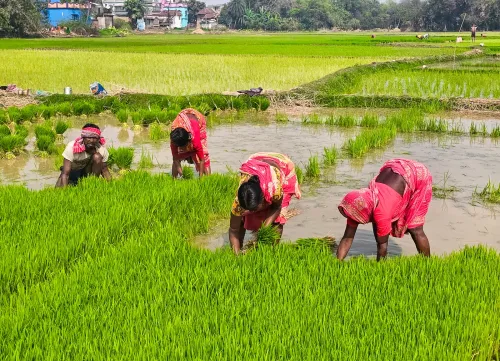
Across these sectors, approximately 300 biological resources were utilised during the year. These included staple and traditional crops and herbs such as maize, rice, turmeric, amla, mustard, bitter gourd, kalmegh, elachi, tulsi, guggal gum, neem leaves, garcinia, ashwagandha, pepper, and lavanga. The diversity of resources points to growing commercial interest in India's rich biological heritage.
Cumulative ABS Collections and Disbursements
As of the date of the statement, the NBA has cumulatively realised ₹266 crore in ABS funds from users of biological resources and associated traditional knowledge. Of this, ₹145 crore has already been disbursed to beneficiaries across the country, including local communities, Biodiversity Management Committees, farmers, and traditional knowledge holders.
Legal Framework and Policy Context
The ABS mechanism operates under the Biological Diversity Act and is aligned with India's obligations under the Convention on Biological Diversity and the Nagoya Protocol on Access and Benefit Sharing. The FY26 collection also advances Target 13 of the National Biodiversity Strategy and Action Plan 2024–2030, which mandates equitable benefit sharing with communities whose knowledge underpins commercial bio-utilisation.
What This Means for Communities and Conservation
The funds flow directly into biodiversity conservation, sustainable resource use, and grassroots livelihood enhancement. Notably, the growing industry uptake signals that commercial interests and conservation mandates are increasingly being treated as complementary rather than competing priorities. With cumulative disbursements at ₹145 crore against collections of ₹266 crore, the pace of actual benefit transfer to communities will be a key metric to watch in the coming financial year.
Point of View
But the more revealing number is the cumulative gap: ₹266 crore collected, only ₹145 crore disbursed. That ₹121 crore sitting undistributed is the real story — benefit sharing is only meaningful when it reaches the farmers and traditional knowledge holders it is legally designed to protect. The seed sector's dominance also raises a structural question: are India's biodiversity gains being driven by commercial agriculture interests rather than the forest-edge communities the Biological Diversity Act was written for?
NationPress
20 Sept 2026
Frequently Asked Questions
What is the Access and Benefit Sharing mechanism of the National Biodiversity Authority?
The Access and Benefit Sharing (ABS) mechanism, established under the Biological Diversity Act, requires companies and researchers who use India's biological resources to share a portion of the resulting benefits with local communities, farmers, and traditional knowledge holders. The National Biodiversity Authority oversees approvals and fund collection, which are then disbursed to Biodiversity Management Committees and other beneficiaries.
How much did the NBA collect under ABS in FY 2025–26?
The NBA collected ₹21.26 crore in FY 2025–26, with the seed sector contributing the most at ₹11.75 crore, followed by AYUSH at ₹5.56 crore. The funds came from approvals for research, commercial utilisation, intellectual property rights, and bio-survey activities.
Which sectors contributed to ABS collections in FY26?
The seed sector led with ₹11.75 crore, followed by AYUSH (₹5.56 crore), nutraceuticals (₹1.40 crore), and pharmaceuticals (₹1.18 crore). Biotechnology, Cosmetics, Chemical, Biofuel, and Food and Beverage sectors also contributed.
How much of the cumulative ABS funds have been disbursed to communities?
Of the ₹266 crore collected cumulatively since the mechanism's inception, ₹145 crore has been disbursed to beneficiaries including local communities, Biodiversity Management Committees, farmers, and traditional knowledge holders across India.
How does India's ABS framework connect to international biodiversity commitments?
India's ABS mechanism is aligned with the Convention on Biological Diversity and the Nagoya Protocol on Access and Benefit Sharing, both of which mandate equitable sharing of benefits from biological resource use. The FY26 collection also contributes to Target 13 of India's National Biodiversity Strategy and Action Plan 2024–2030.