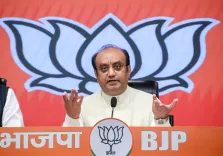
NBA disburses ₹2.82 crore to states under biodiversity benefit-sharing
Synopsis
India's biodiversity benefit-sharing framework just paid out ₹2.82 crore — but the most telling detail is how it was done: genetic resources accessed through a corporate acquisition with no traceable community origin forced the NBA to create a new Expert Committee modality, setting a precedent for how India handles ABS in the era of M&A-driven seed-sector consolidation.
Key Takeaways
The National Biodiversity Authority (NBA) disbursed ₹2.82 crore under the Access and Benefit-Sharing (ABS) mechanism on 22 August . ₹2.80 crore was released to 27 State Biodiversity Boards and 3 Union Territory Biodiversity Councils ; ₹2.01 lakh goes to ICAR-IIHR, Karnataka .
Gujarat (₹44.59 lakh), West Bengal (₹41.24 lakh), and Madhya Pradesh (₹32.73 lakh) are the top recipient states.
The primary ABS payment of ₹2.94 crore came from Advanta Enterprises Ltd for utilising genetic resources of 24 vegetable hybrids across four crops.
A separate ₹7.15 lakh was received from Sumitomo Chemical India Ltd for access to two microbial strains from ICAR-IIHR; 30% (₹2.01 lakh) is being returned to the institute.
State recipients must submit utilisation certificates and expenditure statements within one year .
The National Biodiversity Authority (NBA) has disbursed ₹2.82 crore under India's Access and Benefit-Sharing (ABS) mechanism, channelling funds to states and a public research institution for the utilisation of the country's biological resources, an Environment Ministry official said on Saturday, 22 August. The disbursement marks a significant step in operationalising the ABS framework under the Biological Diversity Act.
How the funds were split
Of the total amount, ₹2.80 crore has been released to 27 State Biodiversity Boards (SBBs) and three Union Territory Biodiversity Councils (UTBCs). A separate sum of ₹2.01 lakh is being disbursed to the ICAR-Indian Institute of Horticultural Research (ICAR-IIHR) in Karnataka.
The Advanta Enterprises case
The larger tranche originates from a payment of ₹2.94 crore received by the NBA from Advanta Enterprises Ltd (formerly UPL Limited) as ABS dues for utilising genetic resources linked to eight cauliflower hybrids (Brassica oleracea var. botrytis), five hot pepper hybrids (Capsicum annuum), five okra hybrids (Abelmoschus esculentus), and six tomato hybrids (Solanum lycopersicum).
According to an official statement, the biological resources in this case were accessed through a corporate acquisition and could not be traced to specific individual farmers, communities, or a single identifiable geographic source. The NBA accordingly constituted an Expert Committee (EC) to recommend a suitable modality for distributing the benefit-sharing component — a recommendation that was subsequently approved by the Authority.
Allocation to SBBs and UTBCs was made by accounting for the cultivation of the relevant horticultural crops across different states and union territories. Gujarat (₹44.59 lakh), West Bengal (₹41.24 lakh), and Madhya Pradesh (₹32.73 lakh) are among the largest recipient states.
How states must use the funds
The funds released to SBBs and UTBCs are earmarked for activities such as documentation and updating of People's Biodiversity Registers, in-situ and ex-situ conservation, restoration of degraded ecosystems, strengthening of Biodiversity Heritage Sites, capacity building of Biodiversity Management Committees, and community livelihood enhancement. Recipient bodies are required to submit a utilisation certificate and expenditure statement within one year of receipt.
Sumitomo Chemical case and ICAR-IIHR disbursement
In a separate matter, the NBA received ₹7.15 lakh from Sumitomo Chemical India Ltd, Mumbai (formerly Excel Crop Care) as ABS dues for access to two microbial strains — Pseudomonas fluorescens 1% WP (strain IIHR-Pf-2) and Trichoderma harzianum 1% WP (strain IIHR-Th-2) — sourced from ICAR-IIHR, Karnataka, for research and commercial use.
Since the biological resources were accessed from a public research institution, 30% of the ABS amount — amounting to ₹2.01 lakh — is being disbursed to ICAR-IIHR in line with established modalities. The remaining funds will be utilised by the NBA as per Section 27 of the Biological Diversity Act. This dual-case disbursement underscores the NBA's effort to systematically operationalise benefit-sharing even in complex access scenarios where direct community attribution is not possible.
Point of View
But the Advanta Enterprises case quietly reveals a structural gap in India's ABS framework: when genetic resources change hands through corporate acquisitions, the benefit-sharing trail to original farming communities breaks down entirely. The Expert Committee workaround — distributing funds proportionally by crop cultivation area — is pragmatic, but it is not the same as communities receiving what the law intended. As seed-sector consolidation accelerates globally, India will face more such cases, and a proportional-area formula risks becoming the default rather than the exception.
NationPress
6 Oct 2026
Frequently Asked Questions
What is the Access and Benefit-Sharing (ABS) mechanism under India's Biological Diversity Act?
The ABS mechanism requires companies that commercially utilise India's biological resources — such as plant genetic material or microbial strains — to share a portion of the resulting benefits with the communities or institutions from which those resources were sourced. It is governed by the Biological Diversity Act and administered by the National Biodiversity Authority (NBA).
Why could the NBA not trace the Advanta Enterprises ABS payment to specific farmers or communities?
Advanta Enterprises accessed the genetic resources through the acquisition of another company, which severed the documentation trail linking the material to specific farmers, communities, or geographic sources. In such cases, the NBA constituted an Expert Committee to devise an alternative distribution modality, ultimately allocating funds to states based on the cultivation spread of the concerned crops.
Which states received the largest share of the ₹2.80 crore disbursement?
Gujarat received the largest allocation at ₹44.59 lakh, followed by West Bengal at ₹41.24 lakh and Madhya Pradesh at ₹32.73 lakh. Allocations were calculated based on the cultivation of the relevant horticultural crops — cauliflower, hot pepper, okra, and tomato — across different states and union territories.
What must state biodiversity boards do with the funds they receive?
The funds must be used for activities such as updating People's Biodiversity Registers, in-situ and ex-situ conservation, restoring degraded ecosystems, strengthening Biodiversity Heritage Sites, building capacity of Biodiversity Management Committees, and enhancing community livelihoods. Recipients are required to submit a utilisation certificate and expenditure statement within one year of receiving the funds.
Why is ICAR-IIHR receiving ₹2.01 lakh from the Sumitomo Chemical ABS payment?
ICAR-IIHR in Karnataka is the source institution for the two microbial strains — Pseudomonas fluorescens and Trichoderma harzianum — that Sumitomo Chemical India Ltd accessed for research and commercial use. Under the established ABS modality for resources sourced from public research institutions, 30% of the ABS amount (₹2.01 lakh of the ₹7.15 lakh received) is returned to the originating institution.