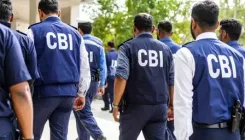
NCB secures conviction in 1,127-kg ganja seizure case in Maharashtra

Synopsis
A Maharashtra court has sentenced two drug traffickers to 10 years of rigorous imprisonment each for transporting over a tonne of ganja in a single truck — a case the NCB Mumbai Zonal Unit built over nearly four years. The verdict is one of the larger commercial-quantity ganja convictions in recent NDPS court records and underlines the bureau's push to see complex prosecutions through to sentencing.
Key Takeaways
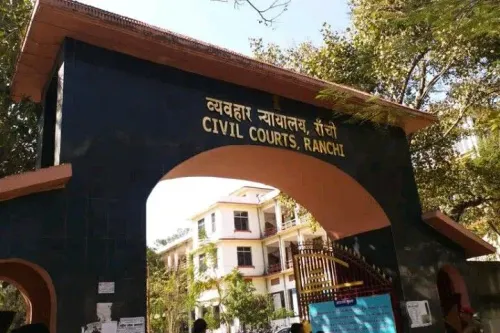
The Additional Sessions Judge, Special NDPS Court, Biloli, Nanded convicted Gokul Narayan Rajput and Sunil Yadav Mahajan on 8 September .
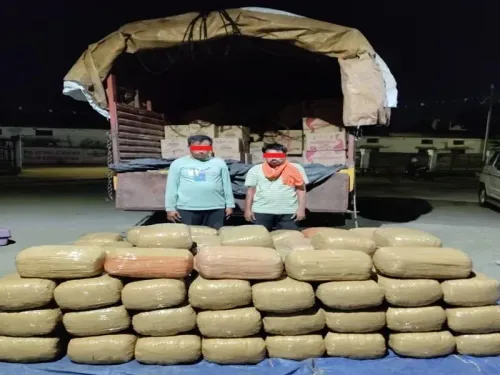
1,127 kg of ganja — packed in 49 bags — was recovered from a truck intercepted near Manjram village, Nanded district on 15 November 2021 .
Each accused was sentenced to 10 years of rigorous imprisonment and a fine of ₹1 lakh under Section 20(b)(ii)(C) of the NDPS Act, 1985 .
The truck bearing registration MH-26-AD-2165 and all seized articles have been ordered confiscated.
The NCB MANAS helpline (1933) is available for citizens to report drug trafficking information confidentially.
The Narcotics Control Bureau (NCB) has secured the conviction of two drug traffickers in connection with the seizure of 1,127 kg of ganja in Maharashtra, marking a significant outcome in the agency's sustained campaign against drug trafficking networks across India. The verdict was delivered on 8 September by the Additional Sessions Judge, Special NDPS Court, Biloli, Nanded.
The Conviction
The court convicted two accused — Gokul Narayan Rajput, the truck driver, and Sunil Yadav Mahajan, the co-driver — under Section 20(b)(ii)(C) of the Narcotic Drugs and Psychotropic Substances (NDPS) Act, 1985. The judge held that the prosecution had proved the offence beyond reasonable doubt, finding both individuals in conscious possession of a commercial quantity of ganja without a satisfactory explanation.
Each accused was sentenced to 10 years of rigorous imprisonment (RI) and a fine of ₹1 lakh. In the event of default in fine payment, each will serve an additional six months of rigorous imprisonment. The court also ordered the confiscation of the truck and all other seized articles under the provisions of the NDPS Act.
How the Case Unfolded
The case originated on 15 November 2021, when NCB officers intercepted a truck bearing registration number MH-26-AD-2165 near Manjram village in Naigaon taluka of Nanded district, Maharashtra. A search of the vehicle led to the recovery of 49 bags containing 1,127 kg of ganja. The contraband, vehicle, and associated articles were seized in accordance with the law, and both Rajput and Mahajan were arrested at the scene.
The case was subsequently investigated and prosecuted by the NCB Mumbai Zonal Unit, which built the evidentiary record that the court ultimately found sufficient to establish guilt beyond reasonable doubt.
Significance of the Verdict
This conviction is notable for the scale of the seizure — over a tonne of ganja intercepted in a single operation — and for the length of time the case took to reach conclusion, nearly four years from the date of arrest to sentencing. Such timelines are not uncommon in NDPS matters given the complexity of evidence and the mandatory minimum sentences involved under the Act.
The NDPS Act prescribes stringent penalties for commercial-quantity drug offences, with a minimum of 10 years and a maximum of 20 years of rigorous imprisonment. The court's sentence in this case aligns with the statutory minimum, reflecting the established facts on record.
NCB's Broader Anti-Drug Push
The NCB has reiterated its commitment to dismantling drug trafficking networks as part of the broader national objective of a 'Drug-Free India'. The agency has also appealed to citizens to report information on drug sale, trafficking, or distribution by calling the MANAS — National Narcotics Helpline toll-free number, 1933. The NCB has assured that the identity of informers will be kept confidential.
With this conviction added to its record, the NCB signals that long-duration prosecutions in commercial-quantity drug cases will be seen through to their conclusion — a message directed as much at active trafficking networks as at the courts.
Point of View
And commercial-quantity cases are no exception. The NCB's success here rests on a relatively straightforward evidentiary chain: a truck, 49 bags, two occupants, and no credible explanation. What the bureau must now demonstrate is the same prosecutorial consistency in cases where supply chains are more diffuse and accused persons better resourced. A single tonne of ganja off a highway is an enforcement win; dismantling the network that loaded the truck is the harder, unfinished task.
NationPress
24 Oct 2026
Frequently Asked Questions
What was the NCB ganja seizure case in Maharashtra about?
The case involved the interception of a truck carrying 1,127 kg of ganja near Manjram village in Nanded district, Maharashtra, on 15 November 2021. NCB officers from the Mumbai Zonal Unit seized 49 bags of the contraband and arrested the truck driver and co-driver.
Who were convicted and what sentence did they receive?
Gokul Narayan Rajput (driver) and Sunil Yadav Mahajan (co-driver) were each convicted and sentenced to 10 years of rigorous imprisonment along with a ₹1 lakh fine. Failure to pay the fine attracts an additional six months of rigorous imprisonment for each accused.
Under which law were the accused convicted?
Both accused were convicted under Section 20(b)(ii)(C) of the Narcotic Drugs and Psychotropic Substances (NDPS) Act, 1985, which covers offences involving commercial quantities of cannabis. The court found the prosecution had proved the offence beyond reasonable doubt.
What happened to the truck used in the drug trafficking?
The court ordered the confiscation of the truck bearing registration number MH-26-AD-2165, along with all other seized articles, in accordance with the provisions of the NDPS Act.
How can citizens report drug trafficking information to the NCB?
Citizens can call the MANAS — National Narcotics Helpline on the toll-free number 1933 to report information related to drug sale, trafficking, or distribution. The NCB guarantees that the identity of informers will be kept confidential.