NDA leaders slam Owaisi over hijab remarks, cite vote-bank politics
Synopsis
The NDA's coordinated broadside against Owaisi over the Allahabad High Court hijab ruling is less a legal debate and more an early electoral skirmish — with BJP and Shiv Sena leaders framing the AIMIM chief as a communal opportunist while the court's own order questioned whether wearing a scarf meets the 'essential religious practice' threshold.
Key Takeaways
Allahabad High Court dismissed a petition by a minor student in Prayagraj seeking permission to wear a hijab with school uniform.
AIMIM chief Asaduddin Owaisi called the ruling a violation of Articles 25 and 19 of the Indian Constitution.
BJP MP Ghulam Ali Khatana and leader Mukhtar Abbas Naqvi accused Owaisi of vote-bank politics and a 'Taliban-like' approach to Muslim girls' education.
Shiv Sena spokesperson Shaina NC said hijab is not a religious compulsion and that uniform discipline reflects secularism.
The court noted that photographs showed students of the same faith attending school without scarves, and no scripture was produced to establish hijab as an 'essential' practice.
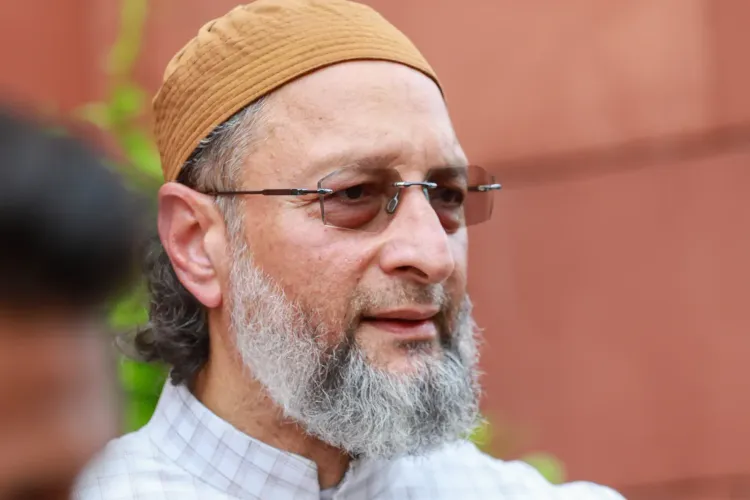
Several leaders of the ruling National Democratic Alliance (NDA) on Wednesday, 26 August launched a sharp attack on All India Majlis-e-Ittehadul Muslimeen (AIMIM) chief Asaduddin Owaisi, accusing him of exploiting the Allahabad High Court's dress code ruling for electoral gain and injecting a 'communal flavour' into the broader debate on Muslim girls' education and progress.
Background: The Court Order and Owaisi's Remarks
The controversy follows the Allahabad High Court's dismissal of a petition filed by a minor student from a school in Prayagraj, who had sought permission to wear a hijab alongside the prescribed school uniform. The court observed that the petitioner had failed to produce any religious scripture or material establishing that wearing a scarf was an 'essential' practice of her faith. It also noted that photographs submitted in the case showed students from the same religious community attending school without scarves.
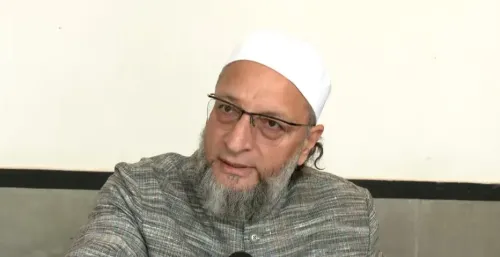
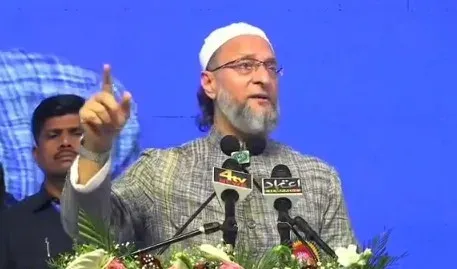
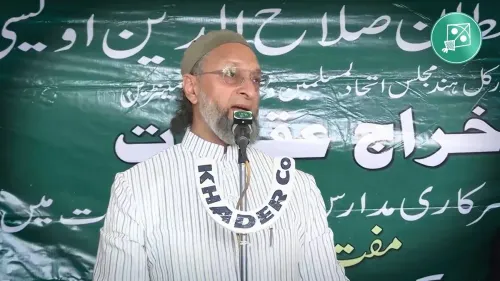
Addressing a Jalsa-e-Rahmatul-lil-Alameen gathering at the AIMIM headquarters in Darussalam on Tuesday, Owaisi declared, 'I disagree with this High Court judgment; I do not concur with it... Today's verdict violates Articles 25 and 19 of the Indian Constitution. Who are you to decide what is essential to Islam? Girls are wearing hijab on their heads, not on their minds. It is an attack on Islam.'
BJP Leaders Push Back
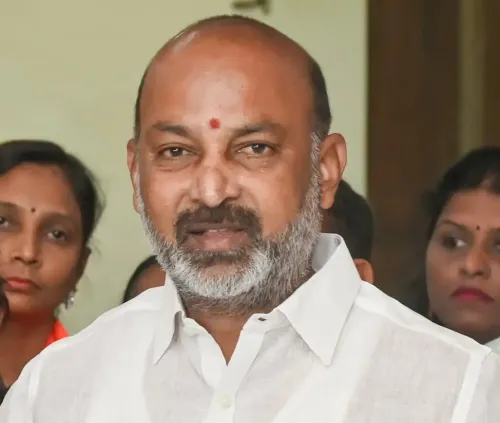
Bharatiya Janata Party (BJP) MP Ghulam Ali Khatana said that Islam itself enjoins respect for the laws of the land. 'Owaisi indulges in his own brand of vote-bank politics. Islam teaches that in whichever country you live, we should adapt to and respect its norms, laws, and identification regulations, and not create obstacles in their way,' Khatana said.
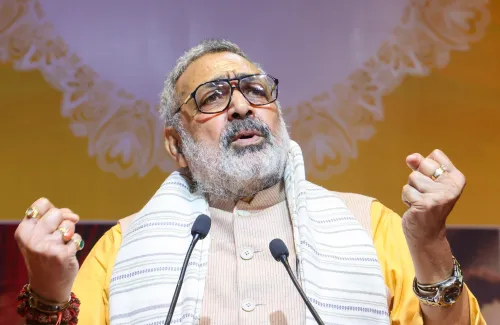
BJP leader Mukhtar Abbas Naqvi went further, accusing Owaisi of attempting to confine Muslim girls' futures in what he described as a 'Taliban-like manner.' 'Some people are trying to lock up the education and progress of Muslim girls in a Taliban-like manner. And in the name of that, sometimes they try to create communal confusion over the hijab, and sometimes they try to add a communal flavour to their education and progress,' Naqvi said. He added that while the hijab is not banned in India — unlike in several other countries — every institution retains the right to enforce its own dress code.
Shiv Sena Weighs In
Shiv Sena spokesperson Shaina NC maintained that the ruling alliance holds no personal objection to the hijab but questioned whether it is a religious compulsion. 'Personally, we're not against wearing the hijab, but nowhere has it been mentioned that women in Islam must wear the hijab. But Asaduddin Owaisi obviously has his own agenda of vote bank politics. He can continue to argue till doomsday, but do understand that uniform discipline and equality represent secularism. When you have uniform instilled discipline, equality amongst children, it projects that the institutional identity is maintained,' she said.
Wider Context
The hijab-in-schools debate has recurred across Indian states since the Karnataka controversy of 2022, when the Karnataka High Court upheld a ban on hijabs in educational institutions — a ruling later challenged in the Supreme Court, which delivered a split verdict. The latest Allahabad High Court order adds a fresh chapter to an unresolved constitutional question about the intersection of institutional discipline and individual religious expression.
With assembly elections on the horizon in several states, critics argue that the hijab issue is being kept alive as much by political actors as by genuine legal or religious concern. The NDA's coordinated response on Wednesday signals an intent to frame Owaisi and the AIMIM as divisive forces ahead of those contests.
Point of View
The ruling alliance deflects scrutiny of the court's contested 'essential religious practice' standard, which remains unsettled in Supreme Court jurisprudence. Naqvi's 'Taliban-like' framing is rhetorically potent but sidesteps the substantive constitutional question Owaisi raised about Articles 19 and 25. With elections approaching in key states, the hijab debate serves both sides as a mobilisation tool — and Muslim girls' educational outcomes risk being reduced to a political football rather than a policy priority.
NationPress
10 Oct 2026
Frequently Asked Questions
What did the Allahabad High Court rule on the hijab petition?
The Allahabad High Court dismissed a petition filed by a minor student from a school in Prayagraj who sought permission to wear a hijab with the prescribed school uniform. The court found that the petitioner had not produced any religious scripture establishing hijab as an 'essential' religious practice, and noted that photographs showed other students of the same faith attending school without scarves.
Why did Asaduddin Owaisi criticise the Allahabad High Court order?
Owaisi argued that the ruling violates Articles 25 and 19 of the Indian Constitution, which protect freedom of religion and expression. Speaking at a gathering in Darussalam, he said the judgment amounted to an attack on Islam and questioned the court's authority to determine what is essential to the faith.
What did BJP leaders say in response to Owaisi's remarks?
BJP MP Ghulam Ali Khatana accused Owaisi of vote-bank politics, saying Islam itself teaches respect for the laws of the country one lives in. BJP leader Mukhtar Abbas Naqvi accused Owaisi of trying to confine Muslim girls' education in a 'Taliban-like manner' and of adding a 'communal flavour' to the issue.
Is the hijab banned in India?
No, the hijab is not banned in India. As Mukhtar Abbas Naqvi noted, several other countries have imposed such bans, but India has not. However, individual educational institutions can enforce their own dress codes, and courts have upheld such institutional rules in multiple rulings.
How does this relate to the earlier Karnataka hijab controversy?
The Karnataka High Court in 2022 upheld a ban on hijabs in educational institutions, a ruling challenged before the Supreme Court, which delivered a split verdict leaving the question legally unresolved. The Allahabad High Court's latest order adds to that unresolved constitutional debate about institutional discipline versus individual religious expression.