Allahabad HC hijab verdict violates Constitution, says Owaisi
Synopsis
AIMIM chief Asaduddin Owaisi has declared the Allahabad High Court's hijab ruling unconstitutional, invoking Articles 25 and 19 at a charged Milad-un-Nabi rally in Hyderabad — folding the court verdict into a wider broadside against the UCC, RSS, and the Modi government's record on jobs and religious freedom.
Key Takeaways
AIMIM President Asaduddin Owaisi condemned the Allahabad High Court hijab verdict as an 'attack on Islam' at a Milad-un-Nabi rally on Tuesday night in Hyderabad .
Owaisi argued the ruling violates Articles 25 and 19 of the Indian Constitution , which protect religious freedom and free expression.
He alleged the Uniform Civil Code implemented in Uttarakhand is based on Hindu personal laws and cannot be called 'uniform'.
Owaisi pushed back against UP CM Yogi Adityanath's remarks on Mohammed Ali Jauhar , citing Jauhar's role in the Khilafat Movement .
He cited 11 crore unemployed youth and accused the government of using religious issues to distract from economic failures.
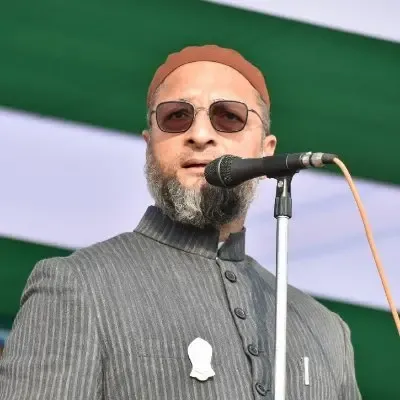
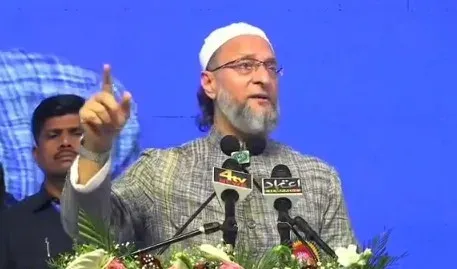
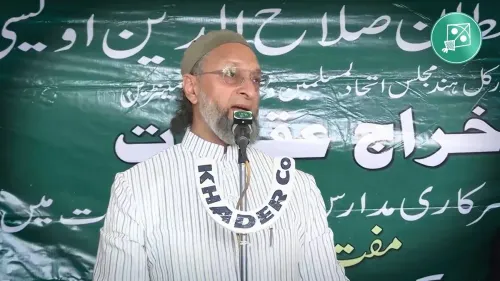
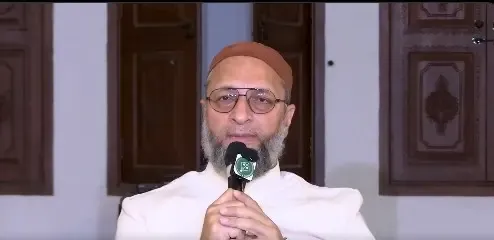
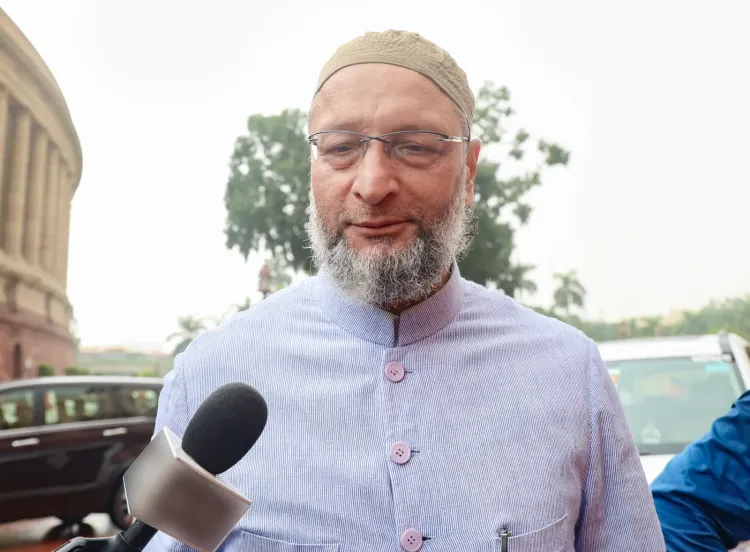
All India Majlis-e-Ittehadul Muslimeen (AIMIM) President Asaduddin Owaisi on Tuesday night sharply condemned the Allahabad High Court's ruling that the hijab is not essential to Islam, calling it an 'attack on Islam' and arguing it violates fundamental rights guaranteed by the Indian Constitution. Owaisi made the remarks while addressing a public gathering at the party's Hyderabad headquarters, Darussalam, on the occasion of Milad-un-Nabi.
Owaisi's Constitutional Argument
The Hyderabad Member of Parliament invoked Articles 25 and 19 of the Constitution — which protect freedom of religion and freedom of expression respectively — to challenge the court's ruling. 'Allahabad High Court has given a judgment today. One of our daughters was wearing Hijab to school. The Court ruled that one cannot wear a Hijab. I disagree with this High Court judgment. This violates Articles 25 and 19 of the Indian Constitution. Who are you to decide what is essential to Islam. It is an attack on Islam,' he said.
Owaisi further pointed out that the Supreme Court has already held the right to privacy to be a fundamental right, framing the hijab as an extension of personal religious practice that the state cannot adjudicate upon.
Criticism of Uniform Civil Code
Owaisi also trained his sights on the Uniform Civil Code (UCC), which has been implemented in Uttarakhand, and is reportedly under consideration in Assam and Gujarat. He alleged that the code, far from being uniform, is rooted in Hindu personal laws — specifically the Hindu Marriage Act, the Hindu Divorce Act, and the Hindu Succession Act. 'Uniformity is not equality... How can they be called a Uniform Civil Code? Why should these laws be imposed on Muslims when they are rooted in Hindu personal laws?' he asked.
Broader Political Attacks
Targeting the Rashtriya Swayamsevak Sangh (RSS), Owaisi alleged that four days after the Indian Constitution was adopted, the RSS had complained that the Manusmriti should have been adopted instead. He also pushed back against Uttar Pradesh Chief Minister Yogi Adityanath's remarks about Mohammed Ali Jauhar, reminding him that Jauhar was a central figure of the Khilafat Movement and that RSS founder Hedgewar himself had once gone to jail in support of the same movement.
On the 'Vande Mataram' controversy, Owaisi argued that Mahatma Gandhi, Netaji Subhas Chandra Bose, and Rabindranath Tagore had collectively decided that singing of the song would be restricted to its first two stanzas. He accused the Centre of disrespecting these leaders by legislating on the matter. 'Is Prime Minister Narendra Modi more intellectual, more patriotic than Mahatma Gandhi, Netaji Subhas Chandra Bose, Rabindranath Tagore?' he asked.
On Unemployment and Governance
Owaisi alleged that the Modi government was using issues such as the Uniform Civil Code, 'Vande Mataram', and 'gau raksha' to divert attention from economic failures, citing a figure of 11 crore unemployed youth in the country. He also noted that India remains the world's largest beef exporter, questioning what he described as the government's double standards on food habits and religious sentiment. He warned that the youth would take to the streets if jobs were not delivered.
Point of View
The UCC, and unemployment into a single narrative of Muslim grievance — a framing that plays well at the grassroots but risks reducing complex constitutional questions to electoral fuel. The Allahabad HC ruling itself deserves scrutiny on its merits: courts deciding what is 'essential' to a religion have a contested track record in India, and the Supreme Court's own privacy jurisprudence does complicate the lower court's logic. What is missing from Owaisi's critique, however, is any engagement with the legal reasoning of the judgment — the attack is political, not jurisprudential. The 11-crore unemployment figure, if accurate, is the more potent charge, and it is telling that it arrived last in a speech dominated by identity issues.
NationPress
11 Oct 2026
Frequently Asked Questions
What did the Allahabad High Court rule on the hijab?
The Allahabad High Court ruled that the hijab is not essential to Islam. The ruling came in a case involving a student who wore a hijab to school, and it has drawn sharp criticism from Muslim leaders including AIMIM chief Asaduddin Owaisi.
Why does Owaisi say the hijab verdict is unconstitutional?
Owaisi argues the verdict violates Article 25 (freedom of religion) and Article 19 (freedom of expression) of the Indian Constitution. He also cited the Supreme Court's ruling that the right to privacy is a fundamental right, framing the hijab as a protected personal religious practice.
What is Owaisi's objection to the Uniform Civil Code?
Owaisi alleges that the UCC implemented in Uttarakhand is based on Hindu personal laws — the Hindu Marriage Act, Hindu Divorce Act, and Hindu Succession Act — and therefore cannot be genuinely 'uniform'. He argues imposing these laws on Muslims amounts to imposing Hindu personal law on a minority community.
What did Owaisi say about Mohammed Ali Jauhar and Yogi Adityanath?
Owaisi pushed back against UP Chief Minister Yogi Adityanath's claim that Mohammed Ali Jauhar helped Pakistan, pointing out that Jauhar was a leading figure of the Khilafat Movement — a pre-Partition Indian Muslim political movement. He also noted that RSS founder Hedgewar had once gone to jail in support of the same movement.
What economic criticism did Owaisi level at the Modi government?
Owaisi alleged that the Modi government was using issues like the UCC, 'Vande Mataram', and 'gau raksha' to distract from a jobs crisis, citing 11 crore unemployed youth in India. He also questioned the government's stance on beef, noting that India is the world's largest beef exporter.