NDA stays united as Modi 3.0 completes two years, defying coalition doubts
Synopsis
Two years in, the coalition government that critics dismissed as short-lived has not only survived but steered major legislation through Parliament. With Nitish Kumar's graceful exit to the Rajya Sabha and both Naidu and Deve Gowda publicly backing Modi, the NDA's durability is the story — and a pointed rebuke to every doom forecast made in June 2024.
Key Takeaways
The NDA completed two years of Modi 3.0 on 9 June 2025 , defying predictions of coalition collapse after the 2024 Lok Sabha election .
The alliance commands 293 seats across 44 parties in the 543-member Lok Sabha , with JD(U) and TDP remaining committed partners.
Nitish Kumar voluntarily stepped back, moving to the Rajya Sabha and backing Samrat Choudhary as Bihar's new BJP Chief Minister .
Chandrababu Naidu and H.D.
Deve Gowda published tributes crediting Modi with surpassing Nehru's record as the longest continuously serving democratically elected Prime Minister.
Deve Gowda has reportedly retired from electoral politics after nearly seven decades in Parliament.
The NDA has reportedly passed several major bills covering economic reforms, social legislation, and constitutional amendments during this term.
The National Democratic Alliance (NDA) marked two years of Modi 3.0 on 9 June 2025 as a cohesive coalition government, confounding predictions of instability that followed the 2024 Lok Sabha election, in which the Bharatiya Janata Party (BJP) fell short of an outright majority and relied on alliance partners to cross the 272-seat threshold. With 293 seats across a 44-party alliance in the 543-member Lok Sabha, the government has navigated two full years without a significant coalition rupture.
How the Coalition Held
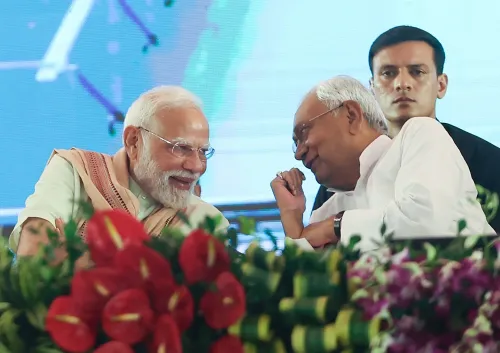
When the 2024 results came in, critics argued that dependence on Nitish Kumar's Janata Dal (United) and Chandrababu Naidu's Telugu Desam Party (TDP) made the government structurally fragile. That forecast has not materialised. Both regional partners have remained firmly in the alliance fold, and the NDA has reportedly steered several major bills through Parliament spanning economic reforms, social legislation, and constitutional amendments.
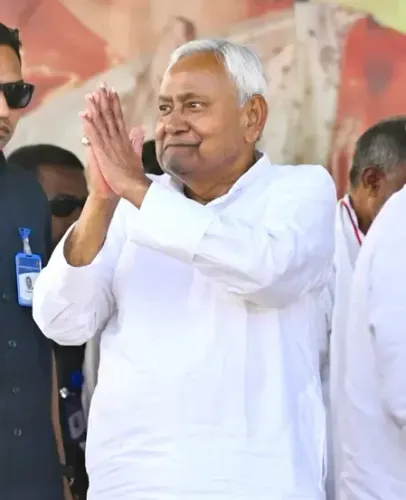
Notably, Nitish Kumar, the 75-year-old veteran JD(U) leader, has since transitioned to the Centre as a Rajya Sabha member, voluntarily stepping back from his earlier role and endorsing Samrat Choudhary as Bihar's new BJP Chief Minister — a succession that proceeded without public friction within the alliance.
Allies Pen Tributes to Modi's Leadership
Andhra Pradesh Chief Minister Chandrababu Naidu, writing in The Indian Express, described Prime Minister Narendra Modi's tenure as having 'rediscovered India's cultural pride and national self-belief.' He asserted that the milestone reflects 'the enduring trust that millions of Indians have placed in a model of governance anchored in the principle of Nation First,' and characterised the present moment as 'the beginning of a golden era for India.'
Former Prime Minister and Janata Dal (Secular) leader H.D. Deve Gowda, writing in The Times of India, reflected that Modi becoming the longest continuously serving democratically elected Prime Minister — surpassing the record of Jawaharlal Nehru — reflects 'both the strength and evolution of Indian democracy.' He credited Modi's leadership with what he described as 'uncompromising protection of national interest and sustained public support.'
The nonagenarian JD(S) leader has reportedly announced his retirement from electoral politics, opting out of the Rajya Sabha race and bringing to a close a parliamentary career spanning nearly seven decades.
The Nehru Comparison: Context and Caveats
Deve Gowda offered a nuanced reading of the record. He noted that Nehru's first term began without a direct popular vote — the first general election was held between 1951 and 1952 — and that the Congress at the time functioned as a dominant force with minimal organised opposition. By contrast, when Modi assumed office in 2014 and returned for a third term in 2024, India had, according to Deve Gowda, 'transformed significantly in terms of diversity and economic complexity.'
He also observed that leaders such as Modi and himself did not benefit from dynastic or privileged political backgrounds, and lacked the 'inherited political capital, patronage, or social advantage' that historically served as springboards into national leadership — a point that implicitly distinguishes their trajectories from those of political dynasties.
Opposition Bloc Under Pressure
While the NDA consolidates, the Opposition coalition has faced its own turbulence, with the INDIA bloc struggling to maintain internal coherence since the 2024 election. The contrast between a stable ruling alliance and a fragmented opposition has, analysts note, reinforced the government's narrative of continuity and decisive governance heading into the second half of its term.
What the Next Phase Looks Like
With the government now in the latter half of its five-year term, attention will shift to whether legislative momentum is sustained and whether state-level electoral outcomes — particularly in Bihar and Andhra Pradesh, home states of the two key allies — test the alliance's cohesion. For now, the coalition that many predicted would fracture within months has, by all available signals, held firm.
Point of View
But the tributes from Naidu and Deve Gowda deserve scrutiny — both leaders have significant stakes in continued central goodwill for their states, which colours the effusiveness of their praise. The more substantive question is whether the alliance's legislative record matches its political durability: passing bills is not the same as transformative governance, and with Bihar and Andhra Pradesh elections on the horizon, the real stress-test for NDA cohesion is still ahead. Deve Gowda's Nehru comparison is analytically careful, but the underlying point — that Modi's multi-party mandate in a fragmented polity is structurally harder to hold than Nehru's Congress dominance — is worth taking seriously as a measure of political achievement.
NationPress
23 Oct 2026
Frequently Asked Questions
How has the NDA coalition stayed united for two years despite lacking an outright BJP majority?
The NDA has held together through continued support from key regional allies, particularly JD(U) and TDP, giving the government 293 seats in the 543-member Lok Sabha. Both partners have remained in the alliance without major public friction, and the government has reportedly passed significant legislation during this period.
What record has PM Modi reportedly surpassed?
According to H.D. Deve Gowda's article in The Times of India, Modi has become the longest continuously serving democratically elected Prime Minister of India, surpassing the record previously held by Jawaharlal Nehru. Deve Gowda noted that the comparison must account for the very different political environments of 1952 and 2024.
What role does Nitish Kumar now play in the NDA government?
Nitish Kumar, the 75-year-old JD(U) leader, has transitioned from his earlier position to become a Rajya Sabha member, voluntarily vacating his previous role. He endorsed Samrat Choudhary as Bihar's new BJP Chief Minister, a succession that proceeded without visible alliance tension.
What did Chandrababu Naidu and Deve Gowda write about Modi's two-year milestone?
Chandrababu Naidu, writing in The Indian Express, credited Modi with restoring India's cultural pride and called the moment the beginning of a 'golden era.' Deve Gowda, in The Times of India, described Modi's record tenure as reflecting the strength of Indian democracy and praised his leadership for protecting national interest.
Has H.D. Deve Gowda retired from politics?
The nonagenarian JD(S) leader has reportedly announced his retirement from electoral politics, opting out of the Rajya Sabha race. This would bring to a close a parliamentary career spanning nearly seven decades, according to reports.