NEET re-exam June 21: How India rebuilt trust after the paper leak
Synopsis
After the 3 May NEET paper leak shook confidence in India's most competitive medical entrance exam, the state assembled an unprecedented response: IAF aircraft for paper transport, biometric checks, AI-CCTV, CRPF-CISF deployment, and Cabinet Secretary-level federal coordination — all for a single re-examination on 21 June. The real question is whether this crisis-built machinery becomes permanent procedure.
Key Takeaways
The NEET re-examination is scheduled for 21 June after the 3 May paper was compromised in a leak.
The Indian Air Force is transporting question papers to minimise ground-transit interception risk.
The CRPF and CISF are providing layered security; biometric verification and AI-enabled CCTV are deployed at halls.
The Cabinet Secretary chaired review meetings with central ministries, state chief secretaries, and the testing agency to align the federal response.
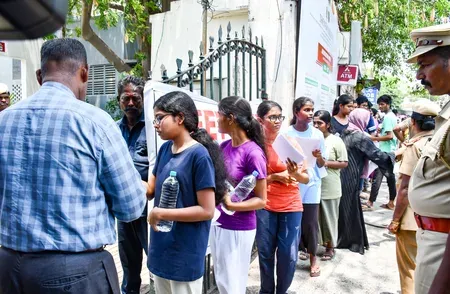
Special trains and free bus services have been arranged for candidates; prohibitory orders are in place near sensitive centres.
Officials and observers are treating the exercise as a potential template for securing high-stakes examinations at scale going forward.
The NEET re-examination scheduled for 21 June in New Delhi and across India is, at its core, an exercise in institutional trust repair — not merely a second sitting of a compromised test. After the integrity of the 3 May examination was breached, the challenge before the state extended well beyond logistics: it had to convince millions of medical aspirants and their families that merit could still prevail in a national examination.
Securing the Chain: From Printing Press to Exam Hall
Authorities conducted a clear-eyed diagnosis before assembling the response. A question-paper leak, according to officials overseeing the re-examination, is rarely a failure of intent — it is a failure of the chain, the long route a paper travels from the printing press to the candidate's desk. Every link in that chain has been hardened for the re-exam.
The Indian Air Force is transporting question papers, compressing the ground-transit window and dramatically reducing interception opportunities. The Ministry of Home Affairs has deployed the Central Reserve Police Force (CRPF) and the Central Industrial Security Force (CISF) to provide layered security around paper movement. The printing hubs — identified as the most vulnerable nodes in the earlier breach — have received the most intensive attention.
Technology at the Centre: Biometrics, AI and Multi-Round Frisking
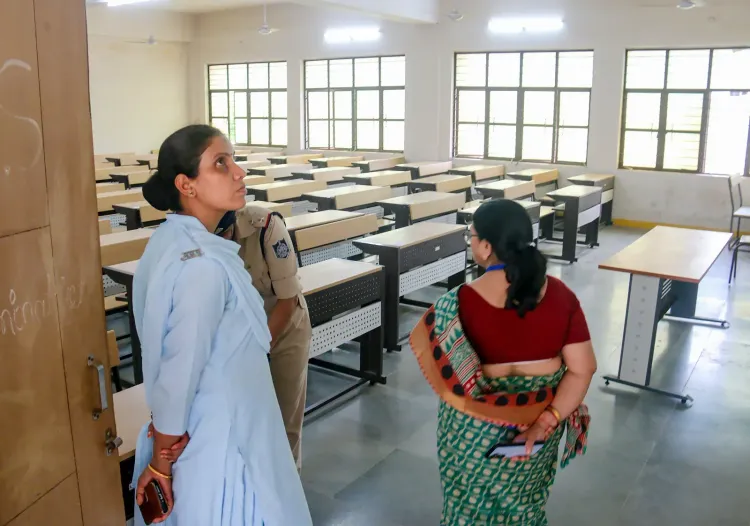
Inside examination halls, the focus shifts from the paper to the person. Biometric verification and facial recognition technology are being deployed to confirm that the candidate seated in each chair matches the registered roll. AI-enabled CCTV provides continuous monitoring without the lapses that human surveillance can produce. Multiple rounds of frisking are in place to guard against electronic devices — a vulnerability that has, in past examination scandals, converted a merit test into a marketplace.
None of these measures is individually novel. Together, they constitute a procedural architecture designed to close the gaps that made the 3 May breach possible.
Candidate Welfare: Trains, Buses and Prohibitory Orders
Indian Railways is operating special trains to ferry candidates to their examination centres on time. Free bus services have been organised in several states. Where large gatherings near centres could create security or crowd-management risks, local authorities have imposed prohibitory orders to maintain a calm environment. These arrangements, rarely highlighted in coverage of examination security, treat the aspirant as the central stakeholder rather than an administrative afterthought.
Federal Coordination: Cabinet Secretary Chairs Review Meetings
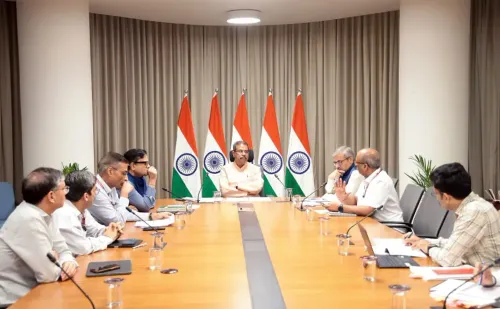
The Cabinet Secretary has chaired multiple review meetings — first with secretaries of central ministries, then with chief secretaries of states, and subsequently with the testing agency. The objective, according to officials, is to align a federal system behind a single operational plan, ensuring that the Centre, state governments, and the examining body are not working at cross-purposes under a tight deadline. This coordination is, arguably, the least visible but most consequential element of the entire exercise.
The Cost of Heavy Security — and the Real Measure of Success
Critics have noted that an elaborate security apparatus can amplify anxiety among students who are already under considerable pressure. The concern is legitimate: a security architecture that intimidates the very candidates it is designed to protect has, in a meaningful sense, failed its purpose. Officials and observers alike have stressed that the true benchmark on 21 June will not be the number of personnel deployed but whether the examination concludes calmly, cleanly, and without incident — with safeguards experienced as reassurance rather than as menace.
Seen in a wider frame, the exercise is being watched as a potential template for securing high-stakes public examinations at scale. If the protocols assembled under crisis conditions this June are codified into standing procedure, the episode could leave behind something more durable than a single clean re-examination: a system designed to protect the chain of trust by default, rather than one that scrambles to restore it after the fact.
Point of View
But the harder question is what happens after 21 June. India runs dozens of high-stakes examinations every year, and the 3 May breach was not a one-off — it exposed a structural vulnerability in the paper-distribution chain that has surfaced in earlier scandals too. Deploying the Air Force and the Cabinet Secretary for a single re-exam is crisis management, not systemic reform. The real test of institutional seriousness will be whether the protocols assembled in haste this June are written into standing procedure before the next examination cycle begins — or whether the machinery is quietly stood down once the immediate pressure passes.
NationPress
19 Sept 2026
Frequently Asked Questions
Why is the NEET re-examination being held on 21 June?
The NEET re-examination on 21 June was ordered after the integrity of the original 3 May examination was compromised by a question-paper leak. Authorities determined that restoring public confidence in the merit-based selection process required a fresh, heavily secured sitting rather than simply validating the earlier results.
What security measures are in place for the NEET re-exam?
The Indian Air Force is transporting question papers to reduce ground-transit interception risk. The CRPF and CISF are providing layered security around paper movement, while biometric verification, facial recognition, AI-enabled CCTV, and multiple rounds of frisking are deployed at examination halls.
How is the government coordinating the NEET re-examination?
The Cabinet Secretary has chaired a series of review meetings — with secretaries of central ministries, chief secretaries of states, and the testing agency — to align the federal response behind a single operational plan. The aim is to ensure the Centre, state governments, and the examining body work in concert.
What arrangements have been made for students travelling to centres?
Indian Railways is running special trains to help candidates reach examination centres on time, and free bus services have been organised in several states. Local authorities have also imposed prohibitory orders near centres to maintain a calm and secure environment.
What is the long-term significance of the NEET re-examination security setup?
Officials and observers view the security architecture assembled for the 21 June re-exam as a potential template for protecting high-stakes public examinations at scale. If the crisis-driven protocols are codified into standing procedure, the episode could produce lasting systemic improvements rather than a one-time fix.