DUSU election 2026: Deepanshu Shokeen's win puts Congress 'nepo politics' in spotlight
Synopsis
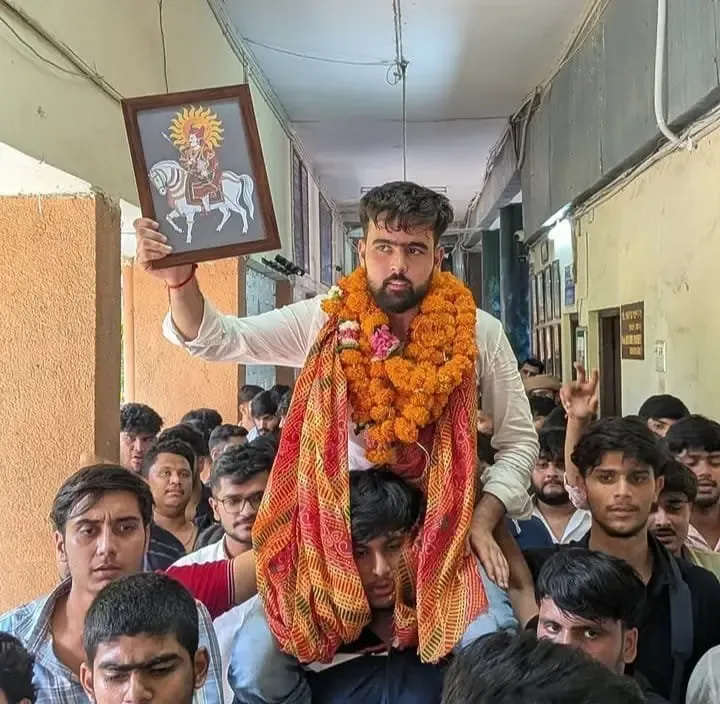
A bus conductor's son who was denied an NSUI ticket just defeated the Congress leader's son in the DUSU Vice President race — by over 30,000 votes. Deepanshu Shokeen's barefoot campaign from Peeragarhi has turned a student union contest into a live case study of what 'parivarvad' costs Congress at the ballot box.
Key Takeaways
Deepanshu Shokeen won the DUSU Vice President post on 19 September 2026 with 30,615 votes , contesting as an Independent.
He defeated NSUI's Vir Chatrath — son of senior Congress leader Manish Chatrath — and ABVP's Ishu Maurya .
Shokeen was reportedly denied the NSUI ticket when the organisation fielded Chatrath, triggering his rebellion candidacy.
Shokeen is the son of a bus conductor and an Anganwadi worker , a resident of Peeragarhi in outer Delhi.
He campaigned barefoot after the Satya Niketan incident , pledging to continue until students received justice.
The result has intensified scrutiny of Congress and NSUI's candidate selection process and internal democracy.
Independent candidate Deepanshu Shokeen has won the Vice President post in the Delhi University Students' Union (DUSU) election on 19 September 2026, securing 30,615 votes to defeat both ABVP's Ishu Maurya and NSUI's Vir Chatrath. Political observers have described the outcome as a pointed setback for the Congress ecosystem's alleged practice of favouring politically connected candidates over grassroots workers.
How the Rebellion Began
Shokeen was reportedly among the strongest contenders for the National Students' Union of India (NSUI) ticket ahead of the DUSU polls. However, the organisation fielded Vir Chatrath — son of senior Indian National Congress (Congress) leader and All India Congress Committee (AICC) Headquarters in-charge Manish Chatrath — bypassing Shokeen for the nomination. According to reports, Shokeen was subsequently asked to withdraw his nomination, a request he refused, choosing instead to contest as an Independent.
The episode quickly drew wider attention as it mirrored broader criticism of what political analysts call 'parivarvad' — family-driven politics — where lineage is seen to outweigh ground-level organisational work in securing opportunities within the Congress structure.
The 'Nepo Kid' Narrative
Chatrath faced the 'nepo kid' label prominently during the campaign. He had pushed back against the characterisation, stating that his seat was not a 'parachute seat' and that he had been engaged with students from the outset. Despite those assertions, Shokeen's victory has reinforced the counter-narrative among observers who argue that grassroots workers often lack adequate recognition within established political organisations.
Notably, Shokeen maintained a lead from the very first counting rounds, suggesting his support base was both wide and consistent — not the outcome of a late swing.
A Candidate Rooted in Ordinary Delhi
Shokeen's personal background became a focal point of the political narrative surrounding the contest. A resident of Peeragarhi in outer Delhi, he is the son of a bus conductor and an Anganwadi worker. He completed his graduation from Bhagat Singh College in 2026 and is currently enrolled in the Department of Buddhist Studies.
His campaign attracted additional attention after he chose to walk barefoot following the Satya Niketan incident, pledging to forgo footwear until students received justice — a gesture that resonated strongly with voters and amplified his 'common man' image against Chatrath's perceived establishment backing.
What It Means for Congress and NSUI
For Congress and NSUI, analysts argue, the result raises uncomfortable questions about candidate selection, internal democracy, and the balance between political connections and grassroots popularity. The defeat of an organisation-backed candidate by its own spurned aspirant is, critics argue, an organisational failure that goes beyond one election.
'Shokeen's victory has consequently become more than an individual electoral success, placing the debate over dynastic politics and opportunities for ordinary student workers at the centre of the DUSU contest,' according to political commentators.
As the DUSU results are digested, the Congress and NSUI leadership face pressure to revisit how candidate selection decisions are made — and whether dissent from the grassroots can be managed before it becomes a ballot-box verdict.
Point of View
The internal message is unambiguous — grassroots workers are watching and keeping score. The 'parivarvad' critique has long been Congress's most durable vulnerability; what makes the DUSU result significant is that it plays out not in a general election narrative but inside the Congress's own organisational family. NSUI is supposed to be the pipeline for the next generation of Congress workers; if that pipeline is seen to reward lineage over labour, the party's cadre problem compounds every election cycle.
NationPress
19 Sept 2026
Frequently Asked Questions
Who is Deepanshu Shokeen and why did he contest as an Independent in DUSU 2026?
Deepanshu Shokeen is a Delhi University student from Peeragarhi and son of a bus conductor and an Anganwadi worker, who graduated from Bhagat Singh College in 2026. He was reportedly a strong contender for the NSUI ticket but was denied the nomination after NSUI fielded Vir Chatrath, son of Congress leader Manish Chatrath. Shokeen refused to step aside and contested as an Independent, ultimately winning the Vice President post with 30,615 votes.
What were the DUSU Vice President election results on 19 September 2026?
Independent candidate Deepanshu Shokeen won the DUSU Vice President post with 30,615 votes, defeating ABVP's Ishu Maurya and NSUI's Vir Chatrath. Shokeen led from the first counting round, indicating a decisive mandate.
Why is Vir Chatrath called a 'nepo kid' in the DUSU election context?
Vir Chatrath is the son of senior Congress leader and AICC Headquarters in-charge Manish Chatrath, and critics used the 'nepo kid' label to argue that his NSUI nomination was driven by political lineage rather than grassroots credentials. Chatrath rejected the charge, stating he had been involved with students from the beginning and that it was not a 'parachute seat'. His defeat to a self-funded Independent has renewed the debate.
What is the significance of the Satya Niketan incident in Deepanshu Shokeen's campaign?
Shokeen chose to campaign barefoot following the Satya Niketan incident, pledging not to wear shoes until students received justice. The gesture amplified his 'common man' image and drew significant attention during the campaign, contrasting sharply with the perceived establishment backing of his NSUI rival.
What does Shokeen's DUSU victory mean for Congress and NSUI going forward?
The result puts Congress and NSUI under pressure to reform their candidate selection process, with analysts arguing it exposed the cost of prioritising political connections over grassroots popularity. The defeat of an organisation-backed candidate by its own denied aspirant is widely seen as a signal that internal democracy concerns within Congress are now playing out at the ballot box in student politics.