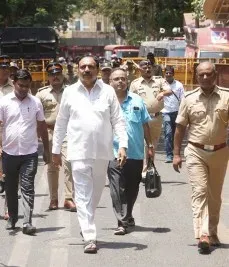
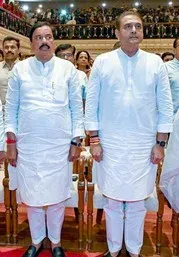
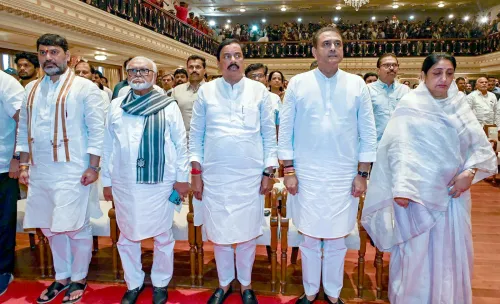
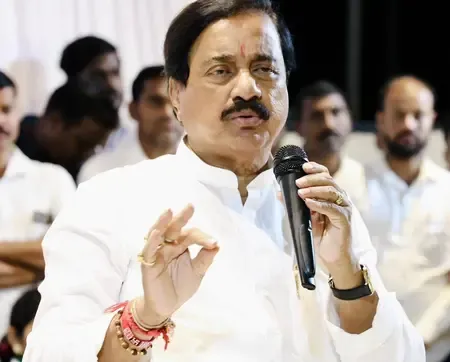
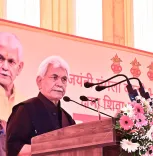
RBI removes Maharashtra Minister Babasaheb Patil from Latur bank board over 10-year tenure breach
Synopsis
The RBI has removed Maharashtra's own Cooperation Minister from a co-operative bank board for the same tenure violations he is meant to police — and unlike seven fellow directors who stepped down, Patil refused, forcing the central bank's hand. The episode puts a spotlight on political entrenchment in Maharashtra's DCCBs and raises questions about regulatory accountability at the top of the state's co-operative hierarchy.
Key Takeaways
The RBI issued a removal order on 18 September 2026 directing Babasaheb Patil off the Latur District Central Co-operative Bank board.
Patil, an NCP leader and Maharashtra Cooperation Minister , had served as a director for more than 10 consecutive years , breaching RBI governance norms.
A complaint filed on 25 May 2026 by Satish Jadhav named 8 of 19 board members as tenure violators; 7 resigned — Patil did not.
Under Section 10A of the Banking Regulation Act , directors of co-operative banks cannot serve continuously beyond 10 years .
Patil has announced plans to challenge the RBI order in court .
Maharashtra's DCCBs are key channels for agricultural credit and sugar co-operative financing, making board control politically significant.
The Reserve Bank of India (RBI), in a communication dated 18 September 2026, removed Babasaheb Patil — Nationalist Congress Party (NCP) leader and Maharashtra's Minister for Cooperation — from the Board of Directors of the Latur District Central Co-operative Bank (DCCB). The central bank's action follows a regulatory finding that Patil had served as a director for more than 10 consecutive years, in breach of RBI governance norms applicable to co-operative banks. Patil has refused to accept the order and has announced his intention to challenge the dismissal in court.
How the Complaint Unfolded
The chain of events began on 25 May 2026, when Satish Jadhav, a member of the Latur District Co-operative Bank, filed a formal complaint alleging that 8 of the 19 board members, including Patil, had held their positions for over a decade — violating RBI's tenure limits. Jadhav subsequently filed a petition before the Chhatrapati Sambhajinagar (Aurangabad) Bench of the Bombay High Court, seeking enforcement of the central bank's governance directives.
Acting on the court's directives, seven of the eight directors named in the complaint resigned. Patil alone declined to step down, compelling the RBI to issue a direct removal order.
The Regulatory Framework Behind the Action
Under Section 10A of the Banking Regulation Act (as applied to Co-operative Societies) and subsequent RBI governance directives, any individual who has served as a director of a co-operative bank for a continuous period exceeding 10 years is disqualified from contesting further elections or retaining a seat on the board. The rule is designed to prevent entrenched control, reduce political patronage, and introduce fresh management into District Central Co-operative Banks (DCCBs).
Notably, DCCBs in Maharashtra function as critical credit arteries for agricultural loans and sugar co-operatives, giving board positions considerable influence over rural economies and constituencies.
The Political Contradiction at the Centre
The dismissal carries an especially sharp political dimension: as Maharashtra's Cooperation Minister, Patil is the cabinet officer responsible for overseeing co-operative institutions across the state — the very category of institution from whose board he has now been removed for non-compliance. Critics argue the episode exposes a contradiction between the minister's regulatory mandate and his personal conduct within the co-operative sector.
This is not an isolated pattern. Entrenched political control over DCCBs has been a recurring governance concern in Maharashtra, where rural co-operatives often serve as financial bases for local political networks.
Patil's Legal Challenge and What Comes Next
Patil has publicly stated his intention to approach the judiciary to contest the RBI's removal order. Legal observers note that challenging a central bank directive issued under the Banking Regulation Act carries a high bar, though courts have occasionally intervened on procedural grounds. A stay on the RBI order, if granted, could temporarily restore his position on the board pending a full hearing.
The case is likely to draw wider scrutiny to other DCCBs across Maharashtra and potentially other states, where similar tenure-limit violations may remain unaddressed.
Point of View
Unlike seven colleagues, refused to go voluntarily. The RBI's direct intervention is rare and signals that the central bank is no longer willing to rely on voluntary compliance in co-operative governance. The deeper problem is structural: Maharashtra's DCCBs have long been prizes in rural political competition, and tenure limits exist precisely to break that cycle. If the minister's legal challenge succeeds on a technicality, it risks sending precisely the wrong signal to other entrenched directors still clinging to board seats across the state.
NationPress
19 Sept 2026
Frequently Asked Questions
Why did the RBI remove Babasaheb Patil from the Latur DCCB board?
The RBI removed Babasaheb Patil because he had served as a director of the Latur District Central Co-operative Bank for more than 10 consecutive years, violating the central bank's governance norms under Section 10A of the Banking Regulation Act. The removal order was issued on 18 September 2026 after Patil declined to resign voluntarily, unlike seven other directors who faced the same allegation.
Who filed the complaint that triggered the RBI action?
Satish Jadhav, a member of the Latur District Co-operative Bank, filed a formal complaint on 25 May 2026 alleging that 8 of the bank's 19 board members had held their positions for over a decade in violation of RBI rules. Jadhav subsequently filed a petition before the Aurangabad Bench of the Bombay High Court, which issued directives that led to seven of the eight directors resigning.
What is the RBI rule on co-operative bank director tenure?
Under Section 10A of the Banking Regulation Act, as applied to co-operative societies, a director who has served continuously for more than 10 years is disqualified from contesting further elections or retaining a board seat. The rule is intended to prevent entrenched control, reduce political patronage, and ensure fresh management in District Central Co-operative Banks.
What is Babasaheb Patil's role in Maharashtra's government?
Babasaheb Patil is an NCP leader serving as Maharashtra's Minister for Cooperation, which means he oversees the very category of co-operative institutions from whose board he has now been removed. This creates a significant contradiction between his cabinet portfolio and his own regulatory compliance.
What happens next in the Babasaheb Patil RBI case?
Patil has announced he will challenge the RBI's removal order in court. If a court grants a stay, he could temporarily retain his board position pending a full hearing; however, challenging a Banking Regulation Act directive from the RBI is considered a high legal bar. The outcome is also expected to draw scrutiny to tenure compliance across other DCCBs in Maharashtra.