What Are the New Guidelines from ECI Regarding Deceased Voters in Bengal?

Synopsis
The Election Commission of India has issued new instructions for electoral officers in West Bengal regarding the creation of a separate list of deceased voters. This initiative aims to ensure accurate voter registration during the Special Intensive Revision process, which is crucial for upcoming elections.
Key Takeaways
ECI issues new guidelines for deceased voters in West Bengal .
Focus on data re-verification from multiple sources.
98.84% of enumeration forms have been digitized.
Draft voters’ list to be published on December 16 .
Final voters’ list expected by February 14 .
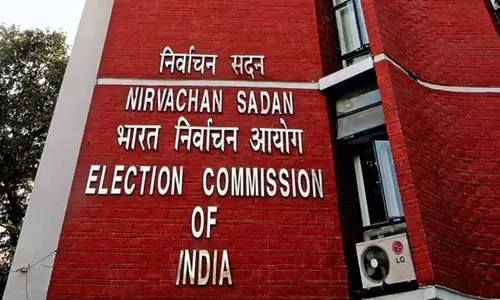
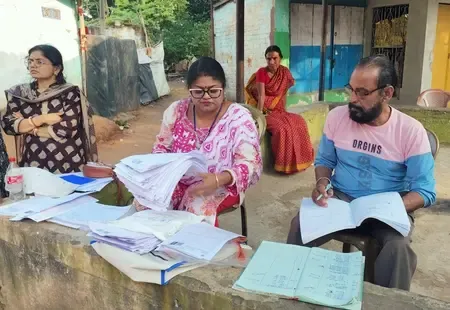
Kolkata, Dec 5 (NationPress) The Election Commission of India (ECI) has issued new directives to electoral officials involved in the ongoing Special Intensive Revision (SIR) in West Bengal concerning the compilation of a distinct list of deceased voters within the state.
According to an insider from the office of the Chief Electoral Officer (CEO) of West Bengal, the Commission has instructed electoral officers to meticulously review the data of individuals previously identified as deceased voters during the digitization and mapping of the fully completed enumeration forms from 2002.
The ECI has outlined three key sources for the re-verification of deceased voter data. The primary source is the death records maintained by various municipal corporations, municipalities, and panchayats throughout the state.
The second source specified by the Commission includes death records held by insurance companies and banks. Lastly, the final source for re-verification is the beneficiary list from various state government social welfare schemes, particularly those that provide death benefits.
As of Thursday evening, a remarkable 98.84% of the completed enumeration forms submitted by voters have been digitized. Based on the current digitization trends, 52,99,663 voters in the existing electoral roll have been identified as eligible for exclusion until that time.
Sources from the CEO's office in West Bengal indicate that out of the 52,99,663 identified excludable voters, 23,48,095 are deceased individuals.
The total number of voters as recorded on October 27, 2025, stands at 7,66,37,529. The SIR process commenced on November 4, with the draft voters’ list set for publication on December 16, and the final voters’ list, following the completion of all necessary processes, to be released on February 14.
Additionally, on Friday, the ECI published the daily bulletin for Phase II of the Special Intensive Revision of electoral rolls, reporting nearly complete progress in the distribution and digitization of Elector-specific enumeration forms (EFs) across 12 States and Union Territories.
The enumeration phase, which began on November 4, is set to continue until December 11.
According to the bulletin, Lakshadweep, Rajasthan, Andaman and Nicobar Islands, and Goa have reported full coverage in the distribution of EFs, achieving 100% distribution.
Point of View
The Election Commission's recent move to enhance the accuracy of voter rolls by focusing on deceased voters reflects a commitment to electoral integrity. This initiative, while specific to West Bengal, sets a precedent for how electoral processes can evolve to maintain trust in democratic systems across India.
NationPress
19 Sept 2026
Frequently Asked Questions
What is the Special Intensive Revision (SIR)?
The Special Intensive Revision (SIR) is a process initiated by the Election Commission of India to update and maintain the accuracy of electoral rolls, ensuring eligible voters are correctly listed.
Why is the ECI focusing on deceased voters?
The ECI aims to ensure the accuracy of voter rolls by removing deceased voters, which helps maintain the integrity and reliability of the electoral process.
What are the sources for verifying deceased voters?
The sources for verifying deceased voters include records from municipal corporations, death records from banks and insurance companies, and beneficiary lists from social welfare schemes.
When will the final voters’ list be published?
The final voters’ list will be published on February 14, following the completion of the Special Intensive Revision process.
What is the significance of this revision for voters?
This revision is significant as it ensures that the electoral roll is up-to-date, preventing potential issues during elections and ensuring that only eligible voters are included.