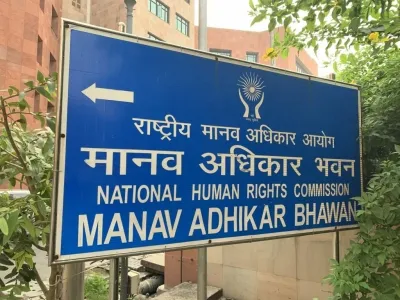
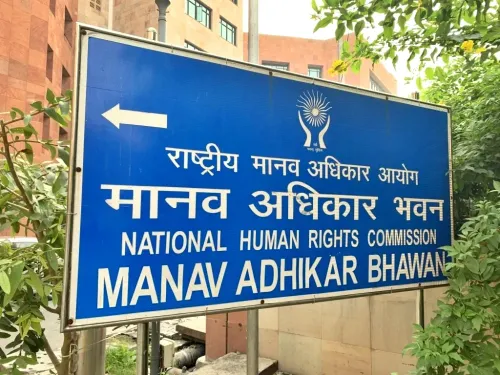
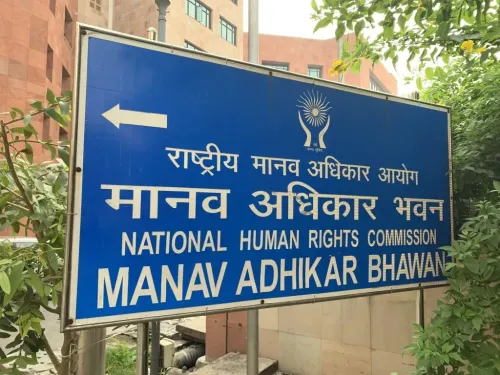
NHRC seeks Punjab report on I-Day non-observance in border schools
Synopsis
The NHRC has put Punjab on notice over allegations that government schools near the India-Pakistan border did not observe Independence Day on 15 August 2026 — raising a pointed question about whether geography is quietly determining which children get to participate in national civic life.
Key Takeaways
The NHRC has taken cognisance of a complaint alleging Independence Day non-observance in Punjab government schools near the India-Pakistan border .
The NHRC Bench headed by Priyank Kanoongo has directed the Punjab government to submit state-wise, district-wise, and school-wise data on 15 August 2026 celebrations.
The Chief Secretary of Punjab must file an Action Taken/Compliance Report within four weeks .
The Ministry of Education has been asked for relevant information; the Ministry of Home Affairs has been informed for appropriate action.
The Commission seeks to determine whether children in border and remote areas were denied equal civic participation solely due to their school's geographical location.
The National Human Rights Commission (NHRC) has taken cognisance of a complaint alleging that Independence Day celebrations were not held in certain government schools in Punjab, particularly those situated near the India-Pakistan border, and has directed the state government to submit a detailed report. The matter was flagged on 19 August 2026, raising concerns about equal civic participation for children in remote and border regions.
What the Complaint Alleges
The complaint contends that some government schools — especially in rural, remote, and border areas of Punjab — allegedly did not observe Independence Day on 15 August 2026. This, the complainant argued, deprived students of the opportunity to participate in a national celebration and engage with foundational civic concepts including India's freedom struggle, the Constitution, national symbols, civic duties, national unity, and democratic values.
NHRC's Directions to Punjab Government
The NHRC Bench headed by Priyank Kanoongo has directed the Punjab government to furnish state-wise, district-wise, and school-wise data on Independence Day observance. The report must detail the number of government schools where the national flag was hoisted, the National Anthem was sung, and students actively participated in the celebrations.
The state has also been asked to identify schools where prescribed activities were not conducted and to explain the reasons for such non-compliance. The Chief Secretary of Punjab has been directed to submit a detailed Action Taken/Compliance Report to the NHRC within four weeks.
Focus on Border and Remote Areas
The Commission specifically directed authorities to verify conditions in schools located in rural, remote, and border areas and to document any disparities in opportunities available to children based on the geographical location of their schools. The NHRC observed that national occasions such as Independence Day carry significant educational and civic value, helping students develop a sense of national unity and respect for constitutional symbols.
Notably, this inquiry spotlights a long-standing concern about unequal access to civic participation for children in geographically marginalised regions — a gap that rarely surfaces in policy discourse despite repeated commitments to inclusive education.
Centre Also Brought into the Loop
Beyond the state government, the NHRC has sought relevant information from the Ministry of Education, Government of India, and has also informed the Ministry of Home Affairs for appropriate action. The involvement of two central ministries signals that the Commission views this not merely as an administrative lapse but as a matter with broader national significance.
What Happens Next
The Punjab government is expected to respond within four weeks. Depending on the findings, the NHRC could issue further directions or recommend remedial measures to ensure uniform observance of national occasions across all government schools, irrespective of their location. The outcome could set a precedent for how border-area schools are monitored during national events going forward.
Point of View
It points to a structural gap in administrative oversight, not just an isolated oversight. The involvement of both the Ministry of Education and the Ministry of Home Affairs suggests the Commission is treating this as a national-security-adjacent civic failure, not a routine school administration matter. The four-week deadline will be telling — Punjab's response will either reveal systemic neglect or surface local logistical constraints that policy has long ignored.
NationPress
19 Aug 2026
Frequently Asked Questions
What is the NHRC notice to Punjab about?
The NHRC has directed the Punjab government to submit a detailed report on whether Independence Day was observed in government schools near the India-Pakistan border on 15 August 2026. The Commission took cognisance of a complaint alleging that celebrations were not held in some of these schools, potentially depriving students of civic participation.
Who is heading the NHRC Bench that issued this directive?
The NHRC Bench is headed by Priyank Kanoongo. The Bench issued directions to the Punjab government to provide school-wise, district-wise, and state-wise data on Independence Day observance.
What details has Punjab been asked to provide?
Punjab has been asked to furnish data on the number of government schools where the national flag was hoisted, the National Anthem was sung, and students participated in celebrations on 15 August 2026. The state must also identify schools where prescribed activities were not conducted and explain the reasons.
When must Punjab respond to the NHRC?
The Chief Secretary of Punjab has been directed to submit a detailed Action Taken/Compliance Report to the NHRC within four weeks of the directive issued on 19 August 2026.
Why does this matter for children in border areas?
The NHRC is examining whether students in rural, remote, and border areas were denied equal opportunities to participate in national civic events solely because of the geographical location of their schools. Such participation is considered educationally significant for instilling awareness of India's freedom struggle, constitutional values, and national unity.