Can NIA's Charge Sheet Expose Pakistan's Pahalgam Deceit on a Global Scale?

Synopsis
The NIA's newly filed charge sheet in the Pahalgam attack case links Pakistan directly to the incident, providing vital evidence that could shift international perceptions and strengthen India's position in exposing terrorism.
Key Takeaways
NIA charge sheet provides 1,597 pages of evidence.
Links Pakistan directly to the Pahalgam attack.
Identifies key terrorists involved.
Highlights the mastermind Sajjad Jutt's role.
May impact international perceptions of Pakistan.
New Delhi, Dec 17 (NationPress) The National Investigation Agency (NIA) has submitted a detailed 1,597-page charge sheet concerning the Pahalgam attack. This document was filed after a thorough investigation that spanned eight months following the incident.
In addition to detailing operational specifics and naming the terrorists, their handlers, and the masterminds behind the attack, the charge sheet highlights a critical connection to Pakistan. This evidence is set to assist India in reinforcing its stance against Pakistan within the international community.
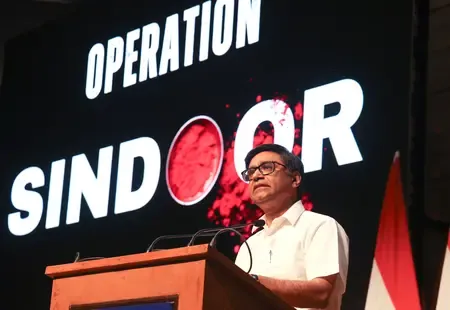
An official indicated that Pakistan has consistently denied involvement in the attack, labeling India's accusations as unfounded. Following the Pahalgam attack, Pakistan expressed outrage over India's execution of Operation Sindoor as a response. While the NIA meticulously crafted the charge sheet, the intention was not solely to bring the case to trial but to secure a swift conviction, further solidifying India's allegations against Pakistan.
It seems evident that Pakistan's motivation behind orchestrating the attack was twofold: to divert attention from domestic issues and to disrupt the flourishing tourism sector in Jammu and Kashmir. Although the attack temporarily affected the industry, it has since returned to normal operations.
According to an Intelligence Bureau official, Pakistan initially attempted to portray the attackers as local Jammu and Kashmir residents, aiming to incite public animosity towards the Kashmiris and sow discord between J&K and the rest of India. However, this tactic proved effective for only a short time.
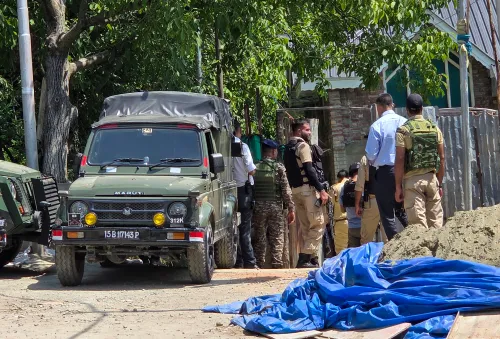
The NIA's charge sheet contains pivotal information linking Pakistan to the attack. Two Android phones were seized from the site of Operation Mahadev, where security forces eliminated three Pakistani terrorists in Dachigam. Evidence collected by the NIA substantiates that these individuals originated from Pakistan.
Further investigations revealed that the recovered phones were acquired in Pakistan, and forensic examinations have established ties to the terrorists. Additionally, M4 assault rifles, frequently used by Pakistani terrorists, were confiscated alongside chocolates and other items, which also had connections to Pakistan.
The investigation identified the terrorists involved as Faisal Watt, Habeeb Tahir, and Hamza Afghani, all Pakistani nationals. The electronic evidence corroborates the attack's link to Pakistan, while the NIA has also identified Sajjad Jutt as the mastermind behind the incident. Jutt is known within intelligence circles for overseeing operations of the Lashkar-e-Taiba proxy, The Resistance Front, and has been active in multiple operations in Jammu and Kashmir.
Indian agencies have tracked Jutt since his involvement in Jammu and Kashmir in 2000 until his return to Pakistan in 2005. He has orchestrated several significant attacks, including the 2024 Reasi bus attack that resulted in the deaths of nine pilgrims and the assault on Indian Army personnel in 2013.
Moreover, Jutt was implicated in the 2023 Bhata Dhurian attack in Poonch, leading to the deaths of five Indian soldiers. Officials assert that the charge sheet is sufficient to expose Pakistan's deceit.
After Operation Sindoor, Pakistan has adopted a victim narrative, claiming it is being unjustly accused. The charge sheet not only affirms India's actions against Pakistan following the Pahalgam attack but also seeks to unveil Islamabad's tactics on the global stage, where it has aimed to depict India as the aggressor, as noted by another official.
Point of View
It is crucial to emphasize that the NIA's charge sheet stands as a testament to India's commitment to uncovering the truth behind terrorist activities. By firmly establishing Pakistan's involvement, India is not only defending its sovereignty but also seeking justice for the victims. The evidence presented must be viewed through a lens of accountability and transparency, reinforcing the need for global support against terrorism.
NationPress
16 Oct 2026
Frequently Asked Questions
What is the significance of the NIA's charge sheet?
The NIA's charge sheet is significant as it provides detailed evidence linking Pakistan to the Pahalgam attack and aims to strengthen India's case in the international community.
Who are the terrorists identified in the charge sheet?
The identified terrorists are Faisal Watt, Habeeb Tahir, and Hamza Afghani, all of whom are Pakistani nationals.
What role did Sajjad Jutt play in the attack?
Sajjad Jutt is identified as the mastermind behind the Pahalgam attack, overseeing operations for the Lashkar-e-Taiba proxy, The Resistance Front.
How does this charge sheet affect India-Pakistan relations?
The charge sheet could further strain India-Pakistan relations by providing substantial evidence of Pakistan's involvement in terrorism against India.
What is Operation Sindoor?
Operation Sindoor was India's response to the Pahalgam attack, executed as a counter-terrorism measure.