Infosys Chairman Nilekani: AI will amplify IT firms, not replace them
Synopsis
At Infosys's 45th AGM, Chairman Nandan Nilekani pushed back against fears that AI will hollow out IT services firms — arguing instead that a $400 billion AI-first opportunity awaits those who move fast. With 90% of its top 200 clients already on AI journeys with Infosys, the company is betting it is the guide, not the casualty, of the AI transition.
Key Takeaways
Nandan Nilekani addressed Infosys's 45th AGM on 23 June in Bengaluru , asserting AI will amplify — not replace — IT firms.
Infosys is targeting a $400 billion AI-first services market by 2030 .
Nilekani said software delivery requires enterprise context, cybersecurity, governance, and architecture expertise beyond automated coding.
Infosys is already working with 90 per cent of its top 200 clients on AI transformation.
The company sees the convergence of AI agents with legacy transaction systems as the next major value-creation wave.
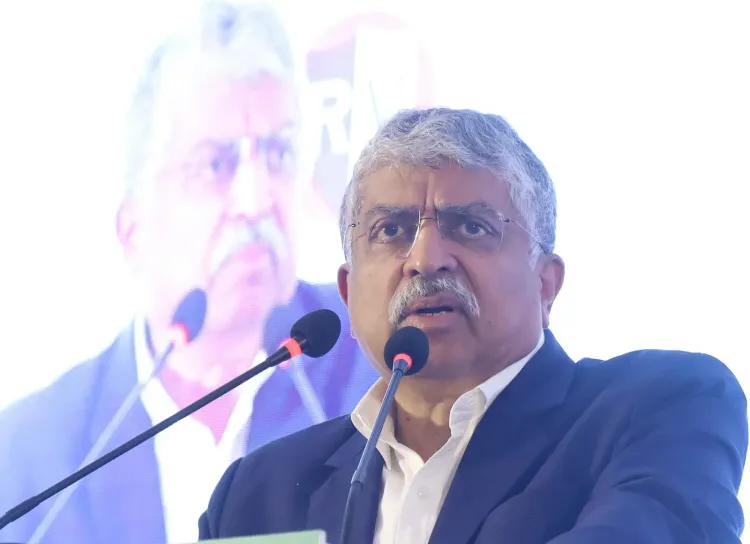
Infosys Chairman Nandan Nilekani on Tuesday, 23 June declared that artificial intelligence will not render IT software companies obsolete — rather, it will magnify the capabilities of those that embrace it swiftly and strategically. Speaking at the company's 45th Annual General Meeting (AGM) in Bengaluru, Nilekani laid out a confident vision for Infosys's role in the AI era, targeting a $400 billion AI-first services market by 2030.
Nilekani's Core Argument
'The AI deployment gap in large enterprise clients is real, and closing that gap is where the work is. AI will not replace companies like ours. It will amplify those who move with purpose and adapt with speed,' Nilekani said in his address to shareholders.
He acknowledged the existential question circulating across the industry — whether firms like Infosys remain relevant as coding becomes increasingly automated. His answer was direct: software development is far more than writing lines of code.
Why IT Services Go Beyond Coding
Nilekani argued that enterprise software delivery demands deep contextual knowledge, integration with legacy technology investments, cybersecurity safeguards, testing, governance, and architectural expertise — none of which can be reduced to automated code generation alone.
'More than three years after GenAI was launched, Infosys is more relevant than ever before and well-positioned for the decade ahead. While we embrace the best coding tools and improve our productivity, there is much more to do in the software development life cycle,' he noted.
The $400 Billion Opportunity
Nilekani identified the defining opportunity as the convergence of intelligent AI systems with mission-critical enterprise platforms. He said the greatest value will emerge from combining AI models and agents with traditional transaction systems that continue to underpin large-scale enterprise operations.
Infosys is already acting on this thesis: the company is collaborating with 90 per cent of its top 200 clients on their AI transformation journeys, Nilekani said. This positions Infosys as a strategic partner rather than a vendor at risk of displacement.
Industry Context and What It Signals
Nilekani's remarks come amid a broader debate in the global technology industry about whether AI-driven productivity gains will shrink headcounts at large IT services firms. Several Indian IT majors have faced investor questions about long-term revenue models as AI coding assistants proliferate.
Notably, Infosys's framing — that AI expands the addressable market rather than compressing it — aligns with arguments made by some industry analysts, though critics contend that enterprise AI adoption could eventually reduce the volume of bespoke services work that sustains large IT margins.
With its AGM address, Infosys has staked out a clear public position: the firm sees the AI transition as a growth catalyst, not a structural threat, and intends to be at the centre of enterprise AI deployment globally.
Point of View
Not a committed revenue target, and Infosys has not detailed how it intends to capture a meaningful share of it. The more substantive question the industry is ducking: if AI genuinely compresses the hours required for enterprise software delivery, does the billable-hours model that underpins large IT margins survive intact? Infosys's answer — that complexity migrates upward and creates new work — is plausible but unproven at scale. The 90% client collaboration statistic is encouraging, but collaboration on AI journeys and monetising those journeys at legacy margins are two very different things.
NationPress
22 Sept 2026
Frequently Asked Questions
What did Infosys Chairman Nandan Nilekani say about AI at the AGM?
Nilekani said AI will not replace IT companies like Infosys but will amplify those that adapt quickly. He made these remarks at Infosys's 45th AGM in Bengaluru on 23 June, targeting a $400 billion AI-first services opportunity by 2030.
Why does Nilekani believe Infosys will remain relevant in the AI era?
He argued that enterprise software delivery requires far more than automated code generation — including deep enterprise context, cybersecurity, governance, testing, and architecture expertise. These are areas where experienced IT services firms hold a structural advantage.
What is the $400 billion AI opportunity Nilekani referred to?
It refers to the estimated global market for AI-first enterprise services by 2030. Nilekani positioned Infosys as a key player in helping large enterprises close the gap between AI potential and actual deployment at scale.
How many Infosys clients are already on AI journeys with the company?
According to Nilekani, Infosys is collaborating with 90 per cent of its top 200 clients on their AI transformation journeys, signalling broad enterprise engagement with its AI services.
What is the 'AI deployment gap' Nilekani mentioned?
The AI deployment gap refers to the distance between what large enterprise clients could achieve with AI and what they have actually implemented. Nilekani said closing this gap is the primary opportunity — and responsibility — for IT services firms like Infosys.